
If you want to improve Quran recitation, the most reliable path is a mix of correct pronunciation, gradual Tajweed learning, and short daily practice. It takes time and patience, but simple habits can help you recite more accurately and confidently, whether you are just starting to read Arabic or want to refine your Tajweed.
In this guide, you will find 9 practical tips, a simple 25-minute daily routine, and advice on fluency, common mistakes, and when to learn with a qualified Quran teacher, so you can build a stronger connection with the words of Allah.
Why Is It Important to Improve Your Quran Recitation?
Improving your recitation is about more than reading smoothly. Every Arabic letter has a specific articulation point, and pronouncing it incorrectly can change the sound or even the meaning of a word. Scholars describe two levels of error: Lahn Jali (a clear mistake that changes the meaning or the sound of a word) and Lahn Khafi (a subtle mistake in applying Tajweed rules that does not change the meaning but reduces the quality of recitation). Learning proper pronunciation and Tajweed helps you avoid both.
Recitation is also an act of worship. In Sahih al-Bukhari and Sahih Muslim, from the narration of Aisha (may Allah be pleased with her), the Prophet Muhammad ﷺ said that the one who recites the Quran skillfully will be with the noble and obedient angels, while the one who recites with difficulty and effort will receive a double reward.
This is a comforting reminder for beginners, but it is a reward for those who keep striving, not a reason to stop improving. Keep learning, practise consistently, and be patient with yourself.
How to Improve Quran Recitation: 9 Practical Tips
You do not need to change everything at once. Start with a few manageable habits and build on them as your reading improves.
1. Learn the Correct Pronunciation of Arabic Letters
Every Arabic letter has a specific articulation point, known as a Makhraj. Some letters are challenging for non-Arabic speakers because they have no equivalent sound in their native language.
Common pairs that learners confuse include:
| Letters | What to watch for |
|---|---|
| ح and ه | The first comes from the middle of the throat, the second from the far end |
| ق and ك | The first is produced deeper in the throat than the second |
| ع and أ | The first requires constriction of the throat; the second is a light stop |
| ص and س | The first is heavy; the second is light |
| ض and د | The first is heavy and produced from the side of the tongue |
| ط and ت | The first is heavy; the second is light |
| ذ and ز | The first is produced with the tongue tip between the teeth; the second is not |
Practise each difficult letter on its own before using it in words and verses. A qualified teacher can demonstrate how to produce each sound and correct mistakes that are hard to notice by yourself. For a step-by-step guide, read our article on [Arabic Letter Makharij Step-by-Step – Fix Your Quran Recitation] to learn more about Arabic letter articulation and improve your Quran reading.
2. Learn Tajweed One Rule at a Time
Tajweed teaches you how to pronounce Quranic letters and words according to established recitation rules. Trying to memorize every rule at once can feel overwhelming, so begin with the basics:
- Makharij: the articulation points of Arabic letters.
- Madd: the rules for extending certain vowel sounds.
- Ghunnah: nasalization in specific recitation contexts.
- Noon Sakinah and Tanween: the rules that determine how these sounds are pronounced before particular letters.
- Tafkheem and Tarqeeq: heavy and light letters, and the characteristics that affect how they sound.
Choose one rule, listen to examples, and practise it in a short passage. Once you feel comfortable applying it, move on to the next. For more personalized guidance, explore our [Online Tajweed Lessons in English | Master Quran Recitation] and learn how to apply Tajweed rules correctly with the help of a qualified teacher.
3. Practise Every Day, Even for a Few Minutes
Consistency is more useful than occasional long sessions. Short daily practice gives you more chances to reinforce what you have learned and become familiar with Quranic words.
Start with 15 to 20 minutes a day, or whatever you can comfortably maintain, and build up gradually toward the 25-minute routine below. Choose a few verses, read them aloud, and revisit any words that cause difficulty. It also helps to review previous material instead of always moving on to something new, because repetition strengthens your skills.
4. Listen to Skilled Quran Reciters

Listening to experienced reciters helps you become familiar with correct pronunciation, Tajweed, elongation, and appropriate pauses.
Sheikh Mahmoud Khalil Al-Husary is particularly useful for learners because of his clear, measured recitation, and his Muallim (teaching) recordings repeat each phrase for the student to echo, which suits beginners.
Sheikh Muhammad Siddiq Al-Minshawi is another respected reciter whose recordings support listening practice.
For a contemporary voice with a clear, steady pace, many learners also listen to Sheikh Mishary Rashid Alafasy.
Try this simple method:
- Choose a short passage and follow it in your Mushaf (the printed copy of the Quran).
- Listen to the passage carefully.
- Pause the recording and recite the same section aloud.
- Listen again and notice any differences.
Focus on pronunciation and Tajweed rather than trying to imitate the reciter’s voice or melody.
5. Recite Slowly and Work on Difficult Words
Reading faster does not mean reading better. Rushing can lead to unclear letters, shortened elongations, and pronunciation mistakes. One of the most effective ways to improve Quran recitation is to practise Tartil, which means measured and deliberate recitation. Give each letter its proper sound and length, and take appropriate pauses.
When a particular word is difficult, do not read past it and hope it improves on its own. Stop, listen to a reliable recitation, repeat the word slowly, and then practise it within the complete verse. Return to the same passage over several days until it feels familiar. This breaks a challenging task into smaller steps, which is especially helpful for beginners.
As your accuracy improves, your reading will become smoother naturally. There is no need to force a faster pace before you can apply the rules consistently.
6. Record Your Recitation and Review It
Recording yourself helps you notice hesitation, inconsistent pacing, and some differences in elongation. Choose a short passage, record your reading, and listen back while following the same words in your Mushaf. Keep track of the parts you find difficult and use them as goals for your next session.
However, recordings cannot reliably reveal every pronunciation or Tajweed mistake. If you are unsure whether you are producing a letter correctly, ask a qualified teacher to check it.
7. Learn Where to Pause and Resume
Knowing where to stop and where to resume helps you recite smoothly without disrupting the meaning of a verse. In Tajweed, Waqf refers to stopping during recitation, while Ibtida’ refers to beginning or resuming. Learn the stopping signs in your Mushaf and practise applying them in context.
Avoid pausing simply because a word feels difficult; practise the phrase until you can read it through. At the same time, remember that appropriate pauses are an important part of correct recitation.
8. Keep a List of Your Recurring Mistakes
Learning a rule is only useful if you can apply it while reciting. Keep a short written list of the mistakes you make most often. You might notice that you confuse two particular letters, forget a Madd rule, or hesitate on certain words.
Work on one or two items at a time and tick them off as they improve. This keeps your practice focused and lets you see your progress over time.
9. Learn with a Qualified Quran Teacher
Self-study and listening resources can support your progress, but they cannot replace direct feedback. A qualified teacher can identify errors, demonstrate correct pronunciation, and explain how to apply Tajweed rules while reading.
One-to-one lessons are especially helpful because the teacher can adapt the plan to your level. Beginners can build a strong foundation, while experienced readers can focus on specific weaknesses. You can also combine lessons with daily home practice, using the time between sessions to review what you learned and prepare questions about difficult words or rules.
How to Improve Quran Recitation with Tajweed
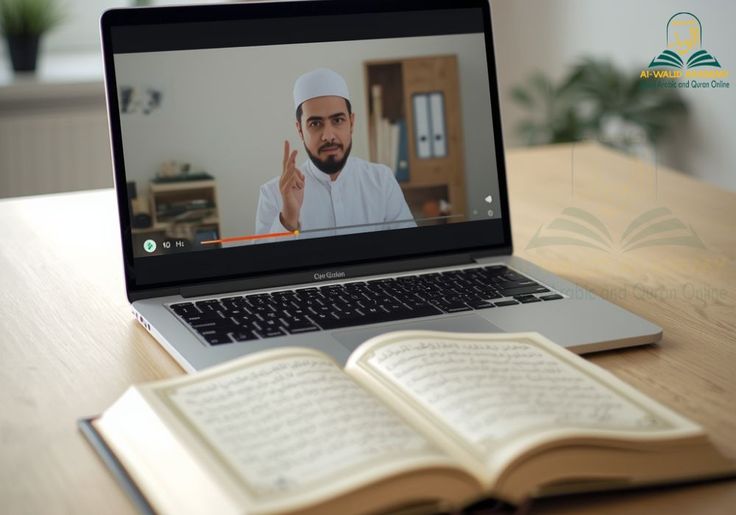
Tajweed becomes easier when you understand the rules and practise them in real Quranic passages. You do not need to master everything immediately; start with the rules that match your current level.
For example, the rules of Noon Sakinah and Tanween fall into four main categories:
- Izhar: pronouncing the sound clearly.
- Idgham: merging the sound into the following letter in specified cases.
- Iqlab: changing the Noon Sakinah or Tanween sound into a concealed Meem sound before ب.
- Ikhfa: pronouncing the sound with concealment and Ghunnah under its applicable conditions.
There are also three rules for Meem Sakinah: Ikhfa Shafawi, Idgham Shafawi, and Izhar Shafawi.
Another important area is Madd, which involves extending certain sounds according to specific rules. In the common recitation of Hafs ‘an ‘Asim, natural Madd is generally held for two counts, while other types may require different lengths.
The best way to learn these rules is to study one at a time, listen to clear examples, and practise them in short passages. A teacher can help you apply them correctly and avoid forming inaccurate habits.
How to Improve Quran Recitation Fluency
Fluency develops as you become more familiar with Arabic words and more confident applying Tajweed. If you often hesitate between words, begin with short or familiar surahs and repeat them until your reading becomes natural.
Keep these principles in mind:
- Focus on accurate pronunciation before increasing your speed.
- Practise connecting words without unnecessary hesitation.
- Learn appropriate stopping points rather than avoiding pauses altogether.
- Repeat challenging passages until you can read them comfortably.
A smooth recitation is not necessarily an accurate one. Your goal is to improve fluency while preserving the pronunciation and rules of the Quran.
How to Make Your Quran Recitation More Beautiful
Beautiful recitation begins with correct pronunciation and Tajweed, not with a naturally melodious voice. You can develop a balanced and meaningful style by reading calmly, breathing naturally, and giving each letter its proper sound.
Listen to skilled reciters to become familiar with measured pacing and natural rhythm, but avoid copying their melodies at the expense of pronunciation. Build your accuracy first, then allow your voice and rhythm to develop gradually.
The purpose is not to sound impressive. Clear pronunciation, appropriate pauses, and sincere attention to the words are all part of meaningful recitation.
Common Mistakes That Slow Down Your Progress

- Rushing: reading fast before the letters and rules are secure.
- Ignoring Madd: shortening or over-extending elongations.
- Relying on recordings alone: recordings help, but they cannot replace a teacher’s correction.
- Learning too many rules at once: this leads to confusion and burnout.
- Skipping review: moving on to new material without revisiting what you studied.
- Imitating melody instead of pronunciation: copying a reciter’s voice before your own accuracy is stable.
A Simple Daily Quran Recitation Routine for Beginners
A focused 25-minute routine can help you practise without feeling overwhelmed. If 25 minutes is too much at first, start with 15 to 20 and work up to it.
| Time | Practice |
| 5 minutes | Listen to a qualified reciter while following the passage in your Mushaf. |
| 5 minutes | Practise one or two difficult Arabic letters or sounds. |
| 10 minutes | Recite a short passage aloud and apply the Tajweed rules you have learned. |
| 5 minutes | Review difficult words and repeat the parts that need more attention. |
Adjust the routine to your level and schedule. If you have only ten minutes, use them well rather than skipping practice. A routine you can maintain is more valuable than an ambitious plan you rarely follow.
How Long Does It Take to Improve Quran Recitation?
The time required depends on your starting level, practice routine, and access to qualified guidance. A learner who already reads Arabic may focus on refining pronunciation and Tajweed, while a complete beginner may first need to learn the alphabet, vowel marks, and connected reading.
Some learners notice improvement in particular skills within a few weeks, while developing consistent Tajweed and confident recitation can take months or longer.
Instead of measuring progress only by how many pages you finish, ask yourself: Are you pronouncing letters more accurately? Can you apply familiar Tajweed rules more consistently? Are you reading familiar passages with fewer hesitations? Recording the same passage from time to time and getting feedback from a teacher can help you see these improvements.
How to Help Children Improve Their Quran Recitation

Children benefit from lessons and routines that match their age, attention span, and reading level. The aim is to build strong foundations without making Quran learning feel stressful.
Start with Arabic letters and their sounds before moving on to connected reading and more advanced Tajweed. Resources such as Noorani Qaida, a step-by-step beginner primer for learning the Arabic letters and basic reading rules, introduce these skills gradually.
For children under seven, shorter lessons of around 30 minutes are usually more manageable, since longer sessions can be hard for them to sustain. Short practice sessions at home can reinforce what they learn in lessons.
Listening, repetition, and gentle correction matter too. Encourage your child to repeat a short verse, celebrate improvements, and revisit difficult sounds patiently. One-to-one lessons let a teacher focus on your child’s specific needs and adjust the pace as they progress.
You can make the most of your child’s learning experience by choosing the right teacher. Read our guide, [Quran Teacher for Kids Online: 7 Things to Check Before You Book], to learn what to look for when selecting a qualified Quran teacher for your child.
Can You Improve Quran Recitation Without a Teacher?
Yes. Self-study can help you learn Arabic letters, review Tajweed rules, listen to skilled reciters, and practise familiar passages. Beginner resources and daily repetition are valuable, especially when you are starting from scratch.
However, it is hard to recognize your own pronunciation mistakes. You may understand a rule in theory but apply it incorrectly while reading, or struggle to distinguish letters that sound similar. That is why combining home practice with feedback from a qualified Quran teacher works so well: you practise independently between lessons and use lesson time to correct errors, ask questions, and focus on your weakest areas.
✨If you would like that kind of guidance, Areeb Academy offers personalized one-to-one online Quran lessons with qualified teachers who communicate in English. Lessons are tailored to your level and goals, whether you want to learn Quran reading from the beginning, improve your Tajweed, or develop more fluent recitation. Book a free trial lesson to see how it works.
Final Thoughts
Improving your Quran recitation is a gradual journey built on accurate pronunciation, Tajweed, regular practice, and patience. You do not need to master every rule at once or compare your progress with anyone else’s.
Start with a manageable passage, listen to clear recitation, practise the skills you are learning, and review your mistakes regularly. With consistent effort and the right guidance, you can become a more confident and accurate reader while deepening your connection with the Quran. Ready for personal feedback? Book a free trial lesson with Areeb Academy and take the next step.
Frequently Asked Questions
How can I improve my Quran recitation at home?
Practise daily for 15 to 25 minutes, listen to a skilled reciter before you read, recite slowly, repeat difficult words, record yourself, and keep a list of recurring mistakes. Check your progress with a qualified teacher when possible.
What is the fastest way to improve Quran recitation?
There is no shortcut, but the most effective approach is consistent daily practice combined with regular feedback from a qualified teacher, who can correct mistakes before they become habits.
Do I need to learn all the Tajweed rules to recite correctly?
Not at once. Learn one rule at a time, starting with the basics such as Makharij, Madd, and Noon Sakinah and Tanween, and practise each in short passages.
How many minutes a day should I practise?
Start with 15 to 20 minutes and build up to about 25 minutes. A short daily habit you can keep is better than occasional long sessions.
Which reciters are good for beginners?
Sheikh Mahmoud Khalil Al-Husary (including his Muallim recordings), Sheikh Muhammad Siddiq Al-Minshawi, and Sheikh Mishary Rashid Alafasy are commonly used by learners.