
The Ikhfa Shafawi Rule is one of the essential rules in Tajweed that helps bring beauty, precision, and flow to Quranic recitation. It occurs when a Meem Sakinah (مْ) comes before the letter Baa (ب). The reciter then gently conceals the Meem sound and produces a soft nasal Ghunnah for two counts.
Understanding this rule is important for every learner who wants to recite the Quran correctly, as it combines both accuracy and rhythm in a very subtle and elegant way. Mastering the Ikhfa Shafawi Rule not only improves pronunciation but also enhances the overall spiritual experience of recitation.
What Is the Ikhfa Shafawi Rule?
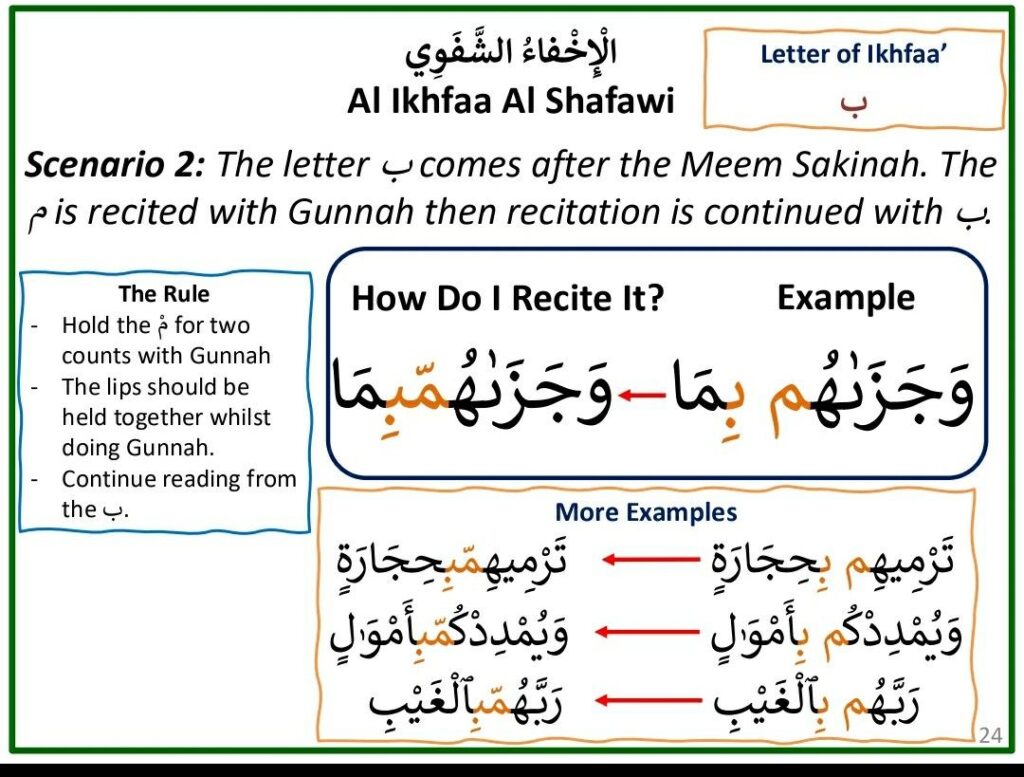
The Ikhfa Shafawi rule is one of the important rules of Tajweed that improves the beauty and accuracy of Quran recitation. It shows how a Meem Sakinah (مْ) sounds when it comes before the letter Baa (ب). In this case, the reciter does not pronounce the Meem clearly. Instead, the reciter gently conceals it and produces a light nasal Ghunnah.
As a result, the recitation flows smoothly and naturally between the two lip letters. This rule also helps maintain proper pronunciation and enhances the rhythm of the Quranic recitation.
Definition of Ikhfa Shafawi
Ikhfa Shafawi (الإخفاء الشفوي) is one of the Tajweed rules that applies when a Meem Sakinah (مْ) comes before the letter Baa (ب). In this situation, the reciter does not pronounce the Meem fully or merge it completely with the next letter. Instead, the reciter partially hides the Meem sound while producing a soft nasal sound (ghunnah) that lasts for approximately two counts.
The pronunciation becomes a smooth blend between the Meem and Baa, where the lips do not fully press together with force, and the sound remains light and flowing.
Why It Is Called “Shafawi” (Lips-Based)
Scholars call this rule Ikhfa “Shafawi” because both letters, Meem (م) and Baa (ب), come from the lips, as the reciter articulates them using the lips.
- “Shafawi” comes from Shafah (شفاه) which means lips in Arabic
- The articulation point (makhraj) of both letters is from the lips
- In this rule, the reciter conceals the Meem sound but still keeps a nasal resonance, which helps create a smooth and natural transition between two lip-based letters.
So, the name reflects both:
- The place of articulation (lips)
- The manner of pronunciation (concealment of Meem)
Importance in Quran Recitation

Ikhfa Shafawi rule plays an important role in improving the beauty, fluency, and correctness of Quran recitation. Its importance includes:
- Ensuring proper application of Tajweed rules when Meem Sakinah is followed by Baa
- Maintaining the correct ghunnah (nasal sound) for two counts
- Creating a smooth and melodious flow between letters without harsh stops
- Preventing common mistakes like:
- fully pronouncing the Meem clearly (which becomes Izhar)
- merging it incorrectly like Idgham
- pressing the lips too firmly or cutting the ghunnah short
Overall, mastering Ikhfa Shafawi helps the reciter achieve a more accurate and beautiful recitation of the Qur’an, as taught in Tajweed principles.
When Does Ikhfa Shafawi Occur?
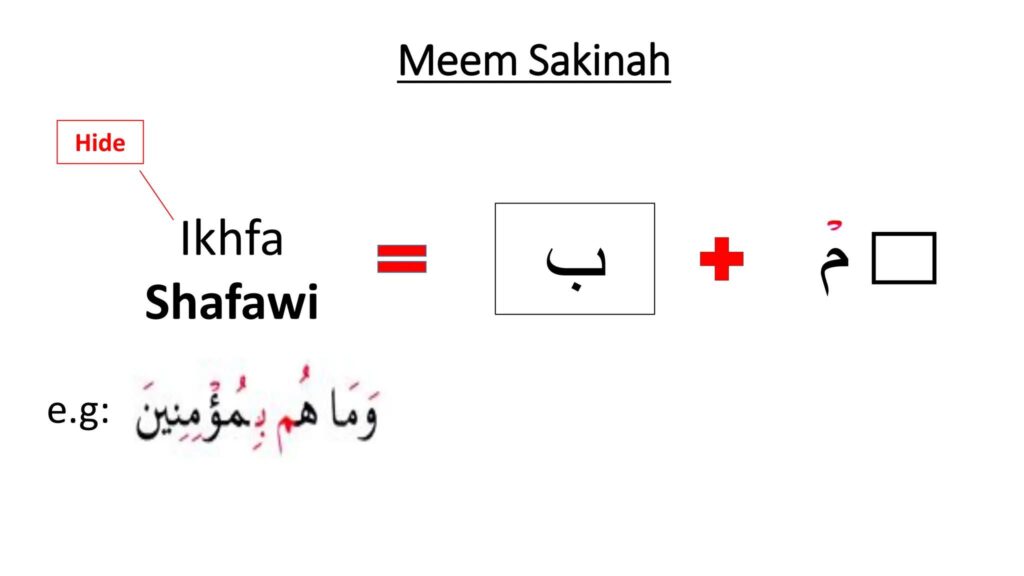
Ikhfa Shafawi occurs when a Meem Sakinah (مْ) comes directly before the letter Baa (ب). In this situation, the reciter applies a special pronunciation rule instead of reading the Meem clearly.
First, the reciter softens the Meem sound. Then, the reciter hides it slightly while producing a light nasal Ghunnah for two counts. After that, the reciter smoothly continues into the pronunciation of the Baa.
As a result, the recitation becomes more connected and natural. This rule also helps maintain correct Tajweed and improves the flow between lip-based letters.
Meem Sakinah Followed by the Letter ب
The Ikhfa Shafawi rule occurs specifically when a Meem Sakinah (مْ) comes immediately before the letter Baa (ب). This means the Meem carries no vowel and comes directly before a labial letter, which creates the condition for this Tajweed rule to apply.
In this situation, the reciter does not pronounce the Meem clearly. Instead, the reciter conceals its sound while producing a light nasal Ghunnah and then smoothly moves into the pronunciation of the Baa.
Key Condition for Applying the Rule

The main condition for Ikhfa Shafawi is very precise:
- The Meem must be sakinah (مْ)
- The next letter must be only Baa (ب)
- The connection usually happens between two words, though it can also appear within a word in some cases
When these conditions are met:
- The reciter does not pronounce the Meem clearly.
- The reciter partially hides the Meem sound.
- The reciter maintains a two-count Ghunnah
- The reciter brings the lips together gently without applying strong pressure.
This makes Ikhfa Shafawi a middle state between clear pronunciation (Izhar) and full merging (Idgham).
Common Words Where It Appears
Ikhfa Shafawi frequently appears in many verses of the Qur’an. Some well-known examples include:
- تَرْمِيهِم بِحِجَارَةٍ → Surah Al-Fil (105:4)
- أَنبَأَهُم بِأَسْمَائِهِمْ → Surah Al-Baqarah (2:33)
- فَبَشِّرْهُم بِعَذَابٍ → Surah Aal Imran (3:21)
In all these examples, a Meem Sakinah (مْ) comes before Baa (ب), so the recitation follows the Ikhfa Shafawi rule with a soft nasal Ghunnah.
- soft nasalization (ghunnah)
- hidden meem articulation
- smooth transition into the baa
This rule helps preserve the beauty and flow of Quranic recitation while maintaining precise pronunciation rules.
How to Pronounce Ikhfa Shafawi Correctly
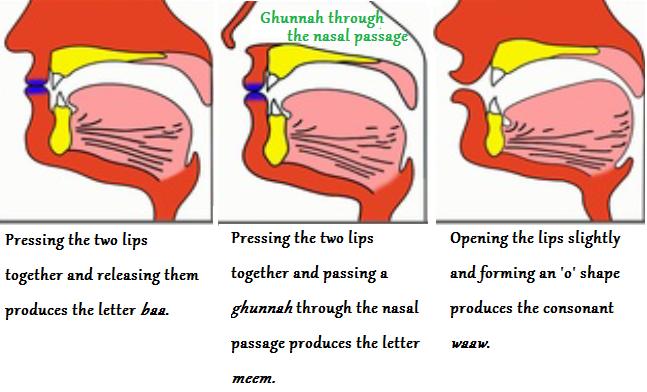
To pronounce Ikhfa Shafawi correctly, the reciter follows a few simple steps when a Meem Sakinah (مْ) comes before the letter Baa (ب). First, the reciter brings the lips together gently without pressing them tightly. Then, the reciter does not pronounce the Meem clearly. Instead, the reciter hides its sound slightly and produces a soft nasal Ghunnah for two counts.
After that, the reciter smoothly moves into the pronunciation of the Baa without any break. As a result, the sound flows naturally and maintains proper Tajweed rules.
Light Closing of the Lips
To apply the Ikhfa Shafawi rule correctly, the reciter brings the lips together gently when a Meem Sakinah is followed by Baa. The reciter should avoid pressing the lips firmly and instead maintain a soft, light contact to allow the sound to remain hidden and flow smoothly into the next letter.
- The Meem sound is not pronounced clearly
- The lips prepare for the Baa without tension
- This creates a natural “hidden” transition between the two letters
Applying Ghunnah (Nasal Sound)

A defining feature of Ikhfa Shafawi is the Ghunnah (nasal sound).
- The sound is produced through the nose, not the mouth
- It is held for approximately two counts (2 harakah)
- It gives the Meem a “hidden” quality before moving to Baa
- The sound should feel smooth, continuous, and controlled
This nasalization is what connects the concealed Meem to the following letter in a soft and melodic way.
Avoiding Full Idgham or Clear Izhar
When applying Ikhfa Shafawi rule, it is important to avoid two common mistakes:
- Full Idgham (merging): Do not completely merge the Meem into the Baa or turn it into a stressed sound
- Clear Izhar (clarity): Do not pronounce the Meem fully and distinctly before the Baa
Instead, the correct balance is:
- Not fully clear
- Not fully merged
- But partially hidden with Ghunnah
This middle way is what makes Ikhfa Shafawi unique and essential in proper Tajweed recitation.
Examples of Ikhfa Shafawi from the Quran

Ikhfa Shafawi appears in many places in the Quran whenever a Meem Sakinah (مْ) comes before the letter Baa (ب). In these cases, the reciter does not pronounce the Meem clearly. Instead, the reciter hides it slightly and applies a soft nasal Ghunnah for two counts before moving into the Baa.
Practice Words from Short Surahs
Ikhfa Shafawi is also found in many frequently recited phrases, especially in short surahs:
- وَمَا هُم بِمُؤْمِنِينَ
The meem in hum is followed by baa in bimu’minin.
- وَكَلْبُهُم بَاسِطٌ (Surah Al-Kahf)
The meem in kalbuhum is followed by baa in basitun.
- مِن بَعْدِ
The meem sakinah in min is followed by baa in ba‘di. - يَعْتَصِم بِاللَّهِ
The meem in ya‘tasim is followed by baa in billah.
These short expressions are very useful for daily practice because they appear often in recitation.
Listening and Repetition Tips

To master Ikhfa Shafawi, consistent listening and repetition are very important:
- Listen carefully to expert Quran reciters and notice the soft nasal sound before baa
- Repeat slowly, focusing on the two-count ghunnah
- Practice first without speed, then gradually increase fluency
- Pay attention to gentle lip contact, not tight closure
- Compare your recitation with a qualified teacher or Tajweed recording
With regular practice, the transition between Meem Sakinah and Baa becomes natural, smooth, and fully aligned with Tajweed rules.
Ikhfa Shafawi vs Other Meem Sakinah Rules
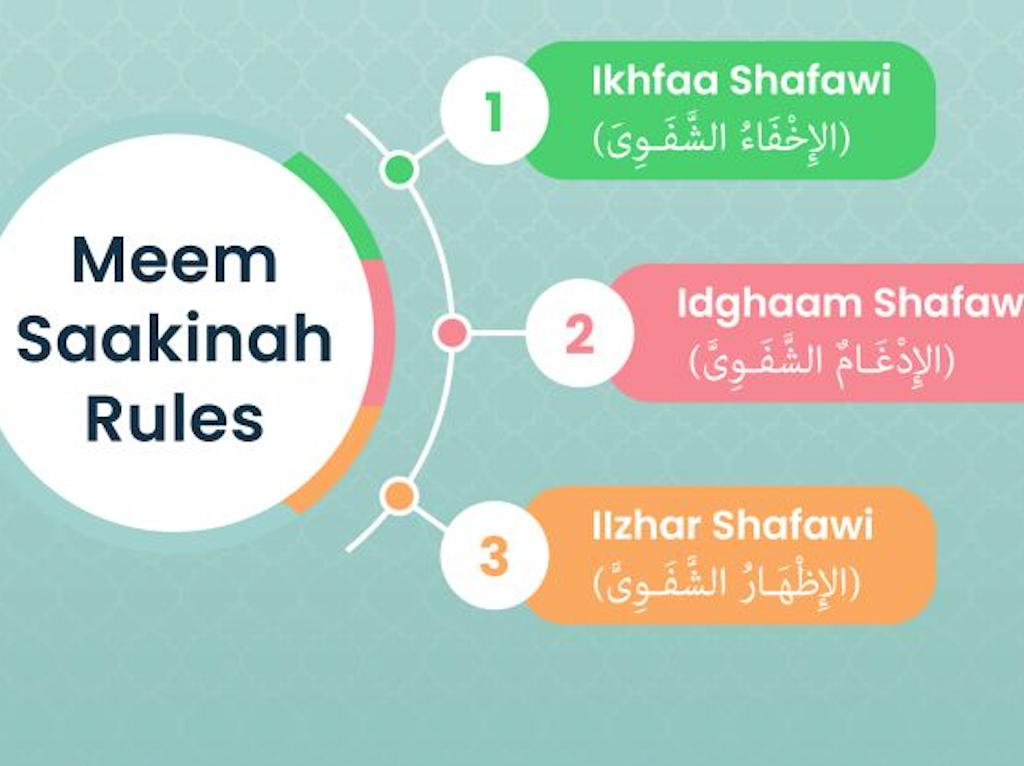
Meem Sakinah (مْ) has three main Tajweed rules depending on the letter that follows it: Ikhfa Shafawi, Idgham Shafawi, and Izhar Shafawi. Each rule changes how the reciter pronounces the Meem and how the sound flows into the next letter.
Difference Between Ikhfa Shafawi and Idgham Shafawi
The main difference is hiding vs merging:
- Ikhfa Shafawi (مْ + ب)
- The reciter conceals the Meem instead of pronouncing it fully.
- The reciter also produces a light 2-count Ghunnah to maintain the correct Tajweed flow.
- The lips touch gently without pressure
- The sound transitions smoothly into Baa (ب)
- Example: تَرْمِيهِم بِحِجَارَةٍ
- Idgham Shafawi (مْ + م)
- The Meem is fully merged into the next Meem
- It becomes one stressed Meem sound
- A strong ghunnah (2 counts) is applied
- The lips stay closed longer due to merging
- Example: فِي قُلُوبِهِم مَّرَضٌ
👉 In short:
Ikhfa = hidden sound, while Idgham = complete merging
Difference Between Ikhfa Shafawi and Izhar Shafawi
The difference here is nasalization vs clarity:
- Ikhfa Shafawi (مْ + ب)
- Meem is hidden with ghunnah
- Sound is soft and partially nasal
- Transition into Baa is smooth and blended
- Izhar Shafawi (مْ + any letter except ب or م)
- Meem is pronounced clearly and fully
- No extra ghunnah (beyond natural Meem sound)
- Clear separation between letters
- Example: هُمْ نَائِمُونَ
👉 In short:
Ikhfa = hidden with nasal sound, while Izhar = clear and direct pronunciation
Quick Comparison Table
| Rule | Letter After Meem | Action | Ghunnah |
|---|---|---|---|
| Ikhfa Shafawi | ب | Hide the Meem | Yes (2 counts) |
| Idgham Shafawi | م | Merge into Meem | Yes (strong 2 counts) |
| Izhar Shafawi | Other letters | Clear pronunciation | No extra ghunnah |
Common Mistakes in Ikhfa Shafawi Rule

Ikhfa Shafawi depends on precision, softness, and controlled nasalization (ghunnah). Because the rule is subtle, learners often make small mistakes that affect the correctness of recitation.
Closing the Lips Too Tightly
One of the most frequent mistakes is pressing the lips firmly when pronouncing Meem Sakinah before Baa.
- This makes the Meem sound too clear and strong
- It turns the rule into Izhar Shafawi instead of Ikhfa Shafawi
- It breaks the idea of “concealment”
✔ Correct approach:
Use a light, gentle lip contact without pressure, allowing the sound to remain soft and partially hidden.
Skipping the Ghunnah Sound
Another common error is removing or shortening the nasal sound (ghunnah).
- The reciter moves directly from Meem to Baa
- The “hidden” quality of the rule disappears
- The pronunciation becomes incomplete
✔ Correct approach:
Always maintain a 2-count ghunnah, producing a soft nasal sound that connects both letters smoothly.
Turning It into Idgham by Mistake
Some learners exaggerate the transition, making it sound like full merging (Idgham).
- The sound becomes overly blended or forced
- The identity of the Meem is lost too early
- It no longer reflects Ikhfa Shafawi
✔ Correct approach:
Keep it balanced and partial:
- Not fully clear (Izhar)
- Not fully merged (Idgham)
- But softly hidden with ghunnah
Tips to Master Ikhfa Shafawi Rule
Mastering Ikhfa Shafawi becomes easier when you focus on the basics and practice regularly. Pay attention to gentle lip positioning, keep the Ghunnah steady for two counts, and avoid rushing between letters. Start slowly, repeat key examples, and listen to skilled reciters to improve your pronunciation naturally.
Practice Slowly with Clear Focus
Start at a slow pace so you can control every part of the rule. Focus on three things together:
- Light lip contact (no tight closure)
- A clear 2-count Ghunnah
- Smooth transition into the letter ب
Speed comes later. Accuracy first.
Use Audio Recitation for Guidance

Listening is one of the fastest ways to improve.
- Choose skilled Qurra’ (reciters) known for Tajweed accuracy
- Pause and repeat after them (ayah by ayah)
- Compare your pronunciation with theirs, especially the nasal sound duration
This helps you naturally “hear” the correct Ikhfa Shafawi instead of guessing it.
Learn with a Qualified Tajweed Teacher
Self-learning can only take you so far. A teacher can immediately correct:
- Lip positioning (too tight or too open)
- Ghunnah timing (too short or too long)
- Confusion with Idgham or Izhar Shafawi
Even a few guided sessions can significantly fix long-term mistakes.
Ikhfa Shafawi Rule Chart (Quick Summary)
Easy Table for Quick Revision
| Rule | Letter Condition | Action | Ghunnah |
|---|---|---|---|
| Ikhfa Shafawi | مْ + ب | Hidden Meem with soft transition | Yes (2 counts) |
| Idgham Shafawi | مْ + م | Full merging of Meems | Yes (2 counts) |
| Izhar Shafawi | مْ + other letters | Clear pronunciation | No extra Ghunnah |
Memory Tips for Beginners
- “B = Hide” → If Meem Sakinah comes before ب, it is always Ikhfa Shafawi
- Think “soft bridge” → not fully clear, not fully merged
- Two-count rule → every Ikhfa Shafawi has a steady nasal hold
- Lip rule → light touch, never tight pressure
If you remember these four cues, most mistakes disappear naturally with practice.
🔗 Explore More Tajweed Rules
If you’re working on mastering the Ikhfa Shafawi Rule, it’s important to understand other connected Tajweed rules as well. Each rule builds on the other and helps you achieve smoother, more accurate recitation.
You can continue your learning journey with these helpful guides:
- Ghunnah Letters Rules: Simple Guide Every Quran Learner Needs
Learn when and how to apply nasal sounds correctly in different Tajweed situations. - Madd Rules in Tajweed Online: 5 Simple Tips for Perfect Recitation
Understand how to stretch sounds properly and improve your recitation rhythm. - Meem Sakinah Rules: Perfect Your Quran Recitation in Minutes
Get a complete overview of all Meem Sakinah rules, including Ikhfa, Idgham, and Izhar.
These guides will help you connect the rules together and build a strong Tajweed foundation step by step.
Final Thoughts on Ikhfa Shafawi Rule
Learning Tajweed becomes much easier and more enjoyable when you have the right guidance and environment. At Areeb Academy, the teachers are highly qualified and experienced, making complex rules like the Ikhfa Shafawi Rule simple and easy to understand step by step. One of the best things about the academy is the flexibility — you can choose a schedule that fits your routine and learn at your own pace without pressure.
Whether you want to improve your Quran recitation, learn Arabic Fusha, or master Tajweed rules, Areeb Academy provides structured learning that suits all levels.
If you’re just starting your journey or want to refine your skills, don’t hesitate to take the next step. You can easily book a free trial class and experience the teaching style yourself before committing.
Join Areeb Academy today and begin your journey toward confident Quran recitation, stronger Tajweed, and fluent Arabic learning at your own pace.
FAQs about Ikhfa Shafawi Rule
1. What is the Ikhfa Shafawi Rule?
The Ikhfa Shafawi Rule is a Tajweed rule that occurs when a Meem Sakinah (مْ) comes before the letter Baa (ب). The reciter gently hides the Meem sound and produces a soft nasal ghunnah for two counts.
2. How long should the ghunnah be in Ikhfa Shafawi?
The ghunnah should last for two counts (two harakat). Keeping the timing consistent helps maintain the correct rhythm of recitation.
3. What is the difference between Ikhfa Shafawi and Idgham Shafawi?
In Ikhfa Shafawi, the reciter hides the Meem with a light nasal sound before Baa. In contrast, in Idgham Shafawi, the reciter merges the Meem completely into another Meem, creating one stressed sound with ghunnah.
4. What are common mistakes in Ikhfa Shafawi?
Common mistakes include pressing the lips too tightly, skipping the ghunnah, making the sound too clear (Izhar), or turning it into full merging (Idgham). For example, many learners press their lips too firmly, which makes the Meem sound overly clear instead of hidden.
5. How can I improve my Ikhfa Shafawi pronunciation?
You can improve by practicing slowly, focusing on light lip contact, maintaining a two-count ghunnah, listening to skilled reciters, and learning with a qualified Tajweed teacher.