
The last two verses of Surah At-Tauba, verses 128 and 129, bring the surah to a close with a message of mercy, compassion, and complete reliance on Allah. They highlight Prophet Muhammad’s ﷺ deep concern for his people and teach believers how to respond to hardship, rejection, and uncertainty while keeping their hearts connected to Allah.
About Surah At-Tawbah
Surah At-Tawbah is the ninth chapter of the Quran. It is also known as Surah Bara’ah (Disavowal). It is a Madinan surah and one of the final surahs revealed to the Prophet Muhammad ﷺ. Much of the surah relates to the events surrounding the Expedition of Tabuk and the final years of the Muslim community in Arabia.
One feature sets Surah At-Tawbah apart from every other chapter in the Quran. It does not begin with “Bismillah ir-Rahman ir-Raheem” (In the name of Allah, the Most Gracious, the Most Merciful).
Scholars have offered several explanations for this. Many scholars view Surah At-Tawbah as a continuation of Surah Al-Anfal. They consider the two surahs to form one connected discourse. Therefore, Surah At-Tawbah does not have a separate opening formula.
Others point to the surah’s opening message. It begins with a declaration of disavowal toward those who broke their treaties. This firm tone differs from the usual opening with Allah’s mercy.
The surah addresses themes such as repentance, sincerity, the exposure of hypocrisy, and unwavering commitment to faith. After this extended discussion, it ends with a reminder of the Prophet’s ﷺ mercy toward the believers and the importance of placing complete trust in Allah. These themes provide the context for the Surah Tauba last two verses, which offer a powerful message of mercy, faith, and reliance on Allah.
Verse 128: The Mercy of Prophet Muhammad ﷺ
لَقَدْ جَاءَكُمْ رَسُولٌ مِّنْ أَنفُسِكُمْ عَزِيزٌ عَلَيْهِ مَا عَنِتُّمْ حَرِيصٌ عَلَيْكُم بِالْمُؤْمِنِينَ رَءُوفٌ رَّحِيمٌ
(Surah At-Tawbah 9:128)
Transliteration: Laqad jaa’akum rasoolun min anfusikum ‘azeezun ‘alayhi maa ‘anittum hareesun ‘alaykum bil-mu’mineena ra’oofur-raheem.
Meaning: There certainly has come to you a messenger from among yourselves. He is grieved by your suffering, anxious for your well-being, and gracious and merciful to the believers.
Tafsir:
- “A Messenger from among yourselves” — The Prophet ﷺ was sent from among his own people. He spoke their language and understood their circumstances firsthand, which made his message clear and accessible rather than foreign or distant.
- “Grievous to him is what you suffer” — The Prophet ﷺ deeply felt the suffering of his people. Their hardship and distress were never matters he treated lightly.
- “He is concerned over you” — The word harees conveys a strong, almost restless eagerness — not passive concern, but an active longing for people’s guidance and well-being. He sincerely wanted people to accept the truth and attain what was good for them.
- “Kind and merciful to the believers” — Allah describes the Prophet ﷺ using two of His own attributes, Ra’oof (gentle) and Raheem (merciful), emphasizing the exceptional depth of his compassion toward the believers.
This verse reminds Muslims of the Prophet’s ﷺ loving concern for his Ummah and calls them to appreciate and reflect his compassionate example in their own dealings with others.
Verse 129: Complete Reliance on Allah
فَإِن تَوَلَّوْا فَقُلْ حَسْبِيَ اللَّهُ لَا إِلَٰهَ إِلَّا هُوَ ۖ عَلَيْهِ تَوَكَّلْتُ ۖ وَهُوَ رَبُّ الْعَرْشِ الْعَظِيمِ
(Surah At-Tawbah 9:129)
Transliteration: Fa-in tawallaw faqul hasbiyallaahu laa ilaaha illaa huwa ‘alayhi tawakkaltu wa huwa rabbul-‘arshil-‘azeem.
Meaning: But if they turn away, then say, “Allah is sufficient for me. There is no god worthy of worship except Him. In Him I put my trust, and He is the Lord of the Mighty Throne.”
Tafsir:
- “Hasbiyallahu la ilaha illa Huwa” — “Allah is sufficient for me; there is no deity except Him.” This verse declares pure Tawheed: Allah alone deserves worship, and He alone is sufficient for His servants, whether people accept or reject the message.
- “Alayhi tawakkaltu” — “Upon Him I have relied.” Tawakkul means placing one’s trust in Allah while still doing what is required — it is not passivity, but strength drawn from certainty in the face of uncertainty, rejection, or hardship.
- “Wa Huwa Rabbul Arshil Azeem” — “And He is the Lord of the Great Throne.” The verse closes by reminding believers of Allah’s supreme greatness and authority over all creation, grounding their trust in His limitless power.
This verse shifts the focus from the Prophet’s ﷺ concern for people to the believer’s own relationship with Allah. It teaches that after making every sincere effort, a person should not be shaken by people’s rejection — Allah alone is sufficient.
Pronunciation Tips for the last Two verses of Surah Tauba for Beginners
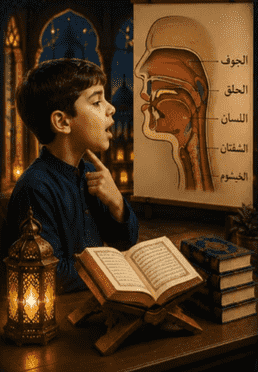
If you are learning to recite the last two verses of Surah Tauba, keep these simple pronunciation tips in mind:
- Recite slowly: Take your time with each word and avoid rushing through the verses.
- Focus on ‘ayn (ع): In words such as ‘alaykum, pronounce the ‘ayn from the middle of the throat with a gentle, controlled sound.
- Pronounce qaf (ق) clearly: In Laqad, the qaf should come from the back of the tongue and should not sound like the English “k.”
- Pay attention to emphatic letters: Keep heavy letters such as ṣād (ص) full and clear, while pronouncing lighter letters with a thinner sound.
- Observe Ghunnah: In phrases such as “min anfusikum“, pay attention to the nasal sound associated with Ikhfa.
- Use transliteration as a guide: Transliteration can help you follow the words, but it cannot fully represent Arabic pronunciation. Always practice with the Arabic text and audio recitation.
- Listen and repeat: Listen to a qualified Quran reciter, repeat each phrase slowly, and practice until the pronunciation becomes natural.
Do you know how to apply Ghunnah and Ikhfa correctly? 👀 Our guides explains the rules in a simple way, with practical Quranic examples to help you recite with greater accuracy. 🌷
– Ghunnah Letters Rules: Simple Guide Every Quran Learner Needs
– Tajweed Ikhfa Rule : Easy Guide, Letters & Examples for Beginners
Lessons from the Surah Tauba Last Two Verses
The last two verses of Surah Tauba contain powerful lessons about love, faith, patience, and reliance on Allah. They remind believers how to respond to hardship, rejection, and uncertainty.
Love and Respect for Prophet Muhammad ﷺ
Verse 128 shows a man who carried the weight of an entire Ummah in his heart. He was troubled by your suffering and concerned for your guidance. He cared for others before thinking of himself.
This was the kind of love the Prophet ﷺ had for people he had never met. It extended even to those who would come centuries after him.
This verse teaches Muslims to love and honor the Prophet ﷺ. It also encourages us to show the same tenderness to those around us. We should especially care for people who are struggling and need someone to notice.
Turning to Allah When People Turn Away
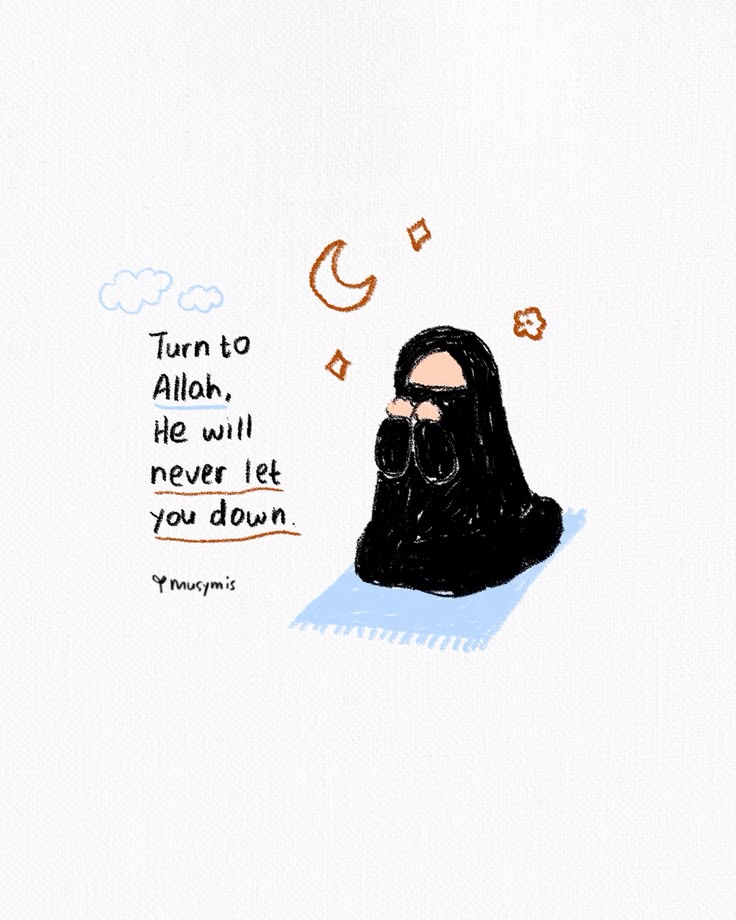
Verse 129 speaks directly to a pain almost everyone knows: the ache of being misunderstood, dismissed, or turned away from by people whose acceptance we hoped for. Even the Prophet ﷺ, the most beloved of creation, faced rejection from his own people. And in that moment, Allah didn’t tell him to chase their approval. He told him to say one sentence instead: Hasbiyallahu la ilaha illa Huwa — Allah is enough for me.
There is something deeply comforting in that. People can walk away. People can misjudge us, grow distant, or fail to see our worth. But Allah never does. He does not turn His back on a servant who turns to Him. People’s love can be conditional and sometimes fickle. Allah’s sufficiency, however, is constant. He remains near, aware, and enough through every difficult moment.
The Surah Tauba last two verses remind us that our role is to do what we can and then leave the outcome to Allah. We trust His plan, knowing that His wisdom is greater than anything people could offer us.
Strengthening Tawheed and Tawakkul
The words “there is no deity except Him” are not just a statement of belief — they are a quiet reordering of the heart’s priorities. When a person truly means those words, the opinions of people shrink, and reliance on Allah grows. “Upon Him I have relied” then completes the picture: tawakkul is not giving up effort, but doing everything within one’s ability and then trusting Allah completely with what happens next. Together, these two phrases teach believers to anchor their hearts in Allah alone, no matter how uncertain the outward circumstances may look.
The Reward of Reciting and Reflecting on These Verses
Reciting the Quran is an act of worship with great spiritual reward. The Prophet ﷺ taught that a believer receives a reward for every letter recited from the Book of Allah. Each good deed is multiplied tenfold.
Quran recitation can also bring peace and tranquility to the heart. In an authentic hadith, the Prophet ﷺ described tranquility descending upon a person who recites the Quran. He also described mercy and angels surrounding gatherings where the Quran is recited and studied.
These last two verses of Surah At-Tawbah are especially suited to quiet reflection — not just recitation, but sitting with the meaning. Reading Verse 128 as a reminder of how deeply the Prophet ﷺ cared, and Verse 129 as a return to Hasbiyallahu whenever the heart feels weighed down by people’s rejection, can make them a meaningful and steadying part of a believer’s daily connection with the Quran.
Are There Specific Virtues for Reciting These Verses?
The last two verses of Surah At-Tawbah carry profound meanings of mercy, faith, and reliance on Allah. However, it is important to distinguish between virtues established by authentic evidence and claims that are not reliably proven.
A narration mentions reciting the phrase “Hasbiyallahu la ilaha illa Huwa, ‘alayhi tawakkaltu, wa Huwa Rabbul-‘Arshil-‘Azeem” seven times in the morning and evening. Scholars have differed over the authenticity of this narration — some considered it weak, while others authenticated it based on supporting chains. It is therefore better not to state as a certainty that reciting it seven times carries a specifically guaranteed protection.
Likewise, the well-known morning and evening dhikr, “Radheetu billahi Rabban, wa bil-Islami deenan, wa bi-Muhammadin ﷺ Nabiyyan,” appears in narrations as a three-time morning and evening remembrance. Scholars have also discussed the grading of these narrations, and some consider them authentic based on supporting reports.
Muslims should be careful when attributing specific numbers, times, or guaranteed benefits to Quranic verses or adhkar. Reciting the last two verses of Surah At-Tawbah benefits believers through Quran recitation and reflection. However, specific claims about reciting them a set number of times each morning and evening need scholarly qualification. We should not present a specific number as an established Sunnah without reliable evidence.
Final Thoughts on the Surah Tauba Last Two Verses
These two verses hold a full circle within them: a Prophet ﷺ whose heart ached for people he loved before they even knew him, and a promise that Allah’s sufficiency never runs out, no matter who turns away. Carrying that meaning with you — not just the recitation, but the reflection — is where these verses do their deepest work.
Learn Surah At-Tawbah and Quran Tafsir with Areeb Academy
Reading the Quran is only the beginning — understanding its meanings and reflecting on its lessons is what builds a real connection with Allah’s Book. At Areeb Academy, you can go beyond recitation and learn Tafsir with qualified teachers, online, at your own pace.
- Flexible scheduling — classes fit around your time zone and daily routine, with no fixed timetable to worry about
- Native Arabic-speaking teachers — fluent in English, so every explanation is clear and easy to follow
- One-on-one personalized lessons — tailored to your level, goals, and learning speed
- Tajweed and Tafsir together — learn correct Quran recitation with proper Tajweed, alongside the meaning and lessons behind the verses
Book a free trial session with Areeb Academy today and start learning with a qualified teacher.
Frequently Asked Questions About Surah Tauba Last Two Verses
1- What are the last two verses of Surah Taubah?
The last two verses of Surah At-Tawbah are verses 128 and 129. They describe the Prophet Muhammad’s ﷺ compassion toward the believers and teach reliance upon Allah.
2- What is the meaning of the last two verses of Surah Taubah?
The two verses remind believers of the Prophet’s ﷺ mercy and concern for his people. They also teach believers to rely on Allah, affirm His oneness, and remember that He is sufficient for them.
3- What is the main lesson of Surah Taubah 9:129?
A central lesson of Surah Taubah 9:129 is tawakkul, or placing one’s trust in Allah. The verse teaches believers to say that Allah is sufficient and to rely on Him even when others turn away.
4- What does “Hasbiyallahu la ilaha illa Huwa” mean?
“Hasbiyallahu la ilaha illa Huwa” means “Allah is sufficient for me; there is no deity except Him.” It expresses reliance on Allah and affirms His oneness.
5- What can Muslims learn from Surah Taubah 9:128?
Surah Taubah 9:128 highlights the Prophet Muhammad’s ﷺ compassion and concern for the believers. It encourages Muslims to appreciate his mercy and to show compassion toward others.