
Tajweed Ikhfa rule is one of the most essential rules every Quran learner must master to achieve accurate and beautiful recitation. It represents the delicate balance between clear pronunciation and complete merging, where the sound of Noon Sakinah or Tanween is softly concealed with a controlled nasal sound (Ghunnah).
Understanding and applying Ikhfa correctly can significantly improve the flow and clarity of your recitation. However, many learners struggle with tongue placement, Ghunnah timing, and distinguishing between light and heavy sounds. In this guide, you will learn everything you need to know about the Ikhfa rule—from its definition and letters to practical examples, common mistakes, and expert tips to master it with confidence.
What Is the Tajweed Ikhfa Rule?
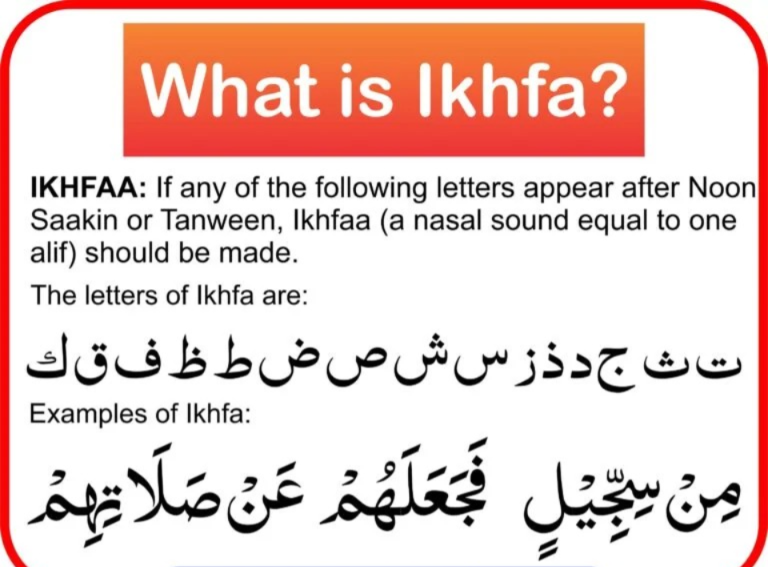
Ikhfa is a key Tajweed rule that helps make Quran recitation smooth and melodious. It involves partially hiding the sound of Noon Sakinah (نْ) or Tanween (ً ٌ ٍ) when followed by certain letters, creating a nasalized sound that flows naturally into the next letter. Mastering this rule ensures your recitation is both accurate and beautiful, while avoiding common pronunciation mistakes.
Definition of the Tajweed Ikhfa Rule
The Tajweed Ikhfa rule (الإخفاء) literally means “concealment” or “hiding.” It is applied when Noon Sakinah (نْ) or Tanween (ً ٌ ٍ) is followed by one of 15 specific letters. Instead of pronouncing the “N” sound clearly, it is partially hidden and nasalized (Ghunnah) for two counts (harakah). This sound falls between Izhar (clear) and Idgham (merged), creating a smooth transition to the next letter.
If you want to fully understand how Ikhfa fits within Tajweed rules, make sure to explore the Izhar rule for clear pronunciation and the Idgham rule for merging sounds. These rules work together to help you achieve accurate and balanced Quran recitation.
Check out our full guides on the Tajweed Izhar Rule and the Idgham Tajweed Rule to master all Noon Sakinah rules step by step.
Why the Tajweed Ikhfa Rule Is Important
The Ikhfa rule is important because it ensures correct pronunciation of the Quran, preserving the proper sounds of letters and their articulation. Applying it prevents mistakes like fully pronouncing the “N” sound or touching the tongue to the upper gum, which can distort the recitation. Mastering Ikhfa also enhances the beauty and flow of recitation, especially when transitioning between letters.
When the Tajweed Ikhfa Rule Applies
The Ikhfa rule is applied whenever Noon Sakinah or Tanween is followed by any of the 15 Ikhfa letters. The tongue stays near but does not touch the roof of the mouth, and the sound is nasalized for two counts.
Additional details:
- Heavy (full-mouth) letters like ص، ض، ط، ظ، ق produce a thicker nasal sound.
- Light (empty-mouth) letters produce a lighter nasal sound.
- Examples:
- مِنْ تَحْتِهَا (Min tahtiha)
- أَنْ كُنْتُمْ (An kuntum)
- يَنْصُرُ (Yansuru)
Ikhfa Letters in Tajweed
Ikhfa in Tajweed is the rule of partial concealment of Noon Sakinah (نْ) or Tanween (ًٌٍ) when followed by certain letters. This rule requires a nasalized sound (Ghunnah) held for two counts, creating a smooth transition between letters. Correct application of Ikhfa preserves the beauty and accuracy of Quranic recitation and helps avoid common mistakes, like fully pronouncing the Noon or neglecting the Ghunnah duration.
The 15 Letters of Ikhfa
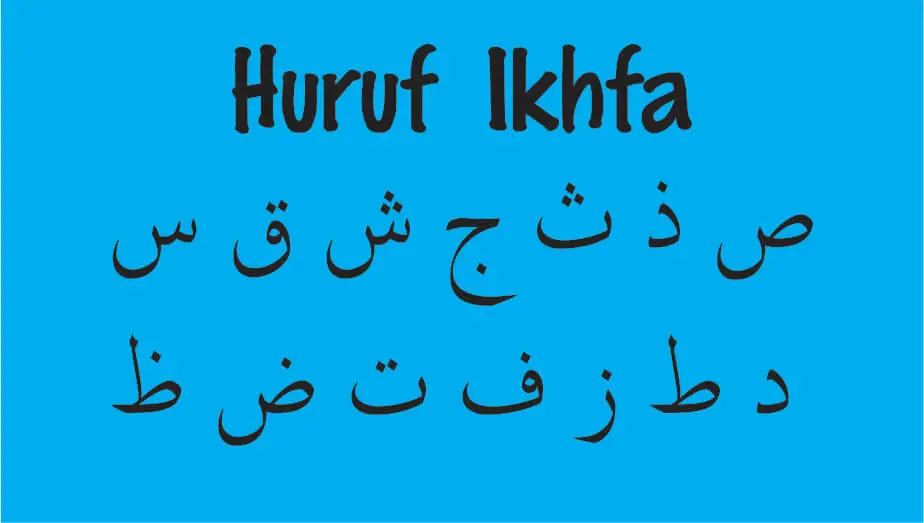
The Ikhfa rule applies specifically when Noon Sakinah or Tanween is followed by any of the 15 letters:
ت (Ta), ث (Tha), ج (Jeem), د (Dal), ذ (Dhal), ز (Zay), س (Seen), ش (Sheen), ص (Sad), ض (Dad), ط (Ta), ظ (Dha), ف (Fa), ق (Qaf), ك (Kaf)
To help memorize these letters, scholars use this mnemonic phrase:
صِفْ ذَا ثَنَا كَمْ جَادَ شَخْصٌ قَدْ سَمَا دُمْ طَيِّبًا زِدْ فِي تُقًى ضَعْ ظَالِمَا
Why These Letters Cause Ikhfa
These letters trigger Ikhfa because they require partial concealment of the Noon sound and blending with the following letter.
- Ghunnah (nasalization): The sound is pronounced from the nose for two counts.
- Heavy (full-mouth) letters like ص، ض، ط، ظ، ق produce a thicker Ghunnah.
- Light (empty-mouth) letters produce a lighter Ghunnah.
- Common mistakes to avoid:
- Pronouncing the Noon or Tanween fully (like Izhar)
- Fully merging the Noon with the next letter (like Idgham)
- Incorrect Ghunnah duration (too short or too long)
Examples of the Tajweed Ikhfa Rule

The Ikhfa rule in Tajweed involves partially concealing Noon Sakinah (نْ) or Tanween (ًٌٍ) and pronouncing it with a nasalized Ghunnah for two counts. The tongue stays close to the next letter without touching the roof of the mouth. Practicing examples from the Quran helps master correct pronunciation and avoid common mistakes.
Examples with Noon Sakinah
Some examples where Noon Sakinah is followed by an Ikhfa letter:
Light Ikhfa (thin Ghunnah):
- مِنْ تَحْتِهَا (Min tahtiha) – Taa
- إنْ كُنْتُمْ (An kuntum) – Kaaf
- مَنْ ذَا (Man dha) – Dhaal
Heavy Ikhfa (thick Ghunnah):
- يَنْصُرُ (Yansuru) – Saad
Other examples in the Qur’an:
- أنذر (Anthar) – Thaa
- فَانْصَبْ (Fansab) – Sad
Examples with Tanween
When Tanween is followed by an Ikhfa letter, the rule also applies, usually across two words:
- عَزِيزٌ ذُو (Azizun dha) – Dhaal
- جَنَّـٰتٍ تَجْرِى (Jannatin tajri) – Taa
- وَأَجْرٌ كَبِيرٌ (Wa ajrun kabeer) – across two words
Ikhfaa Shafawi (Meem Sakinah followed by Ba):
- عَلَيْهِم بُنْيَانًا (Alayhim bunyanan)
- تَرْمِيهِمْ بِحِجَارَةٍ (Tarmihim bihijaratin)
- كُنتُم بِهِ (Kuntum bihi)
How to Apply the Tajweed Ikhfa Rule Correctly
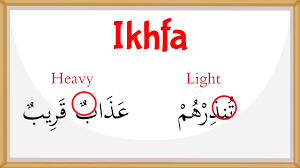
Applying the Tajweed Ikhfa rule correctly requires more than just knowing the letters. It involves understanding how to control the sound and position the tongue properly. You also need to maintain a balanced nasal tone (Ghunnah). Ikhfa is a middle state between clear pronunciation (Izhar) and full merging (Idgham). For this reason, it must be applied with precision and awareness.
To achieve this, learners should focus on three key aspects. First, hide the Noon sound properly. Second, maintain the correct two-count Ghunnah. Third, prepare the mouth for the next letter without fully pronouncing the Noon. In the following sections, we will explain each step in a simple and practical way. This will help you apply Ikhfa confidently in your recitation.
Hide the Noon Sound
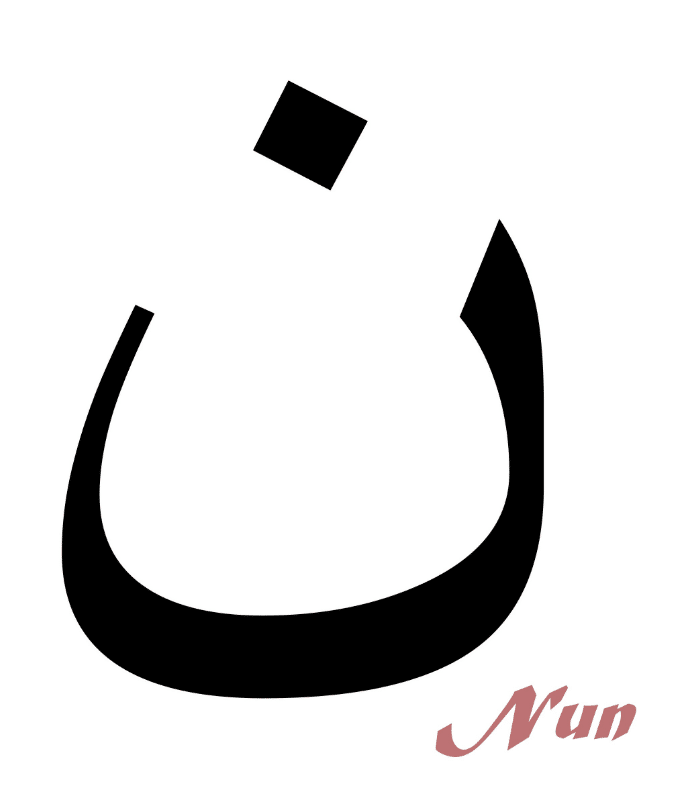
To apply the Ikhfa (concealment) rule in Tajweed, you need to hide the sound of Noon Sakinah (نْ) or Tanween (ًٌٍ) when it is followed by one of the 15 Ikhfa letters: ت, ث, ج, د, ذ, ز, س, ش, ص, ض, ط, ظ, ف, ق, ك. Instead of pronouncing the “N” sound clearly, the tongue hovers near the articulation point of the following letter without touching it. This partial concealment creates a smooth, flowing sound. For example, in مِن سَبِيلٍ (min sabeel), the Noon is hidden before the letter Seen, producing a soft, nasalized transition.
Ikhfa can occur within a single word or between two words, so you must always pay attention to any Noon Sakinah or Tanween in your recitation. Practicing with a skilled teacher and listening carefully helps you hide the Noon naturally, without making the sound too obvious or overly muted. This ensures your recitation is both correct and melodious.
Apply Ghunnah (Nasal Sound)
While hiding the Noon, it is essential to maintain Ghunnah, the nasal sound that lasts for two counts (Harakah). Ghunnah can be light or heavy depending on the following letter. Light Ghunnah occurs before letters like: س, ت, د, ف, while heavy Ghunnah occurs before letters like: ص, ض, ط, ظ, ق.
For instance, in مِن قَبْلُ (min qabl), the Ghunnah is heavy because of the Qaf, while in أَنْ تَبْرَأَ (an tabra’a), the Ghunnah is light due to the Taa.
Ghunnah is not just an extended sound. It is an essential part of Ikhfa. It connects the hidden Noon smoothly to the next letter.
Consistent practice is important. Feedback from a teacher also helps. This allows you to control the nasal sound correctly and give each letter its proper Ghunnah.
Prepare the Mouth for the Next Letter
Before pronouncing the letter following the Noon Sakinah, you must prepare your mouth and tongue for the new articulation point. This means positioning the tongue close to the correct spot without touching the roof of the mouth. For example, in مَنْ ثُمَّ (man thumma), the tongue approaches the position for Thaa before pronouncing the letter, allowing a smooth transition while maintaining the Ghunnah.
Proper mouth preparation is crucial to preserve the balance of sound and the duration of Ghunnah. If the mouth is not correctly positioned, the sound may become unclear or awkward. Therefore, it is recommended to practice transitions between letters carefully, paying attention to the tongue placement and whether the following letter requires light or heavy Ghunnah for perfect recitation.
Common Mistakes in the Tajweed Ikhfa Rule

While the Tajweed Ikhfa rule may seem simple in theory, many learners struggle with applying it correctly during recitation. Small mistakes in tongue placement, Ghunnah duration, or sound control can significantly affect the accuracy and beauty of the recitation.
Understanding these common mistakes is essential, as it helps you recognize and correct them early. In the following sections, we will highlight the most frequent errors learners make when applying Ikhfa and explain how to avoid them effectively.
Making the Noon Too Clear
One of the most common mistakes in applying Ikhfa is pronouncing the Noon Sakinah or Tanween too clearly, treating it like Izhar. Instead of hiding the sound, some learners make the “n” fully audible, which breaks the flow of recitation. This often happens when the tongue touches the upper palate or when the reader doesn’t focus on concealment. Practicing tongue proximity without touching the roof of the mouth helps maintain the soft, hidden Noon sound.
Fully Merging the Sound
Another frequent error is merging the Noon too strongly into the following letter, making it sound like Idgham. This over-emphasis removes the subtle concealment that Ikhfa requires and can distort the pronunciation. To avoid this, focus on partial blending: let the sound flow smoothly into the next letter while maintaining the Ghunnah, without turning it into a full merge. Listening to expert reciters and practicing slowly can help master the correct balance.
Weak or Missing Ghunnah
Incorrect Ghunnah duration is also common. Some learners hold the nasal sound too short or too long, or skip it entirely. Ghunnah should last two counts, with the thickness (Tafkheem or Tarqeeq) adjusted based on the following letter. Heavy letters like ق, ط, ض, ص, ظ require a stronger Ghunnah, while light letters like س, ت, د, ف need a lighter sound. Practicing with timing tools or counting beats can help maintain consistent Ghunnah and proper nasalization.
Ikhfa Shafawi and Letter Identification Errors
Errors often occur with Ikhfa Shafawi, where Meem Sakinah is followed by Baa (ب). Learners may over-press the lips or leave no gap, affecting the hidden sound. Additionally, misidentifying the 15 Ikhfa letters or applying the rule to the wrong letter disrupts the recitation. Studying examples from the Quran, such as verses containing ص, ض, ط, ظ, ك, helps solidify correct identification and application. Attention to detail ensures clarity, proper concealment, and mastery of the Ikhfa rule.
Tips to Master the Tajweed Ikhfa Rule

Mastering the Tajweed Ikhfa rule requires consistent practice, careful listening, and proper guidance. It is not just about memorizing the rule, but about training your ear and tongue to apply it naturally and smoothly in every recitation.
By following practical tips and proven techniques, you can improve your control over the Ghunnah, refine your pronunciation, and confidently apply Ikhfa with different letters. In the next sections, you will find effective tips to help you master this rule step by step.
Practice with Different Ikhfa Letters
Mastering Ikhfa requires consistent practice with the 15 Ikhfa letters: ت, ث, ج, د, ذ, ز, س, ش, ص, ض, ط, ظ, ف, ق, ك. Focus on partial concealment of the Noon Sakinah or Tanween while preparing to articulate the following letter. Pay attention to tongue placement: it should hover near the roof of the mouth without touching it. Practicing examples from the Quran, like “Min qabli” (مِنْ قَبْلِ) and “Anfusikum” (أَنْفُسِكُمْ), helps internalize thick vs. light Ikhfa depending on the next letter.
Listen and Repeat

Hearing the correct application of Ikhfa is crucial. Listen to professional Qaris to understand the subtle shift of the nasal sound before each Ikhfa letter. Repetition reinforces proper timing, ensuring the Ghunnah lasts for two counts (2 harakat). Mimicking their rhythm and pronunciation trains your ear and voice, avoiding common mistakes like making the Noon too clear or fully merging the sound like Idgham.
Learn with a Qualified Teacher
A qualified Qari or Tajweed teacher is essential to check your articulation (makhraj) and correct your Ghunnah, tongue placement, and letter concealment. They guide you in differentiating thick and light nasalization, correct Ikhfa Shafawi with Meem Sakinah before Baa (ب), and prevent misapplication of Ikhfa letters. Personal guidance ensures precision and builds confidence in your recitation.
Consistent Practice and Patience
Mastering Ikhfa, like all Tajweed rules, is a gradual journey. Daily practice, patience, and awareness of common mistakes—such as skipping Ghunnah, over-emphasizing the following letter, or confusing Ikhfa with Idgham—are key. With time, listening, and guidance, your recitation becomes accurate, melodic, and spiritually enriching, connecting you deeply to the Quranic words.
Listening to professional Qaris and practicing with a qualified teacher is essential. You can also explore other Tajweed rules to enhance your recitation further.
Check these guides:
Final Thought
Mastering the Tajweed Ikhfa rule is a key step toward achieving accurate and beautiful Quran recitation. It’s not just about memorizing rules, but about applying them with precision, consistency, and awareness. Through understanding how to properly conceal the Noon sound, apply the correct Ghunnah, and transition smoothly between letters, reciters can elevate their level and avoid common mistakes.
With continuous practice and dedication, Ikhfa becomes natural, allowing your recitation to flow with ease and clarity. More importantly, learning Tajweed deepens your connection with the Quran, turning every recitation into a meaningful and spiritually uplifting experience.
Learn the Tajweed Ikhfa Rule with Expert Teachers
At Areeb Academy, we help you master Ikhfa and all Tajweed rules through personalized one-on-one lessons designed to match your level and goals. Our expert teachers are native Arabic speakers who speak English fluently, ensuring clear explanations and accurate pronunciation guidance every step of the way.
Our structured Tajweed curriculum covers everything you need—from basic rules to advanced application—so you can build confidence and recite the Quran correctly and beautifully.
Join Areeb Academy today and book your free trial to start your journey toward mastering Tajweed with professional support and guidance.
FAQs About the Tajweed Ikhfa Rule
Q1: What is the Tajweed Ikhfa rule?
A: Ikhfa literally means “concealment.” It applies when Noon Sakinah (نْ) or Tanween (ً ٌ ٍ) is followed by one of 15 specific letters. The “N” sound is partially hidden and nasalized (Ghunnah) for two counts, creating a smooth transition to the next letter.
Q2: How is Ikhfa different from Izhar and Idgham?
A:
- Izhar: Noon is pronounced clearly.
- Idgham: Noon merges fully with the next letter.
- Ikhfa: Noon is partially hidden with a nasal sound (Ghunnah) for two counts, balancing clarity and blending.
Q3: What are common mistakes when applying Ikhfa?
A: The main mistakes include:
- Pronouncing the Noon too clearly (like Izhar)
- Merging the Noon too strongly (like Idgham)
- Incorrect Ghunnah timing (too short or too long)
- Errors with Ikhfa Shafawi (Meem Sakinah before Baa)
Q4: Can I practice Ikhfa on my own?
A: Yes, but consistent practice with a qualified teacher is highly recommended. Listening to professional reciters and mimicking their timing and pronunciation helps master Ikhfa accurately.
Q5: Does Ikhfa apply across two words?
A: Yes. Ikhfa can occur within a single word or between two words, as long as Noon Sakinah or Tanween is followed by an Ikhfa letter.