
Hamzatul Wasl and Qat’ are two essential concepts in Arabic pronunciation and Tajweed that every learner must understand to achieve accurate Quran recitation. Although they may look similar in written form, their pronunciation rules are completely different and have a major impact on how words are read and connected.
Hamzatul Wasl is known as the “connecting hamza” that you pronounce only at the beginning of speech and drop when you connect words together. On the other hand, Hamzatul Qat’ is the “cutting hamza” that you always pronounce clearly, regardless of its position in a word or sentence.
Understanding the difference between Hamzatul Wasl and Qat’ is a key step toward mastering fluent Arabic reading and correct Tajweed application, especially for Quran learners.
To build a strong foundation in Quran recitation, it is highly recommended to start with structured learning programs that explain the basics step by step. You can explore our guide on
Online Tajweed Lessons in English | Master Quran Recitation
which is designed to help beginners understand Tajweed rules in a simple and practical way before moving to advanced topics like Hamzatul Wasl and Hamzatul Qat’.
What Are Hamzatul Wasl and Qat’?
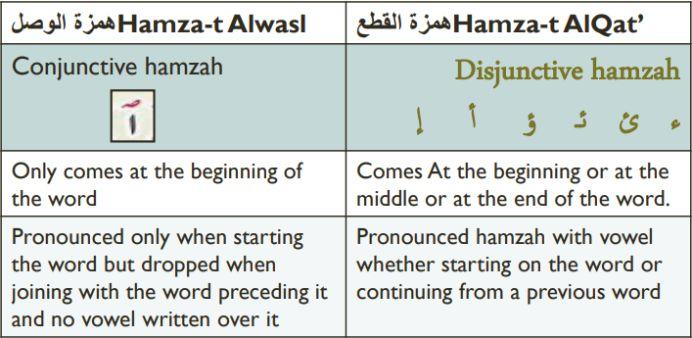
Hamzatul Wasl and Hamzatul Qat’ are two essential types of hamza in the Arabic language. Understanding the difference between them is crucial for correct pronunciation, especially in Quran recitation.
Both types appear at the beginning of words, but they behave very differently in pronunciation and usage. While one connects speech smoothly, the other is always clearly pronounced.
Definition of Hamzatul Wasl

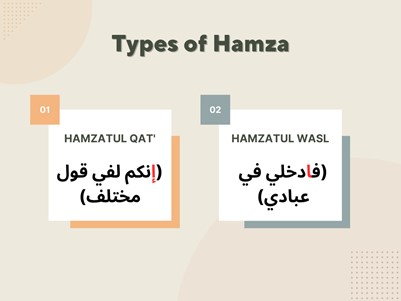
Hamzatul Wasl (ٱ) is called the “connecting hamza.” It appears only at the beginning of words, and you pronounce it only when you start speech from that word.
However, when you connect the word to what comes before it, the hamza becomes silent, and you skip it to keep the pronunciation smooth and continuous.
You commonly find it in:
- The definite article “Al-” (ال)
- Some nouns
- Imperative verbs
In the Quran, you often see it written as an alif with a small sign above it (like a small ص), or sometimes without any visible hamza.
Example:
- ٱلْجِدَارُ (Al-jidaaru – the wall)
- وَٱلْجِدَارُ → the hamza is not pronounced when connected
Definition of Hamzatul Qat’
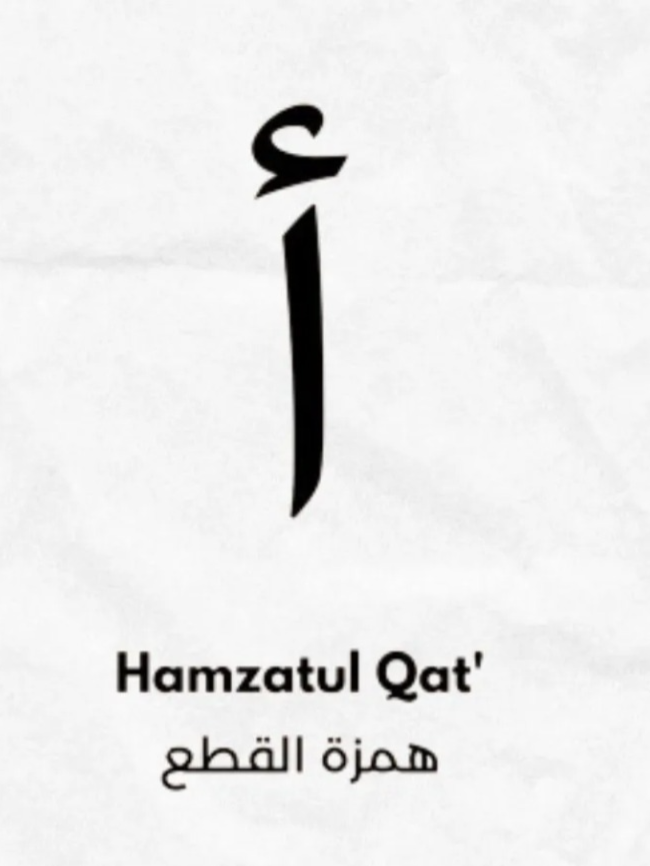
Hamzatul Qat’ (أ / إ) is called the “cutting hamza.” Unlike Hamzatul Wasl, you always pronounce it clearly, no matter where it appears in a sentence.
It can occur at:
- The beginning
- The middle
- The end of words
You write this hamza with a clear hamza sign above or below the alif (ء), which makes it easy to identify.
Examples:
- إِنَّ (Inna – indeed)
- أَكَلَ (Akala – he ate)
In all cases, the hamza sound must be pronounced fully and cannot be dropped.
Why This Rule Is Important in Quran Recitation
Understanding the difference between Hamzatul Wasl and Hamzatul Qat’ is essential for accurate Quran recitation.
First, it helps ensure correct pronunciation of words, especially when connecting verses. Mispronouncing a hamza can change the rhythm and sometimes even the meaning.
Second, Hamzatul Wasl supports a smooth and natural flow in recitation, while Hamzatul Qat’ preserves the clarity of specific words.
Finally, recognizing these two types of hamza allows learners to:
- Avoid common Tajweed mistakes
- Improve fluency
- Recite the Quran more beautifully and confidently
Many of these pronunciation rules are also closely connected with other Tajweed principles such as nasal sounds and articulation rules. For example, learners can strengthen their recitation by studying
Noon Sakinah Rules: 4 Steps for Perfect Quran Recitation
and understanding how pronunciation changes depending on different letter combinations.
Key Differences Between Hamzatul Wasl and Qat’
Hamzatul Wasl (connecting) and Hamzatul Qat’ (cutting) mainly differ in how we pronounce them, where they appear, and how they affect the flow of speech.
In simple terms, Hamzatul Wasl connects words smoothly, while Hamzatul Qat’ produces a clear, permanent sound that we never skip.
When the Hamza Is Pronounced
You pronounce Hamzatul Wasl and Qat’ only when you start speech or begin after a pause. At that point, Hamzatul Wasl takes a vowel sound (usually “i” or “a”) like a regular starting hamza.
But when you connect the word to what comes before it, you drop the sound completely, and the pronunciation continues smoothly without it.
Example:
- اِسْم (ism) → pronounced at the beginning
- بِسْمِ الله → the hamza is dropped in connected speech
On the other hand, you always pronounce Hamzatul Wasl and Qat’ (specifically Hamzatul Qat’), no matter where it appears in a sentence—at the beginning, middle, or end.
Examples:
- أَحْمَد (Ahmad)
- إِنَّ (Inna)
- سَأَلَ (sa’ala)
In all cases, the hamza sound remains clear and cannot be omitted.
When the Hamza Is Dropped
Hamzatul Wasl is dropped whenever it is preceded by another word. This allows Arabic to maintain a smooth, flowing pronunciation without interruption.
For example:
- وَ + ٱلْكِتَاب → pronounced “wal-kitaab” (not “wa-al-kitaab”)
Also, when Tanween comes before Hamzatul Wasl, the sound merges smoothly:
- كِتَابٌ ٱسْمُهُ → pronounced “kitaabunsmuhu”
In contrast, Hamzatul Qat’ is never dropped. It stays ثابت (fixed) in pronunciation and always creates a clear glottal stop, even in the middle of connected speech.
Hamzatul Wasl Rules Explained

Hamzatul Wasl is one of the most important pronunciation rules in Arabic, especially in Quran recitation. It is not just a letter, but a tool that helps you connect words smoothly, making speech more natural and fluent.
Unlike the regular hamza, Hamzatul Wasl is temporary—it appears only when needed and disappears when you connect words.
Hamzatul Wasl and Qat’ are key concepts you must understand to improve your Tajweed and recitation accuracy.
What Is Hamzatul Wasl?
Hamzatul Wasl (همزة الوصل) is a connecting hamza that appears at the beginning of certain Arabic words.
We pronounce it only when we start speech or after a pause, but we drop it completely when we connect the word to what comes before it.
In the Quran, we usually see it written as:
- ٱ (alif with a small ص-like symbol on top)
- or a plain alif (ا) without a visible hamza
Its main purpose is to make pronunciation easier and smoother, acting like a bridge between words.
When Do You Pronounce It?

You pronounce Hamzatul Wasl only when starting from that word.
At that point, it must take a vowel sound, which depends on the word type:
- Fatha (a) → mainly with the definite article “ال”
- Example: ٱلْحَمْدُ → Al-hamdu
- Kasra (i) → the most common (especially in nouns and many verbs)
- Example: ٱسْم → Ism
- Dammah (u) → when the third letter of the verb has a dammah
- Example: ٱدْخُلُوا → Udkhulū
👉 A key rule:
For verbs, you determine the vowel of Hamzatul Wasl by looking at the third letter of the word.
When Is It Dropped (Connecting Words)?
You completely drop Hamzatul Wasl when you connect the word to what comes before it.
Instead of pronouncing the hamza, you directly join the previous letter to the next letter smoothly without a break.
Examples:
- بِسْمِ الله → Bismillah (not Ism Allah)
- وَٱلْكِتَاب → Wal-kitaab (not Wa al-kitaab)
Also:
After tanween, the sound merges smoothly:
- كِتَابٌ ٱسْمُهُ → kitaabun-smuhu
👉 The goal here is to maintain a natural, smooth flow in pronunciation without sudden pauses.
Common Words with Hamzatul Wasl
Hamzatul Wasl appears in specific, limited patterns, which makes it easier to recognize:
1. The Definite Article (ال)
- Always Hamzatul Wasl
- Example: ٱلْكِتَاب (the book)
2. Specific Nouns (Most Important to Memorize)
Common ones include:
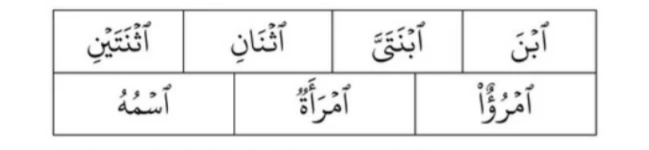
- ٱسْم (name)
- ٱبْن (son)
- ٱبْنَة (daughter)
- ٱمْرَأَة (woman)
- ٱثْنَيْن (two – masculine)
- ٱثْنَتَيْن (two – feminine)
3. Verbs
Hamzatul Wasl appears in:
- Imperative verbs (commands)
- ٱقْرَأْ (Read)
- ٱذْهَبْ (Go)
- Five-letter and six-letter verbs (past, command, verbal noun)
- ٱسْتَغْفَرَ (he sought forgiveness)
- ٱسْتَخْرِجْ (extract)
✨ Quick Insight
Think of Hamzatul Wasl as a bridge:
- It appears when you need to start speaking
- It disappears when words are already connected
And that’s exactly what makes Arabic sound smooth, rhythmic, and natural—especially in Quran recitation.
Hamzatul Qat’ Rules Explained

Hamzatul Qat’ (همزة القطع) is a permanent and clearly pronounced hamza in Arabic. It is one of the most important sounds in Tajweed because it ensures clarity, precision, and meaning distinction in words.
Hamzatul Qat’ differs from Hamzatul Wasl because it never drops in speech, and the reader always articulates it clearly.
What Is Hamzatul Qat’?
Hamzatul Qat’ is a cutting hamza (ء) that produces a clear glottal stop from the deepest part of the throat.
It can appear:
- At the beginning of a word
- In the middle of a word
- At the end of a word
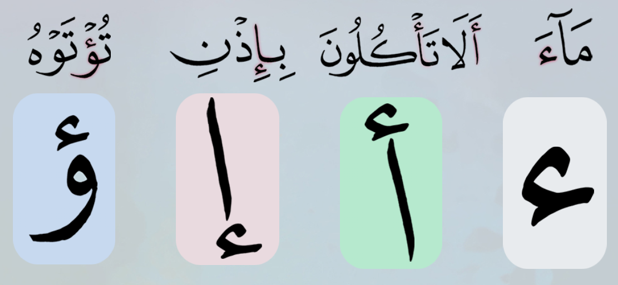
It is written in different forms:
- أ / إ (on or under alif)
- ؤ (on waw)
- ئ (on ya)
- ء (standalone form)
Examples:
- أَكَلَ (he ate)
- إِيمَان (faith)
- سَأَلَ (he asked)
- مَلْجَأ (refuge)
👉 Key idea: It is always part of the word’s structure, not optional.
Why It Is Always Pronounced
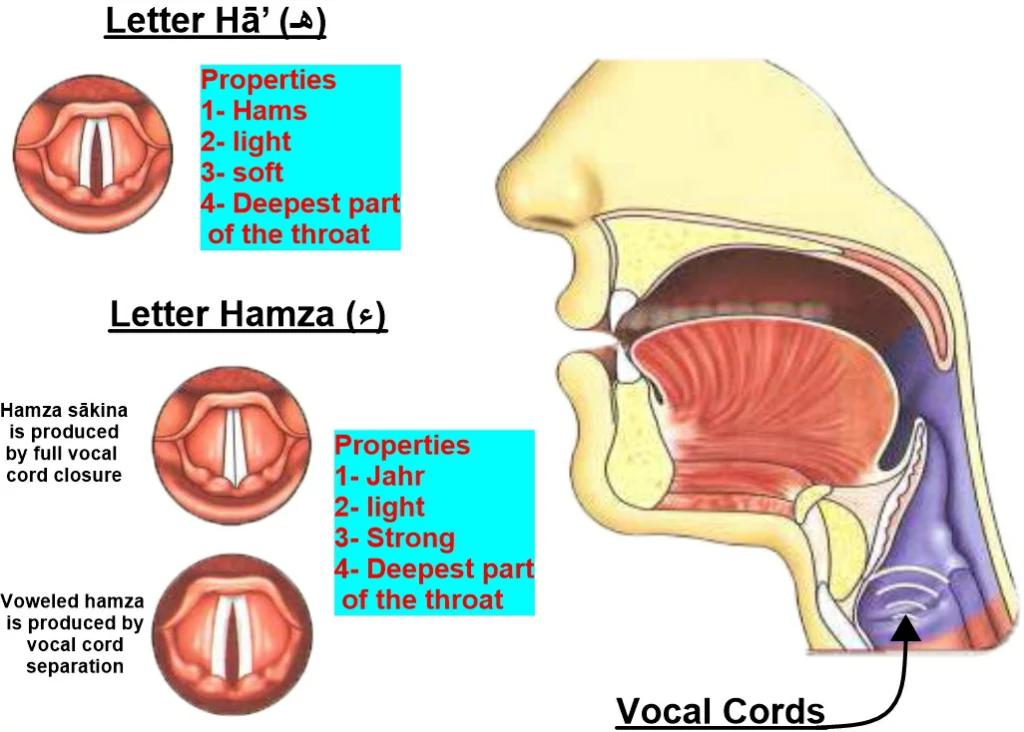
Hamzatul Qat’ is always pronounced because it is a fixed, essential letter in the word.
It creates a clear “break” or “cut” in sound, which:
- Preserves correct meaning
- Ensures accurate pronunciation
- Prevents confusion between similar words
Even when reading fluently or connecting words in a sentence, the hamza sound never disappears.
Example:
- أَحْمَد (Ahmad) → always pronounced
- سَأَلَ (sa’ala) → the glottal stop is clearly heard
👉 In simple terms:
If it’s Hamzatul Qat’, you must say it every time—no exceptions.
Examples from the Quran
Hamzatul Qat’ appears frequently in the Quran in nouns, verbs, and particles.
1. At the Beginning of Words
- قُلْ هُوَ اللَّهُ أَحَدٌ — Surah Al-Ikhlas (112:1)
→ Ahad starts with a clear Hamzatul Qat’ - إِنَّا أَعْطَيْنَاكَ الْكَوْثَرَ — Surah Al-Kawthar (108:1)
→ Both Inna and A’taynaaka begin with pronounced hamza
2. In the Middle of Words
- الْمُؤْمِنُونَ — Surah Al-Mu’minun (23:1)
→ The hamza sits inside the word and is clearly pronounced - يُؤْمِنُونَ — Surah Al-Baqarah (2:3)
→ The glottal stop appears in the middle
3. At the End of Words
- شَيْءٍ — Surah Al-Baqarah (2:284)
→ Ends with a pronounced hamza sound - جَاءَ — Surah An-Nasr (110:1)
→ The hamza is clearly heard at the end
✨ Quick Insight
Think of Hamzatul Qat’ as a strong, fixed sound marker:
- It never disappears
- It always interrupts the flow slightly
- It ensures clarity in meaning and pronunciation
Quick Chart: Hamzatul Wasl and Qat’
To clearly understand the difference between Hamzatul Wasl and Hamzatul Qat’, it is helpful to compare them side by side. While both appear at the beginning of Arabic words, their pronunciation rules and behavior in recitation are completely different.
This quick chart summarizes the most important points for easy revision.
Easy Table for Quick Revision
| Feature | Hamzatul Wasl (همزة الوصل) | Hamzatul Qat’ (همزة القطع) |
|---|---|---|
| Meaning | Connecting hamza | Cutting hamza |
| Pronunciation (start) | Pronounced only when starting | Always pronounced |
| Pronunciation (connection) | Dropped in connected speech | Never dropped |
| Position in word | Only at the beginning | Beginning, middle, and end |
| Written form | Alif without hamza sign (ٱ / ا) | Written clearly (أ / إ / ء / ئ / ؤ) |
| Function | Connects words smoothly | Creates a clear stop in sound |
| Type of sound | Soft transition | Strong glottal stop |
| Quran recitation role | Ensures flow and fluency | Ensures clarity and meaning |
| Example | ٱسْم، ٱهْدِنَا، ٱلْحَمْدُ | أَحْمَد، إِنَّ، سَأَلَ |
Memory Tips to Avoid Confusion

To never mix between Hamzatul Wasl and Hamzatul Qat’, use these simple memory tricks:
1. “Drops or Stays” Rule
- If the hamza drops when connecting → Wasl
- If the hamza always stays → Qat’
2. “Bridge vs Stop” Idea
- Hamzatul Wasl = bridge (connects words smoothly)
- Hamzatul Qat’ = stop sign (forces clear pronunciation)
3. Quick Quran Clue
- If you see ٱ (small ص on alif) → Wasl
- If you see أ / إ / ء → Qat’
4. Simple Test Trick
Try adding a word before it:
- If pronunciation changes or the hamza disappears → Wasl
- If pronunciation stays the same → Qat’
✨ Final Insight
Hamzatul Wasl is about flow, while Hamzatul Qat’ is about clarity. Mastering both is what gives Quran recitation its beauty, rhythm, and precision.
Common Mistakes Students Make

While learning Hamzatul Wasl and Hamzatul Qat’, many students face similar mistakes. These errors usually affect pronunciation, fluency, and sometimes even the meaning during Quran recitation. Understanding them early helps avoid long-term habits that are hard to fix later.
Pronouncing Hamzatul Wasl in the Middle of Speech
One of the most common mistakes is pronouncing Hamzatul Wasl when it should be dropped during connected recitation.
Students sometimes treat it like a regular hamza, even when it comes after another word.
Example mistake:
- Saying: Bismi Allah ❌
- Correct: Bismillah ✔️
Hamzatul Wasl should disappear completely in connected speech, allowing smooth flow between words.
Dropping Hamzatul Qat’ Incorrectly
Another serious mistake is dropping Hamzatul Qat’, thinking it behaves like Hamzatul Wasl.
But Hamzatul Qat’ is always pronounced, no matter where it appears.
Example mistake:
- Saying: iman instead of ʾīmān ❌
- Saying: akal instead of ʾakala ❌
This mistake can also change meaning or reduce clarity, which is why it is very important in Tajweed.
Confusing Similar Words
Many learners also confuse words that look similar but differ due to Hamzatul Wasl or Qat’.
This leads to incorrect pronunciation or misunderstanding during recitation.
For example:
- ٱسْم (ism – name) → Hamzatul Wasl
- أَسْمَاء (asmaa – names) → Hamzatul Qat’
Even a small difference in the type of hamza can completely change the way a reader pronounces a word and understands its meaning.
These mistakes are not limited to Hamzatul Wasl and Qat’ only. Similar pronunciation challenges also appear in other Tajweed areas, such as the rules of Meem Sakinah. You can learn more in
Meem Sakinah Rules: Perfect Your Quran Recitation in Minutes
to avoid common errors and improve fluency in connected recitation.
Tips to Master Hamzatul Wasl and Qat’
Mastering these two types of hamza requires practice, listening, and repetition, not just theory. With consistent effort, recognition becomes automatic during recitation.
Practice with Short Quran Verses
Start with short and frequently recited verses, especially from Surah Al-Fatihah and Al-Ikhlas.
Focus on:
- Where Hamzatul Wasl is dropped
- Where Hamzatul Qat’ is always pronounced
Repeated reading helps build natural fluency.
Listen to Skilled Reciters
Listening to experienced Quran reciters helps train the ear to recognize correct pronunciation.
Pay attention to:
- Where the sound flows smoothly (Wasl)
- Where a clear stop appears (Qat’)
This improves both accuracy and Tajweed application over time.
Learn with a Qualified Tajweed Teacher

Self-learning is helpful, but guided correction is essential.
A qualified teacher can:
- Correct pronunciation mistakes immediately
- Explain subtle differences clearly
- Train you to apply rules naturally in recitation
This is especially important for avoiding long-term mistakes in Quran reading.
Another powerful way to improve your recitation accuracy is practicing sound-based Tajweed rules that train your ear for subtle differences in pronunciation. One great example is
Tajweed Qalqalah Rule – Learn to Hear & Recite the Echo Perfectly
which helps learners master the echoing sound effect in Arabic letters.
Final Thoughts on Hamzatul Wasl and Qat’
Mastering Hamzatul Wasl and Hamzatul Qat’ is not just about memorizing rules—it is about training your tongue, ear, and heart to recite the Quran with clarity, fluency, and confidence. Once you understand when to connect and when to pronounce clearly, your recitation becomes more natural and spiritually connected.
This knowledge is a foundation for anyone serious about improving their Quran reading and Arabic pronunciation.
Learn Tajweed and Fusha Arabic with Areeb Academy
If you want to take your recitation to the next level, learning with a structured program can make a huge difference. At Areeb Academy, we help students master Tajweed and Fusha Arabic in a simple and effective way.
Why Areeb Academy?
- ⭐ Certified and experienced teachers who specialize in Tajweed and Arabic teaching
- 📚 Clear step-by-step learning system for beginners and advanced learners
- 🕒 Flexible schedules that fit your availability and daily routine
- 🎯 Focus on practical recitation, not just theory
Whether you are starting your Quran journey or aiming to perfect your recitation, Areeb Academy provides the guidance and support you need.
🚀 Book Your Free Trial Today
Start your journey with a free trial session and experience how personalized learning can transform your Quran recitation and Arabic skills. Join Areeb Academy today and take the first step toward mastering Tajweed with confidence.
FAQs about Hamzatul Wasl and Hamzatul Qat’
1. What is the main difference between Hamzatul Wasl and Hamzatul Qat’?
Hamzatul Wasl connects words smoothly and appears only when a reader starts speech from a word. The reader drops it when continuing from the previous word to maintain a natural flow. In contrast, Hamzatul Qat’ always produces a clear pronunciation in every position. The reader pronounces it at the beginning, middle, or end of a word without omitting it in any context.
2. When do we pronounce Hamzatul Wasl in recitation?
You pronounce Hamzatul Wasl only when starting from the word itself. If the word comes after another word in connected speech, the hamza is completely dropped for smooth pronunciation.
3. Can Hamzatul Qat’ ever be dropped in Quran recitation?
No. Hamzatul Qat’ is always pronounced clearly in all situations. Dropping it is a mistake because it is an essential part of the word’s structure and meaning.
4. How can I easily recognize Hamzatul Wasl in the Quran?
Hamzatul Wasl is usually written as:
- An alif without a clear hamza sign (ا)
- Or an alif with a small symbol (ٱ)
It commonly appears in Al- (ال), certain nouns like ٱسْم, and some verbs.
5. Does Hamzatul Wasl affect the meaning of words?
Hamzatul Wasl itself does not change meaning, but incorrect pronunciation (like not dropping it when connecting or misplacing it) can affect fluency and sometimes clarity in recitation.
6. Why is learning these two types of hamza important in Tajweed?
Understanding them is essential because it helps you:
- Recite the Quran correctly
- Maintain smooth flow in connected speech
- Avoid pronunciation mistakes
- Improve fluency and confidence in recitation