
Arabic Lessons for Qatar residents are becoming increasingly important for anyone living, working, or planning to settle in Qatar. While English is widely spoken, Arabic remains the official language and plays a central role in daily communication, business, and cultural identity across the country.
For expats, professionals, and families, learning Arabic is more than just a skill—it’s a way to better integrate into society, build stronger relationships, and take advantage of new personal and career opportunities. Whether you’re focusing on spoken Gulf Arabic for everyday interactions or Modern Standard Arabic for formal use, there are flexible learning options designed to suit different goals and lifestyles.
In this guide, we’ll explore the best Arabic lessons for Qatar residents, who they are suitable for, and how to choose the right learning path to achieve real progress.
Why Arabic Lessons Are Important for Qatar Residents
Living in Qatar offers a unique experience where modern international life blends with deep-rooted Arab culture. While English is widely used, Arabic remains the official language and a key part of daily interactions, traditions, and professional environments. Taking Arabic lessons is not just about learning a language—it’s about fully experiencing life in Qatar, both socially and professionally.
Living in an Arabic-Speaking Environment

Even though Qatar has a large expatriate population, Arabic is still the language that shapes the country’s identity. From government institutions to cultural traditions, Arabic plays a central role in everyday life.
Many residents fall into the “expat bubble,” relying only on English. However, those who make the effort to learn Arabic often discover a completely different side of Qatar. Locals are known for their hospitality, and even basic Arabic phrases can open doors to meaningful conversations, friendships, and unique opportunities.
Additionally, Qatar offers exposure to a wide range of Arabic dialects. You’ll hear not only Qatari Arabic but also Egyptian, Levantine, and North African dialects due to the diverse Arab community. This makes it one of the best environments to practice and improve your Arabic skills in real-life situations.
How Arabic Lessons Can Improve Communication for Qatar Residents

Learning Arabic makes everyday life in Qatar smoother and more enjoyable. Simple tasks—like shopping in local markets (souqs), asking for directions, or interacting with service workers—become easier when you understand the language.
It also helps you:
- Read signs, menus, and official notices
- Communicate in places where English is less common
- Handle daily situations with more confidence
Even basic conversational Arabic can significantly improve how you navigate the country. Instead of relying on translations or switching to English, you become more independent and connected to your surroundings.
Cultural and Professional Advantages of Arabic Lessons for Qatar Residents
Arabic lessons provide both cultural depth and career benefits for Qatar residents.
Culturally, learning Arabic allows you to better understand local customs, Islamic traditions, and social etiquette. It gives you access to Arabic media, literature, and authentic cultural experiences that are often missed by non-speakers.
Professionally, Arabic can be a strong advantage in the job market. Many industries in Qatar—such as government, business, and finance—value employees who can communicate in Arabic. In some cases, Arabic is required for official documents, contracts, and workplace communication.
Moreover, speaking Arabic helps you build stronger relationships with colleagues and clients, which can lead to better collaboration and new career opportunities.
Who Needs Arabic Lessons in Qatar?

Arabic lessons in Qatar are not limited to one specific group—they’re valuable for anyone who wants to live, work, or connect more deeply within the country. Whether you’re an expat, a student, or a professional, learning Arabic can significantly improve your experience and open new opportunities.
Expats Living in Doha and Beyond
Qatar is home to a large expatriate community, and many residents rely heavily on English in their daily lives. However, expats who learn Arabic often find it much easier to integrate into society.
Even basic Arabic helps you step outside the “expat bubble” and engage more authentically with the local community. It allows you to build genuine friendships with locals, understand social norms, and experience Qatari culture beyond a surface level.
Many learners also discover that locals are more welcoming and open when you make the effort to speak their language—even if it’s simple greetings or small talk.
Read our blog post about Arabic Greetings for Beginners and discover how basic Arabic can help you speak and connect like a native.
Children in International Schools
Children living in Qatar, especially those enrolled in international schools, benefit greatly from learning Arabic early on.
Arabic lessons help them:
- Adapt better to their environment
- Communicate with a wider community
- Build strong language skills from a young age
Since Arabic is part of the region’s identity, early exposure gives children a long-term advantage both academically and socially. Many programs in Qatar are designed specifically for non-native speakers, making the learning process engaging and age-appropriate.
Professionals and Business Owners

For professionals working in Qatar, Arabic can be a powerful career asset. While English is commonly used in business, Arabic is often essential when dealing with local clients, government entities, and official documentation.
Learning Arabic helps professionals:
- Build stronger relationships with clients and colleagues
- Communicate more effectively in meetings and negotiations
- Gain a competitive edge in industries like business, tourism, and finance
In many cases, companies value employees who can bridge the language gap, especially in roles that require direct interaction with Arabic-speaking stakeholders.
New Residents and Travelers
If you’ve recently moved to Qatar—or even if you’re staying for a shorter period—learning Arabic can make your experience much smoother.
It helps you:
- Navigate daily life with confidence
- Understand local customs and etiquette
- Feel more comfortable in social situations
For travelers and new residents alike, Arabic adds depth to your experience. Instead of just visiting places, you start to understand the culture, connect with people, and engage more meaningfully with your surroundings.
Types of Arabic Lessons for Qatar Residents
Arabic lessons in Qatar come in different formats and styles, depending on your goals. Some learners focus on daily communication, while others need formal Arabic for work or academic purposes. For most residents, combining conversational Arabic with basic Modern Standard Arabic (MSA) offers the best results for long-term living in Qatar.
Arabic Fusha (Modern Standard Arabic)
Modern Standard Arabic (MSA), also known as Fusha, is the formal version of the language used across the Arab world. It is commonly found in:
- Official documents and government communication
- News, media, and formal writing
- Business correspondence and professional settings
Learning MSA is especially useful for professionals who deal with contracts, reports, or formal emails. It also builds a strong foundation in grammar, reading, and writing, making it easier to understand Arabic as a whole.
However, MSA is not typically used in everyday conversations, which is why many learners combine it with a spoken dialect.
Read our blog post about Learn Fusha Arabic and discover how to master Modern Standard Arabic step-by-step from home, building strong reading, writing, and grammar skills.
Conversational Arabic (Dialects)

Conversational Arabic focuses on real-life communication. In Qatar, this usually means learning Gulf (Khaleeji) Arabic, along with exposure to other widely spoken dialects like Egyptian or Levantine Arabic.
This type of course helps you:
- Handle daily interactions such as greetings, asking questions, and shopping
- Communicate with locals and Arabic-speaking residents
- Build confidence in speaking and listening
Many spoken Arabic courses use transliteration (Arabic written in English letters) to make learning easier for beginners. These courses are often practical, fast-paced, and focused on real situations like shopping, ordering food, or socializing.
Quran and Tajweed Classes
For those interested in religious learning, Quran and Tajweed classes are widely available in Qatar. These lessons focus on:
- Correct pronunciation (Makharij)
- Applying Tajweed rules accurately
- Reading and memorizing the Quran properly
This type of Arabic learning is especially important for Muslims who want to deepen their understanding of the Quran and improve their recitation. It also helps learners connect with the spiritual and linguistic beauty of Arabic.
Arabic for Kids
Arabic courses for children are designed to be interactive and engaging, helping young learners build language skills in a natural way.
These programs usually include:
- Basic reading and writing
- Simple vocabulary and conversation
- Games, activities, and storytelling
Learning Arabic at a young age helps children adapt more easily to life in Qatar, especially if they are attending international schools. It also gives them a long-term advantage in both education and communication.
Read our blog post about Arabic Conversation Course for Kids and discover how your child can start speaking Arabic confidently through fun and interactive learning.
Benefits of Online Arabic Lessons for Qatar Residents

Online Arabic lessons have become one of the most practical options for residents in Qatar, especially for busy professionals and families. With flexible schedules, personalized teaching, and access to native instructors, learning Arabic online makes it easier to stay consistent and see real progress—without disrupting your daily routine.
Flexible Scheduling to Fit Your Routine
One of the biggest advantages of online Arabic lessons is flexibility. Life in Qatar can be fast-paced, especially for expats managing work, family, and social commitments.
Online courses allow you to:
- Choose lesson times that fit your schedule (evenings or weekends)
- Learn at your own pace without pressure
- Continue lessons even while traveling
This flexibility makes it much easier to stay consistent, which is key when learning a new language.
Learn Arabic Lessons from Home Comfortably for Qatar Residents
With online learning, there’s no need to deal with traffic, long commutes, or fixed classroom locations. You can learn Arabic from the comfort of your home—or anywhere that suits you.
This makes learning:
- More convenient and less time-consuming
- Less stressful, especially after a long workday
- Easier to integrate into your daily routine
For many residents in Qatar, this convenience is what makes online lessons a sustainable long-term option.
One-on-One Personalized Arabic Lessons

Online Arabic courses often offer private, one-on-one sessions tailored to your specific goals.
Whether you want to focus on:
- Conversational Arabic for daily life
- Business Arabic for work
- Reading and writing skills
Your learning plan can be customized to match your level and objectives. This personalized approach helps you progress faster compared to general group classes.
Access to Native Arabic Teachers
Another major benefit is the ability to learn directly from native Arabic speakers, no matter where they are located.
This gives you:
- Authentic pronunciation and real-life expressions
- Exposure to different dialects (like Gulf, Egyptian, or Levantine)
- Better listening and speaking skills through real conversations
Learning with native teachers also helps you understand cultural nuances, making your communication more natural and effective.
How to Choose the Best Arabic Lessons for Qatar Residents
Choosing the right Arabic lessons in Qatar depends on your goals, schedule, and learning style. With so many options available—both online and in-person—it’s important to focus on quality, flexibility, and real results rather than just price or convenience.
Check Teacher Experience and Qualifications

The quality of your teacher can make a huge difference in how fast you learn Arabic. Look for instructors who:
- Are native Arabic speakers
- Have experience teaching non-native learners
- Can teach both conversational Arabic and basic grammar clearly
Experienced teachers know how to simplify complex concepts, correct your pronunciation, and guide you step by step—especially if you’re starting from zero.
Look for Flexible Scheduling Options

If you’re living in Qatar, chances are you have a busy routine. That’s why flexibility is key when choosing Arabic lessons.
The best courses will offer:
- Evening or weekend classes
- Online options that fit your work schedule
- Easy rescheduling of lessons
Flexible scheduling helps you stay consistent without feeling overwhelmed, which is essential for long-term progress.
Read Reviews and Testimonials
Before committing to any course or center, take time to check reviews from other students.
Look for feedback about:
- Teaching quality and communication style
- Course structure and organization
- Real results (speaking confidence, progress, etc.)
Honest reviews can give you a clear idea of what to expect and help you avoid wasting time or money on ineffective programs.
Start with a Free Trial Lesson
A trial lesson is one of the best ways to decide if a course is right for you. Many platforms and centers offer a free or low-cost first session.
During the trial, pay attention to:
- How the teacher explains and interacts
- Whether the lesson matches your level
- How comfortable you feel speaking and asking questions
If the session feels engaging and clear, it’s a good sign you’re on the right track.
What to Expect from Arabic Lessons for Qatar Residents at Areeb Academy
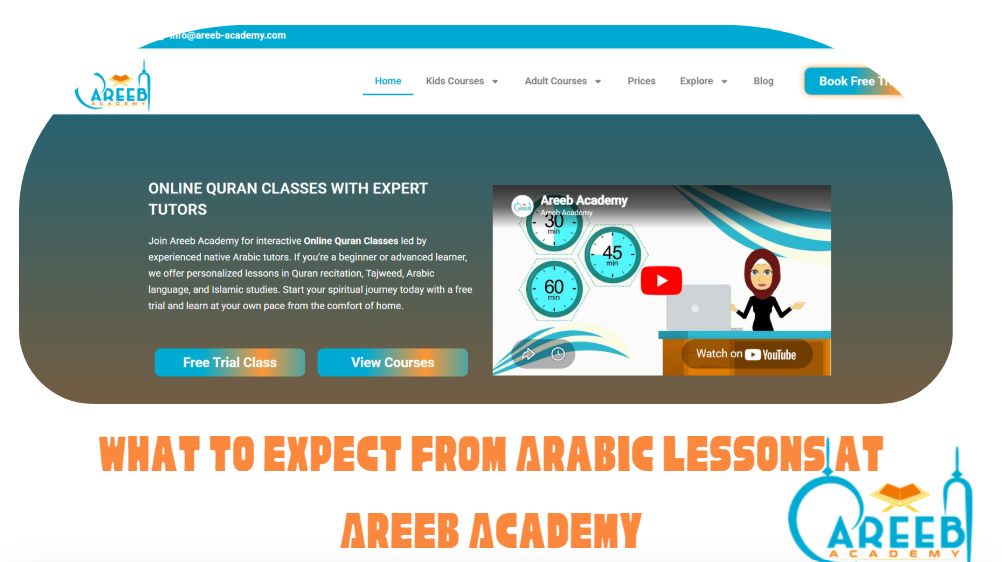
Arabic lessons at Areeb Academy are designed to take you from beginner to confident speaker through a structured, practical, and personalized approach. Instead of focusing only on memorization, the learning experience is built around real communication, gradual progress, and continuous support.
Initial Level Assessment
Before starting your lessons, you’ll go through a simple level assessment to determine your current skills.
This helps the instructors understand:
- Your familiarity with the Arabic alphabet and sounds
- Your speaking and listening level
- Your learning goals (daily conversation, business, Quran, etc.)
Based on this, you won’t waste time repeating what you already know or jumping into a level that’s too advanced.
Customized Learning Plan through Arabic Lessons for Qatar Residents
Every learner is different, which is why Areeb Academy creates a personalized learning plan tailored to your needs.
Your plan may focus on:
- Basic vocabulary and daily phrases for beginners
- Conversational Arabic for real-life situations
- Grammar and sentence structure for accuracy
- A mix of dialect and Modern Standard Arabic (MSA) depending on your goals
This customized approach ensures faster progress and keeps you motivated throughout your learning journey.
Interactive Teaching Methods
Lessons are designed to be engaging and practical, not just theoretical.
You can expect:
- Real-life conversations and role-playing
- Listening and speaking practice from day one
- Pronunciation training (sounds and articulation)
- Learning phrases in context instead of isolated words
This method helps you actually use Arabic, not just understand it. Over time, you’ll notice improved confidence in speaking and better comprehension in real situations.
Continuous Progress Tracking
Your progress is regularly monitored to make sure you’re improving consistently.
This includes:
- Ongoing feedback from your instructor
- Regular assessments to measure your progress
- Adjustments to your learning plan when needed
Instead of feeling stuck or lost, you’ll always know where you stand and what your next step is.
Common Challenges and How to Overcome Them

Learning Arabic can feel challenging at first, especially for English speakers, due to its unique sounds, script, and grammar structure. However, with the right strategies and consistent practice, these challenges become manageable and your progress becomes much faster and more natural.
Difficulty with Pronunciation
One of the most common challenges is pronunciation, especially sounds that don’t exist in English such as ع, ح, ق, ص, ض. These require practice and patience.
To overcome this:
- Listen closely to native speakers and imitate them (shadowing technique)
- Practice daily mouth and throat exercises to get used to new sounds
- Start with simple words before moving to full sentences
- Use audio-based learning to strengthen listening and pronunciation skills
With repetition, your tongue and ear gradually adapt, and these sounds become much easier.
Limited Practice Opportunities
Many learners struggle because they don’t have enough exposure to Arabic outside the classroom.
To solve this:
- Practice with native speakers whenever possible
- Use language exchange apps like Tandem or italki
- Watch Arabic movies, shows, or YouTube content with subtitles
- Try using simple Arabic in daily situations like greetings or shopping
The more you expose yourself to the language, the faster your fluency develops.
Staying Consistent
Consistency is one of the biggest factors in successful language learning. Arabic requires regular exposure to keep improving.
Helpful strategies include:
- Studying for short periods every day instead of long, occasional sessions
- Using flashcards or spaced repetition apps like Anki for vocabulary
- Setting small, realistic goals (e.g., 5–10 new words daily)
- Revising regularly to avoid forgetting what you’ve learned
Even small daily effort leads to strong long-term progress.
Final Thoughts on Arabic Lessons for Qatar Residents
Learning Arabic in Qatar is more than just picking up a new language—it’s a way to connect more deeply with the culture, improve daily communication, and unlock better personal and professional opportunities. Whether you choose spoken Gulf Arabic for everyday conversations or Modern Standard Arabic for formal use, the key to success is consistency, practice, and the right learning environment.
With so many options available, the most important factor is choosing a program that actually fits your goals and lifestyle. That’s where the right academy makes all the difference.
At Areeb Academy, Arabic learning is designed to be simple, flexible, and effective. You’ll be guided by highly qualified native-speaking teachers who understand how to support non-native learners step by step. Lessons are fully personalized and one-on-one, so every session is tailored to your level, pace, and objectives—whether you want to improve speaking, grammar, or everyday communication.
You also get complete flexibility with scheduling, so you can learn at a time that works best for you without disrupting your daily routine. The focus is always on real communication, confidence building, and steady progress in a supportive learning environment.
⁉️FAQs
1. Who can take Arabic lessons in Qatar?
Arabic lessons in Qatar are suitable for expats, professionals, students, and families who want to improve communication, integrate into society, or advance their careers.
2. Should I learn Gulf Arabic or Modern Standard Arabic (MSA)?
It depends on your goal. Gulf Arabic is best for daily conversations, while MSA is ideal for reading, writing, and formal communication.
3. Are online Arabic lessons effective?
Yes, online lessons are highly effective because they offer flexibility, personalized learning, and access to native-speaking teachers.
4. How long does it take to learn Arabic?
The time varies depending on consistency and practice, but regular learners can see noticeable improvement within a few months.
5. Can I get a free trial before joining?
Yes, many academies—including Areeb Academy—offer free trial lessons so you can experience the teaching style before enrolling.