

Learning a new language is an exciting journey, and for teenagers, online Arabic lessons offer a convenient and effective way to build reading, speaking, and comprehension skills from home. Whether your teen is just starting out or looking to strengthen their existing Arabic, the right program can make all the difference.
In this guide, we’ll explore how parents can support their children, the best course paths, effective study routines, and what to look for in an online Arabic teacher—ensuring your teen thrives while learning Arabic online.
Why Arabic Lessons Online for Teenagers Are Unique (And Effective)

When we talk about Arabic Lessons Online for Teenagers, we’re not talking about simplified kids’ classes or fully academic adult programs. Teenagers sit right in the middle — and that’s actually a huge advantage.
At this age, students are not only more independent than children but also more adaptable than adults. Therefore, the teaching style, goals, and structure should be designed specifically for them — rather than copied from kids’ courses and not overloaded like adult programs. In other words, the program must strike the right balance between challenge and engagement.
Teen-focused Arabic courses usually:
- Balance speaking, reading, and writing (without overwhelming grammar)
- Connect lessons to real-life situations teens relate to
- Mix structure with interaction
- Encourage expression, not just memorization
- Build steady progress toward fluency
Unlike younger children, teenagers can understand grammar rules and sentence structure. Unlike adults, they still absorb language naturally and aren’t afraid to experiment — when the environment feels safe.
That’s why Arabic lessons online for teenagers need a special approach.
Teen brains learn patterns fast (when the plan is right)
Teenagers are incredibly good at recognizing patterns — especially in language.
Arabic has:
- Root-based word systems
- Verb patterns
- Consistent sentence structures
When these patterns are explained clearly and practiced consistently, teens grasp them faster than younger children.
The key difference?
They don’t just memorize vocabulary — they understand how the language works.

For example:
- Instead of memorizing random words, they learn how roots create meaning.
- Instead of repeating sentences, they learn how to build their own.
- Instead of only reciting, they begin forming opinions and expressing ideas.
This is where well-designed Arabic Lessons Online for Teenagers shine:
- Clear structure
- Logical grammar progression
- Guided speaking practice
- Real conversation scenarios
When lessons are structured properly, teens can progress rapidly — especially online, where digital tools, visuals, and interactive exercises reinforce patterns effectively.
You can see how this works in practice when teens learn core language building blocks like pronouns and prepositions. If your teenager needs a quick, beginner-friendly explanation, guides such as Arabic Pronouns Explained Simply! and Arabic Prepositions help students understand how sentences connect and flow naturally — making speaking and reading much easier early on.
Confidence matters more than perfection at this age

Teenagers are highly aware of how they sound. Unlike young children, they may feel embarrassed making mistakes — especially in front of others.
That’s why confidence-building is essential.
The best Arabic lessons for teenagers:
- Encourage speaking without fear of mistakes
- Focus on communication before perfect grammar
- Celebrate small improvements
Interestingly, online learning can actually help here — many teens feel more comfortable speaking from their own space rather than in a traditional classroom.
Arabic Lessons Online for Teenagers: choose the right goal first

Before choosing a course level, teenagers need something even more important: a clear learning goal.
One of the biggest mistakes learners make is selecting a course based only on level names like Beginner or Intermediate. In reality, two teenagers at the same level may need completely different types of Arabic lessons depending on why they want to learn.
Some teens want to speak confidently with friends or family. Others need help with school Arabic. Some are learning for Quran recitation, while beginners may simply need strong reading and writing foundations.
That’s why the best Arabic Lessons Online for Teenagers start by defining the goal first — then building the learning path around it. When the goal is clear, motivation stays high and progress becomes much faster.
Goal 1: Speaking for daily conversation

Many teenagers learn Arabic to communicate naturally in real-life situations — with relatives, during travel, or within Arabic-speaking communities.
In this case, lessons should focus on:
- Listening and speaking practice from day one
- Everyday vocabulary and expressions
- Real conversation scenarios
- Pronunciation confidence rather than grammar perfection
Teen learners benefit from interactive sessions where they actively speak instead of only studying rules. Dialect-based learning (like Egyptian or Levantine Arabic) is often more helpful here because it reflects how people actually communicate daily.
The right course level for this goal prioritizes communication skills over heavy grammar study.
For teens interested in real-life communication, dialect learning can make Arabic feel immediately useful. Many families start with spoken varieties first, especially Egyptian Arabic, which is widely understood across the Arab world. Resources like Learn Arabic Egyptian Dialect Fast – Talk Like a True Local show how conversational Arabic helps teenagers gain confidence quickly and start speaking from the first lessons.
Goal 2: School support (grades, exams, homework)
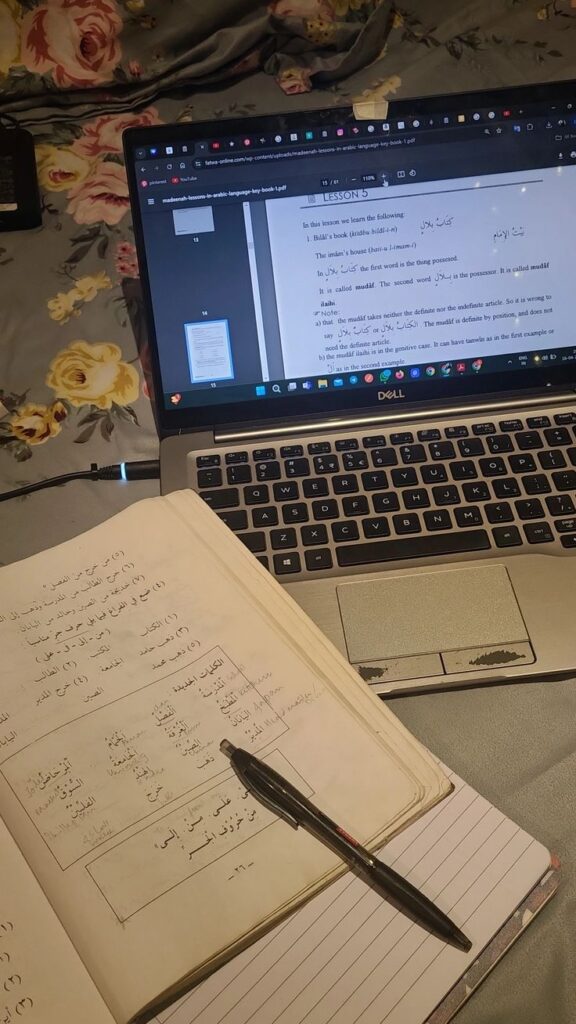
Some teenagers already study Arabic at school but struggle with:
- Grammar explanations
- Reading comprehension
- Writing assignments
- Exam preparation
For these learners, online Arabic lessons work best as structured academic support.
A suitable course should include:
- Clear grammar breakdowns
- Guided reading practice
- Writing correction and feedback
- Homework assistance
- Exam-focused exercises
Unlike conversational programs, these lessons reinforce what teens learn in school while filling knowledge gaps that may slow their progress or affect confidence in class.
Goal 3: Quran reading and pronunciation (makharij)
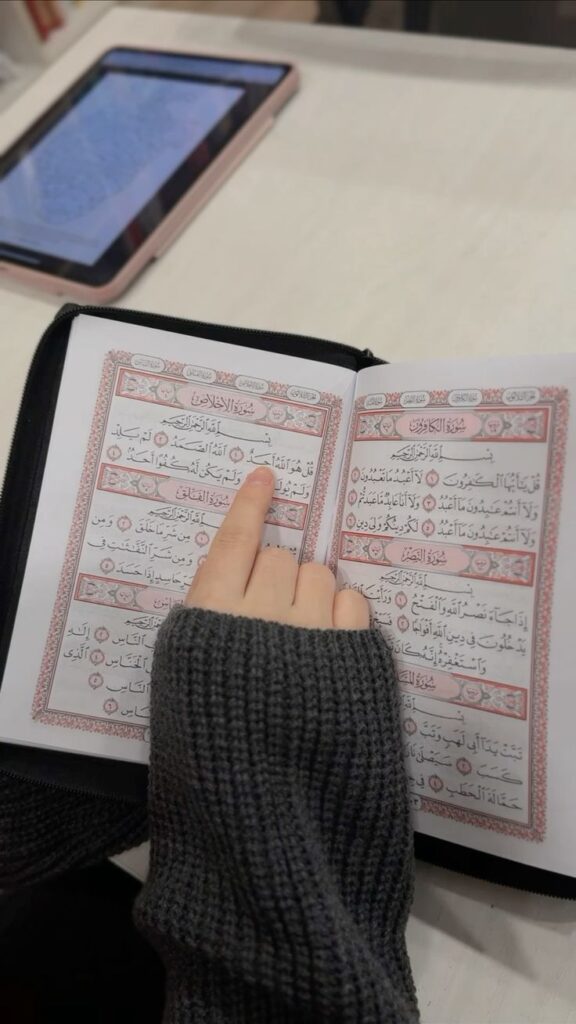
For many families, the goal of learning Arabic is connected to understanding and reciting the Quran correctly.
Teen-focused Quranic Arabic lessons typically emphasize:
- Correct letter pronunciation (Makharij)
- Tajweed basics
- Reading fluency
- Listening and repetition practice
- Gradual vocabulary understanding
At this stage, accuracy matters more than speed. Teenagers are old enough to refine pronunciation carefully while still developing strong reading habits.
Choosing the correct level here depends mainly on reading ability — whether the student is still learning letters or already reading but needs pronunciation improvement.
Goal 4: Reading + writing foundations for beginners

Some teenagers start learning Arabic later and need to build foundational literacy skills first.
These beginner-focused lessons usually include:
- Arabic alphabet mastery
- Letter shapes and writing practice
- Basic sentence formation
- Simple reading exercises
- Core vocabulary development
Unlike children’s courses, teen beginner programs move faster and include logical explanations that match their cognitive level. Teens understand why language rules work, which helps them progress quickly once foundations are strong.
A well-designed beginner course prevents future frustration by building confidence early and ensuring students don’t skip essential skills.
Quick placement test: how to know your teenagers’ level through Online Arabic Lessons
Before starting any Arabic course, it’s important to know your teen’s current level. Even if they’ve studied a little before, their skills may vary widely — and starting at the wrong level can lead to frustration or boredom. A quick placement test helps pinpoint the right course so learning is efficient, engaging, and confidence-building.
Complete beginner vs false beginner (very common)
One of the most common challenges in teen Arabic learning is distinguishing between:
- Complete beginner – a student who has little to no prior exposure to Arabic, hasn’t learned the alphabet, and cannot read or write words independently.
- False beginner – a teen who may have studied Arabic before but has forgotten much of it, or only memorized basic phrases without real understanding.
False beginners are tricky because they feel like they know something but actually need to review fundamentals. Without assessment, they may be placed too high and struggle, or placed too low and get bored. A short placement test clarifies this immediately.
What to assess in 10 minutes (letters, reading, vocabulary, speaking)

You don’t need hours to get a clear picture of your teen’s Arabic level. A 10-minute mini-assessment can cover the essentials:
- Letters & Alphabet – Can they recognize and pronounce Arabic letters correctly? Can they write them?
- Reading – Can they read simple words or sentences? Are they fluent or hesitant?
- Vocabulary – Do they know basic words and expressions for everyday use?
- Speaking – Can they form simple sentences and communicate ideas verbally, or only repeat memorized phrases?
By quickly evaluating these four areas, you’ll know whether if the student is a complete beginner, a false beginner, or ready for a higher level. This ensures that the Arabic lessons online for teenagers start at the perfect pace — challenging enough to keep them motivated, but not so difficult that they get discouraged.
Why Online Arabic Lessons Work So Well for Teenagers
Teenagers learn differently from both children and adults — and online learning environments often match their needs surprisingly well. At this stage, students value independence, flexibility, and meaningful interaction. When Arabic lessons are delivered online, they remove many of the barriers that traditionally slow language learning and instead create a space where teens feel comfortable, motivated, and confident to participate.
Flexible schedules that fit school and activities

Teenagers already juggle busy schedules filled with schoolwork, exams, extracurricular activities, and social commitments. Traditional language classes often add pressure because they follow fixed timings that may not align with a teen’s routine.
Online Arabic lessons, however, offer flexible scheduling options. Sessions can be planned after school, on weekends, or during lighter academic periods. This flexibility helps students stay consistent without feeling overwhelmed, which is one of the most important factors in long-term language success.
A comfortable space builds speaking confidence
For many teenagers, confidence is the biggest obstacle when learning a new language. Speaking in front of a classroom can feel intimidating, especially when students worry about making mistakes.
Learning Arabic online changes this dynamic. When teens join lessons from their own space, they often feel more relaxed and willing to participate. Consequently, they speak more, ask questions freely, and experiment with new vocabulary without fear of embarrassment. Over time, this comfort translates directly into stronger speaking ability.
Access to native Arabic teachers anywhere
Another major advantage of online learning is access. Instead of being limited to local options, teenagers can learn from qualified native Arabic teachers regardless of location.
This exposure improves pronunciation, listening skills, and cultural understanding. Students hear authentic accents, learn natural expressions, and gain insight into real Arabic communication — something that is often missing in standard school programs.
One-on-One Online Arabic Lessons for Teenagers: Faster Progress, Real Confidence

One-on-one online Arabic lessons provide teenagers with something traditional classrooms rarely offer: full attention. Rather than sharing lesson time with many students, teens receive personalized guidance designed around their pace, personality, and learning goals.
- First, individual lessons allow teachers to adapt instantly. If pronunciation or reading becomes challenging, extra time can be dedicated to practice. On the other hand, fast learners can progress without unnecessary repetition. This balance keeps lessons engaging and productive.
- Additionally, private lessons create a safe environment for communication. Many teens hesitate to speak in group settings, but in one-on-one sessions they feel comfortable making mistakes and asking questions. As confidence grows, speaking becomes more natural and fluent.
- Most importantly, personalized feedback helps students improve quickly. Teachers can correct errors gently and consistently, preventing bad habits while reinforcing progress. Over time, teenagers develop not only stronger Arabic skills but also genuine confidence in using the language.
If you’re unsure whether private lessons are the right choice, understanding the differences between learning formats can help parents decide. A deeper comparison is explained in One to One Learning vs Group Learning, which highlights how personalized attention often leads to faster progress and stronger confidence — especially for teenagers.
What a good online Arabic teacher does in Lessons for Teenagers
Choosing the right online Arabic teacher is just as important as choosing the right program. The teacher’s approach can make learning enjoyable, boost confidence, and help teens stay motivated. Here’s a parent-friendly checklist to know what to look for:
- Clear structure, patience, and teen-friendly communication: A skilled teacher plans lessons with a clear progression, explaining concepts step by step. They adapt explanations to suit teens’ interests and attention spans, use relatable examples, and maintain a patient, encouraging tone that keeps students engaged.
- Corrects mistakes gently and consistently: Mistakes are part of learning. A good teacher provides corrections in a supportive way, helping teens understand errors without discouragement. Consistent, positive feedback builds confidence and reinforces proper pronunciation, grammar, and writing skills.
- Gives simple homework teens can actually finish: Assignments should be realistic and reinforce class material without overwhelming the student. Short, focused tasks—like practicing new vocabulary, reading a short passage, or writing a few sentences—ensure teens complete homework successfully while feeling accomplished.
Final Thought
Supporting your teen’s Arabic learning journey online doesn’t have to be overwhelming. With the right structure, guidance, and teacher, teens can build confidence, enjoy the process, and make real progress—while you stay involved and supportive every step of the way.
Start Arabic Lessons Online for Teenagers with Areeb Academy
- Level assessment + personalized learning plan – We identify your teen’s current skills and create a plan just for them.
- Flexible times and teen-friendly teachers – Lessons fit your schedule, with instructors who know how to engage teenagers.
- Book a free trial class and start this week – Take the first step toward confident Arabic reading, speaking, and understanding.
FAQs About Online Arabic Lessons for Teenagers
1. Are online Arabic lessons effective for teenagers?
Yes. Online lessons can be highly effective because they offer personalized attention, flexible scheduling, and a comfortable learning environment. Many teens actually participate more when learning from home.
2. What is the best age for teens to start learning Arabic online?
Teenagers can start at any stage — whether they are complete beginners or already know some Arabic. Programs designed specifically for teens help match their learning style and interests.
3. How are online Arabic lessons different from traditional classroom learning?
Online lessons allow more interaction, one-on-one support, and customized pacing. Unlike crowded classrooms, students get more speaking time and direct feedback from the teacher.
4. Do online Arabic classes focus on speaking or grammar?
Most modern programs balance both, but strong courses prioritize communication first. Speaking practice helps teens gain confidence while grammar is introduced naturally through conversation.
5. How long does it take for a teenager to become fluent in Arabic?
Fluency depends on consistency and practice. With regular lessons and active participation, noticeable improvement can happen within a few months.
6. Can beginners join online Arabic lessons?
Absolutely. Many teens start with zero background, and beginner-friendly programs introduce Arabic step by step in an engaging way.