
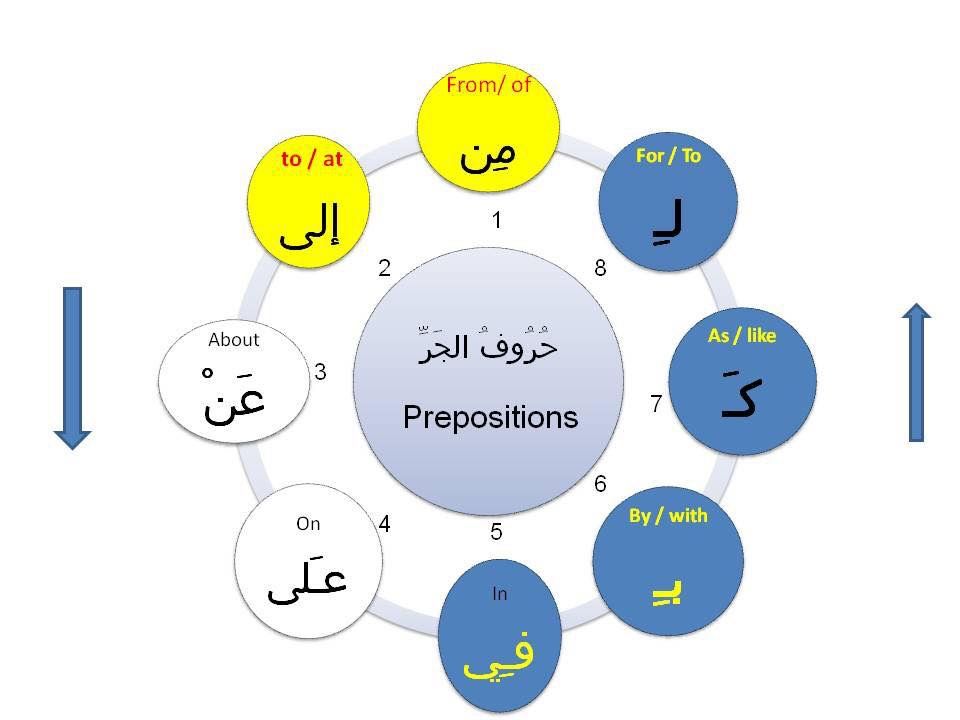
Learning Arabic prepositions can be one of the trickiest parts of mastering the language, especially for beginners. Prepositions in Arabic (Huruf al-jarr) are small words like في, على, من, إلى, مع, لـ, بـ, عن that show relationships between words, locations, directions, and possessions. Unlike English, Arabic prepositions are highly context-dependent, and using the wrong one can change the meaning of your sentence.
This article will guide you through the most common mistakes learners make with Arabic prepositions, explain why these mistakes happen. Whether you are learning Levantine Arabic online, in Amman, Jordan, or anywhere else, mastering prepositions is key to sounding natural and fluent.
What are Arabic prepositions (حروف الجر) in simple terms?
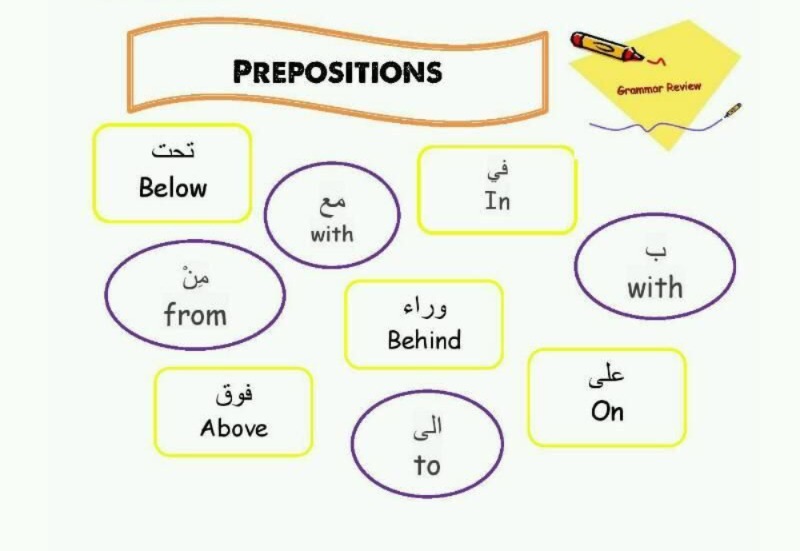
Arabic prepositions (حروف الجر – Huruf al-Jarr) are small words used before nouns or pronouns to show the relationship between words in a sentence. They help express meanings such as location, direction, time, origin, or topic, similar to English prepositions like in, on, to, from, and about.
A preposition always comes before a noun and adds important details about where, when, or how something happens. Some Arabic prepositions appear as separate words, while others attach directly to the noun, such as بِـ (bi-), لِـ (li-), and كَـ (ka-), forming one connected word. Together with the noun, they create meaningful prepositional phrases that complete the sentence’s meaning.
Why Arabic prepositions matter for speaking and understanding

Arabic prepositions are essential because they connect words and clarify meaning in everyday communication. A small change in a preposition can change the meaning of a sentence completely, just like in English expressions.
They are commonly used to express location, movement, origin, tools, purpose, and discussion topics. For example:
- في describes where something is,
- إلى shows direction or movement toward a place
- من indicates where something comes from
Prepositions can also express abstract meanings, not only physical ones, which is why direct word-for-word translation from English does not always work.
Learning how prepositions function helps learners understand sentences more naturally and speak Arabic more accurately.
The basic rule: Arabic prepositions cause الجر (majrur)
In Arabic grammar, any noun that comes after a preposition becomes مجرور (majrūr), meaning it takes the genitive case. This is the main grammatical effect of Arabic prepositions and the reason they are called حروف الجر — “letters that cause the genitive.”
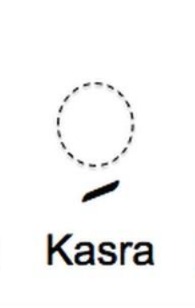
Usually, the noun following a preposition ends with a kasra (ـِ) sound, or kasratain (ـٍ) if it is indefinite. For example: في البيتِ (in the house) and بالقلمِ (with the pen).
Arabic prepositions themselves do not change form; they are considered fixed particles (mabni). Whether written separately or attached to a word, they always cause the noun that follows them to become majrur.
💡 Want to master the details of noun endings in Arabic? Check out our previous guide: [Arabic Tanween Rules for Beginners – Easy Examples & Tips]
The core grammar you must know (without getting overwhelmed)
When learning Arabic grammar, it’s easy to feel overwhelmed by rules and terminology. However, you don’t need to master everything at once. A small number of core concepts give you most of the understanding you need for real communication. Arabic follows logical patterns, and once you understand how words connect and change form, grammar becomes much more predictable.
One of the most important foundations is understanding how prepositions work with nouns and how they affect word endings. By focusing on these essential patterns first, learners can quickly recognize sentence structure, understand meaning, and build correct phrases without memorizing complex rules.
Harf jarr + ism majrur (the pattern)
Arabic prepositions follow a clear and consistent structure known as:
حرف جر + اسم مجرور
(preposition + genitive noun)
A preposition always comes before a noun or pronoun, and together they form a complete prepositional phrase that adds meaning to the sentence.
Examples:
- في البيتِ — in the house
- على الطاولةِ — on the table
- إلى المدرسةِ — to the school
- من المسجدِ — from the mosque
This pattern appears constantly in Arabic speech and writing. Once learners recognize it, they can easily understand relationships like place, direction, origin, or topic within sentences.
What changes at the end of the word (kasrah and its forms)
The main grammatical effect of Arabic prepositions is that they change the ending of the word that follows them. The noun becomes مجرور (majrūr), meaning it takes the genitive case.
In most situations, this change appears as a kasrah (ـِ) sound at the end of the noun.
Examples:
- البيتُ (al-baytu) → في البيتِ (fī al-bayti)
- قلمٌ (qalamun) → بالقلمِ (bil-qalami)
If the noun is indefinite, it may take kasratain (ـٍ) instead. These endings help indicate the grammatical relationship between words rather than changing the core meaning of the noun itself.
For beginners, the key idea is simple:
👉 after a preposition, expect an “i” sound at the end of the word.
Arabic prepositions with attached pronouns (به، لها، منهم)
In Arabic, prepositions can attach directly to pronouns, creating short combined words instead of separate ones. This makes speech more natural and efficient.
Common examples include:
- به (bihi) — with him / by it
- لها (lahā) — for her
- منهم (minhum) — from them
- عليه (‘alayhi) — on him
- فيها (fīhā) — in it / in her
These attached forms follow the same rule: the preposition still controls the grammatical relationship, but the noun is replaced by a pronoun. Learning these combinations is important because they appear frequently in everyday Arabic conversation and written texts.
👉 If you want a simple breakdown of how Arabic pronouns work, read our guide: Arabic Pronouns Explained Simply: Master Them in 10 Minutes!
The most common Arabic prepositions and their meanings
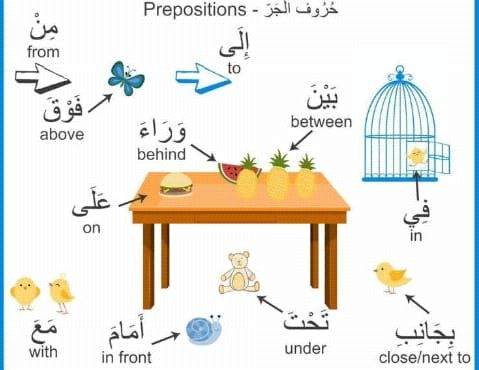
Arabic prepositions (حروف الجر – ḥurūf al-jarr) are essential building blocks in everyday communication. They usually come before a noun and cause it to become majrūr (genitive), which is typically marked with a kasrah (ـِ) at the end of the word. These small words help express relationships such as place, direction, origin, purpose, and topic.
Although Arabic contains many prepositions, a small group appears most frequently in daily speech and writing. Learning these core prepositions allows learners to understand and form a large number of useful sentences quickly.
في (in / inside)
في (fī) is one of the most common Arabic prepositions and is mainly used to indicate location or time. It describes something happening inside a place or during a specific period.
Examples:
- في البيتِ — in the house
- في المدرسةِ — at school
- في الصباحِ — in the morning
It can refer to both physical locations and abstract situations, making it extremely common in everyday Arabic.
على (on / over)
على (‘alā) is used to express position on a surface, above something, or sometimes responsibility or obligation depending on context.
Examples:
- على الطاولةِ — on the table
- الكتاب على المكتبِ — the book is on the desk
- يجب عليك الدراسة — you must study
Besides physical placement, it may also carry figurative meanings in expressions.
إلى (to / toward)
إلى (ilā) indicates direction, movement, or destination. It is commonly used with verbs of motion or actions that move toward a goal or place.
Examples:
- ذهبتُ إلى السوقِ — I went to the market
- ينظر إلى السماءِ — he looks toward the sky
It answers the question “where to?”
من (from)
من (min) expresses origin, starting point, separation, or source. It is frequently used when talking about movement or nationality.
Examples:
- أنا من مصر — I am from Egypt
- خرجتُ من المنزلِ — I left the house
- سافرتُ من القاهرةِ إلى دبي — I traveled from Cairo to Dubai
It can also mean “some of” depending on context.
عن (about / away from)
عن (‘an) is used when speaking about a topic or indicating distance or separation from something.
Examples:
- تحدثتُ عن العملِ — I spoke about work
- ابتعد عن الطريقِ — move away from the road
Its meaning depends strongly on context, so direct translation is not always exact.
بـ (with / by)
بِـ (bi-) is an attached preposition that connects directly to the following word. It often describes the tool, method, or means by which an action happens.
Examples:
- بالقلمِ — with the pen
- بالسيارةِ — by car
- كتبتُ بالقلمِ — I wrote with the pen
In some expressions, it may not translate directly into English but still completes the meaning grammatically.
لـ (for / to)
لِـ (li-) also attaches directly to nouns and usually indicates purpose, benefit, or possession.
Examples:
- هذا الكتابُ لأحمد — this book is for Ahmad
- جئتُ للعملِ — I came to work
- هديةٌ لك — a gift for you
It often answers the question “for whom?” or “for what purpose?”
كـ (like / as)
كَـ (ka-) is used for comparison and similarity. Like bi- and li-, it attaches directly to the noun that follows it.
Examples:
- كالأسدِ — like a lion
- جميلةٌ كالقمرِ — beautiful like the moon
It is commonly used in similes and descriptive expressions.
Arabic prepositions of place and direction (everyday conversation)
In everyday Arabic conversation, prepositions of place and direction are essential for describing where things are located, where someone is going, and how to give or understand directions. These words help speakers explain positions, movement, and spatial relationships clearly in daily situations such as meeting someone, asking for directions, or describing locations.
Many of these expressions are used constantly in real-life communication — at home, in school, in the street, or while traveling. Learning them allows learners to form natural sentences quickly and understand spoken Arabic more easily.
👉 For parents who want children to practice these everyday expressions naturally through speaking activities, explore our Arabic Conversation Course for Kids: Help Your Child Speak Arabic Confidently.
أمام، خلف/وراء، فوق، تحت، بين، عند، مع
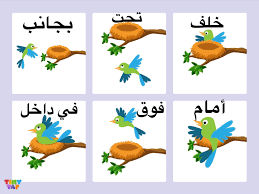
These common words are used to describe location and spatial relationships between people and objects:
أمام (amām) — in front of
Used when something is positioned before another object or place.
Example: أنا أمام المدرسة — I am in front of the school.
خلف / وراء (khalf / warā’) — behind
Both words describe something located at the back of another object.
Example: السيارة خلف المنزل — The car is behind the house.
فوق (fawq) — above / over
Used when something is positioned higher than another object.
Example: الطائرة فوق السحاب — The plane is above the clouds.
تحت (taḥt) — under / below
Describes something located underneath another object.
Example: القطة تحت الكرسي — The cat is under the chair.
بين (bayna) — between
Used when something is located in the middle of two or more things.
Example: البنك بين المدرسة والمكتبة — The bank is between the school and the library.
عند (‘inda) — at / by / near
Often used when referring to being at someone’s place or a specific location.
Example: أنا عند صديقي — I am at my friend’s place.
مع (ma‘a) — with
Indicates accompaniment or being together with someone.
Example: أنا مع العائلة — I am with the family.
These expressions are extremely common in spoken Arabic and help learners describe everyday situations naturally.
Mini-map examples (home, school, masjid, street)
To understand how these prepositions work in real conversation, imagine simple daily locations:
At home:
الكتاب فوق الطاولة، والحقيبة تحت الكرسي.
The book is on the table, and the bag is under the chair.
At school:
أنا أمام الفصل، وصديقي عند المعلم.
I am in front of the classroom, and my friend is with the teacher.
At the masjid:
السيارة وراء المسجد، والمدخل أمام الشارع.
The car is behind the mosque, and the entrance is in front of the street.
In the street:
المقهى بين البنك والصيدلية، والمتجر عند الزاوية.
The café is between the bank and the pharmacy, and the shop is at the corner.
Practicing with real-life “mini maps” helps learners visualize meaning and remember prepositions faster because they connect language with everyday experiences.
Arabic prepositions you see a lot in Quran and classic Arabic
Arabic prepositions (حروف الجر – ḥurūf al-jarr) are crucial for understanding classical texts like the Quran. They indicate location, direction, time, purpose, or relationship between nouns. In classical Arabic, the noun following a preposition takes the genitive case (مجرور), usually marked with a kasra (ــِـ) or tanween kasr (ــٍـ).
Key Quranic Examples
| Preposition | Meaning | Example | Translation |
|---|---|---|---|
| فِي (fī) | in, inside, concerning | فِي السَّمَاءِ | in the sky/heaven |
| إِلَى (ilā) | to, toward | إِلَى النَّارِ | to the fire |
| مِنْ (min) | from, of | مِنْ قُرْآنٍ | from a recitation |
| عَلَى (ʿalā) | on, against | عَلَى سَفَرٍ | on a journey |
| لِ (li-) | for, to | لِأَبِيهِ | for his father |
| بِ (bi-) | by, with, in | بِالصَّدَقَاتِ | by the charities |
| مَعَ (maʿa) | with | مَعَ الرَّسُولِ | with the Messenger |
| بَيْنَ (bayna) | between, among | بَيْنَ السَّمَاءِ وَالأَرْضِ | between the sky and the earth |
How Arabic prepositions can change meaning with small shifts
Prepositions in Arabic are highly context-sensitive. A small change can significantly alter meaning:
- فِي + time/place – Indicates location or time
- Example: فِي ضَلَالٍ – “in error”
- Example: فِي الصَّدَقَاتِ – “concerning the charities”
- عَلَى + responsibility/position – Indicates burden, position, or control
- Example: يَوْمَ هُمْ عَلَى النَّارِ يُفْتَنُونَ – “the Day they will be tormented over the Fire”
- مِنْ + starting point/origin – Indicates source, origin, or separation
- Example: مِنَ الْجَنَّةِ – “from the Garden”
- Example: وَمِنْهُم مَّن يَلْمِزُكَ فِي الصَّدَقَاتِ – “Among them are some who criticize you concerning the charities”
Common patterns: في + time, على + responsibility, من + starting point
فِي + noun
- Often refers to place, state, or situation.
- Example: فِي ضَلَالٍ مُبِينٍ – “in manifest error”
عَلَى + noun
- Often refers to burden, challenge, or being upon someone.
- Example: عَلَى النَّارِ – “over the Fire”
مِنْ + noun
- Often indicates origin, part of, or source.
- Example: مِنَ الأَرْضِ – “from the Earth”
لِ / بِ + noun
- لِ indicates purpose, belonging, or direction.
- بِ indicates means, accompaniment, or causation.
Quranic Tip for Learners
- Always watch the genitive endings after prepositions. They reveal the relationship between words.
- Example: فِي الصَّدَقَاتِ – “concerning the charities” → الصَّدَقَاتِ is in genitive because of فِي.
- Recognizing prepositional patterns helps in translation and comprehension.
Arabic prepositions vs English prepositions (why learners get confused)
Arabic and English prepositions often cause confusion for language learners because there is rarely a one-to-one correspondence between them. Differences in number, usage, and idiomatic expressions make literal translation risky and sometimes incorrect.
One Arabic preposition can cover multiple English meanings
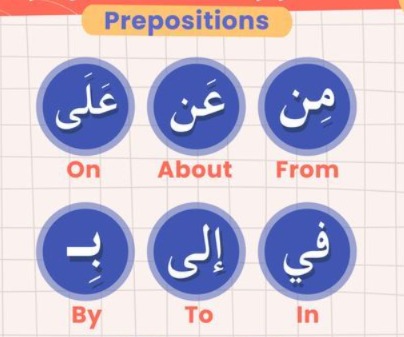
Arabic prepositions tend to be broader in meaning than their English equivalents. For example:
- في (fi) – can mean “in,” “on,” or “at”, depending on context:
- أنا في الباص → I’m on the bus (not “in the bus”)
- سأزورك في يوم الاثنين → I’ll visit you on Monday (sometimes the preposition is omitted in Arabic)
- بـ (bi) – can indicate “with” (instrumental), “by,” or “in/at”:
- بالعلم تبني العقول → You build minds with knowledge
- محمد بالبيت → Mohammad is at home
This broad usage means learners often translate directly from Arabic, producing errors in English such as “I am in the bus” instead of “I am on the bus.”
When English uses “to” but Arabic uses لـ (and when it doesn’t)
The English preposition “to” usually indicates direction, purpose, or recipient, but in Arabic it can correspond to لـ (li-) or sometimes no preposition at all:
- Students go to school to learn → الطلاب يذهبون إلى المدرسة للتعلم
- Success is for the hardworking → النجاح للمجتهدين
- Sometimes Arabic expresses the direction without a preposition:
- I’ll visit you on Monday → سأزورك يوم الاثنين
Understanding these nuances is essential to avoid literal translation mistakes and to use prepositions accurately in both languages.
The top mistakes with Arabic prepositions (and the quick fix)

Arabic prepositions are tricky because one preposition can have multiple meanings depending on the context. Learners often transfer rules from English or other languages, which leads to frequent errors. The good news is that once you understand the common pitfalls, you can fix them quickly with focused practice. Below are some of the top mistakes learners make and tips to correct them.
Mixing إلى and لـ
Mistake: Using إلى (to) and لـ (for) interchangeably.
Explanation:
- إلى is generally used to indicate movement or direction toward a place or person.
- Example: ذهبتُ إلى المدرسة → I went to school.
- لـ is used to indicate purpose, benefit, or possession.
- Example: هذا الكتاب لـ محمد → This book is for Muhammad.
💡Quick Fix: Ask yourself: “Am I showing direction/movement (use إلى) or am I showing benefit/purpose/ownership (use لـ)?”
Mixing من and عن
Mistake: Confusing من (from) and عن (about/from/off).
Explanation:
- من often shows origin, separation, or source.
- Example: جاء أحمد من مصر → Ahmed came from Egypt.
- عن is used for topics, substitutions, or sometimes cause.
- Example: سألني أحمد عن واجبي → Ahmed asked me about my homework.
💡Quick Fix: Think about the relationship between the action and the object. If it’s about a topic or replacement, use عن. If it’s origin, source, or separation, use من.
Using في vs بـ in time and tools
Mistake: Using في (in) and بـ (with/by) incorrectly.
Explanation:
- في can indicate location or time.
- Example (location): في البيت → in the house
- Example (time): في الصباح → in the morning
- بـ indicates means, tools, or manner.
- Example (tool): كتبت الرسالة بالقلم → I wrote the letter with a pen
- Example (manner): عملها بيده → He made it by hand
💡Quick Fix: If you’re talking about time or place, start with في. If you’re talking about how something is done or the tool used, use بـ.
Forgetting the majrur ending after Arabic prepositions
Mistake: Not using the correct case ending (majrur) after prepositions.
Explanation:
- In Standard Arabic, nouns after prepositions take a kasra (ـِ) ending.
- Example: ذهبتُ إلى المدرسةِ → I went to the school
- In Levantine Arabic, the ending is often dropped in speech, but knowing it helps in writing and formal contexts.
💡Quick Fix: Always check if a noun follows a preposition and add the correct majrur ending, especially in formal or written Arabic.
Final Thought

Mastering Arabic prepositions is not just about memorizing a list of words; it’s about noticing patterns, practicing consistently, and training your ears to hear the correct usage in real contexts. Even advanced learners can struggle with prepositions if they rely solely on translation from their first language. By paying attention to how prepositions function with verbs, nouns, and pronouns, you will gradually gain confidence and accuracy in your Arabic speaking and writing.
Want to Learn Arabic Prepositions the Right Way? Join Areeb Academy!
At Areeb Academy, we make learning Arabic practical, engaging, and beginner-friendly. Here’s why learners love us:
- Skilled and supportive teachers who guide you through tricky grammar points like prepositions.
- Flexible scheduling to fit your busy life and learning pace.
- Free trial lessons so you can experience our teaching style before committing.
- A structured and interactive curriculum designed to build fluency fast.
With consistent practice and the right guidance, Arabic prepositions will become second nature—and Areeb Academy is here to help you every step of the way!