
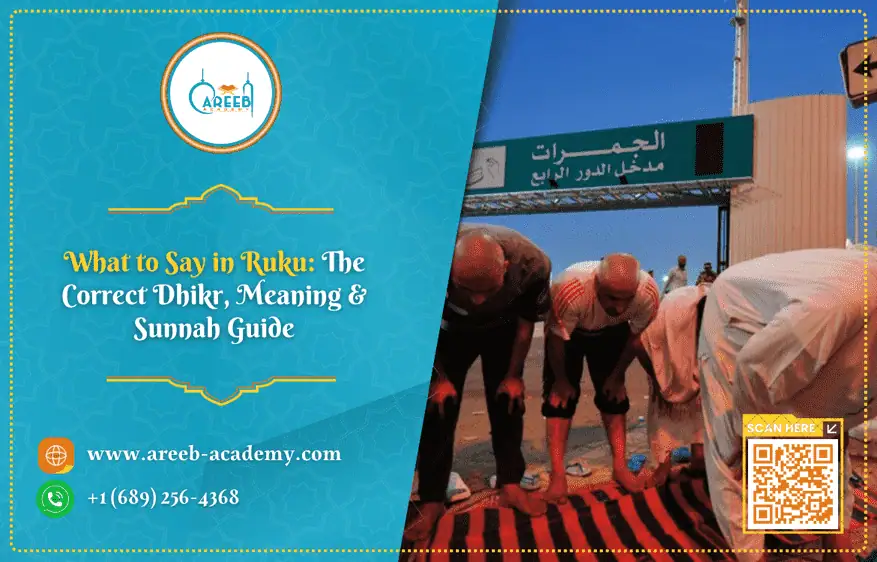
If you’re wondering what to say in Ruku, you’re not alone. Ruku is a key part of every Salah, and knowing the correct words to recite—as well as their meaning and the Sunnah way to say them—can help you pray with greater confidence, focus, and humility.
In this guide, you’ll learn the main dhikr of Ruku, additional authentic Sunnah duas, and the proper way to perform this important pillar of prayer.
What Is Ruku in Salah?
Ruku is one of the essential pillars of Salah and refers to the act of bowing at the waist after completing the Quran recitation while standing (Qiyam). During this position, a Muslim bows with a straight back, places both hands on the knees, and pauses in a posture of humility and submission before Allah. Every rak’ah (unit of prayer) includes Ruku, making it an indispensable part of the prayer that cannot be omitted.
The Meaning of Ruku
The Arabic word Ruku (رُكوع) literally means bowing. In Salah, it refers to bowing before Allah with humility and reverence after completing the recitation of the Quran. During this posture, Muslims glorify Allah through prescribed words of remembrance while reflecting on His greatness and their complete submission to Him.
This act of worship combines physical humility with the remembrance of Allah, helping believers strengthen their faith, sincerity, and devotion during prayer.
Why Ruku Is an Important Part of Prayer
Ruku is not simply a physical movement—it is a mandatory pillar (rukn) of Salah. Every Muslim must perform it correctly for the prayer to be valid. The Prophet Muhammad ﷺ taught believers to pause in Ruku until they are completely still before continuing to the next position, emphasizing that every posture of prayer should be performed with calmness and mindfulness.
Ruku also marks the transition from reciting Allah’s words to expressing humility through physical worship. It prepares the heart for the even deeper act of submission that follows in Sujud (prostration).
What to Say in Ruku
One of the most common questions among new Muslims and those learning Salah is what to say in Ruku. While bowing, Muslims glorify Allah by reciting a special remembrance (dhikr) taught by Prophet Muhammad ﷺ. This moment is an opportunity to reflect on Allah’s greatness while expressing humility and submission through both words and actions.
The Main Dhikr to Recite in Ruku

The primary dhikr recited during Ruku is:
Arabic: سُبْحَانَ رَبِّيَ الْعَظِيمِ
Transliteration: Subḥāna Rabbiyal-‘Aẓīm
Meaning: “Glory is to my Lord, the Most Great.”
This is the authentic remembrance that the Prophet Muhammad ﷺ regularly recited while bowing in Salah. While saying it, remain still in the bowing position with a straight back and hands resting firmly on the knees before moving to the next part of the prayer.
Although this is the main dhikr for Ruku, there are also other authentic supplications from the Sunnah that may be recited occasionally, helping to add variety to one’s worship.
How Many Times Should You Say It?
The Sunnah is to recite Subḥāna Rabbiyal-‘Aẓīm at least three times while in Ruku. Many scholars also mention that reciting it five, seven, or any odd number of times is permissible when praying individually, especially in voluntary prayers.
More important than the number of repetitions is maintaining tuma’ninah—remaining calm, still, and composed in the bowing position before rising. Rather than rushing through the words, take a moment to reflect on their meaning and glorify Allah with sincerity.
Other Authentic Sunnah Duas in Ruku
Besides Subḥāna Rabbiyal-‘Aẓīm, the Prophet Muhammad ﷺ occasionally recited other authentic supplications during Ruku. These duas are optional and may be used to follow the Sunnah and add variety to your worship.
Some of the authentic supplications include:
- Allāhumma laka raka’tu, wa bika āmantu, wa laka aslamtu… – A dua expressing complete submission to Allah.
- Subḥāna dhil-jabarūti wal-malakūti wal-kibriyā’i wal-‘aẓamah – Glorifying Allah’s power, dominion, majesty, and greatness.
- Subḥānaka Allāhumma Rabbanā wa biḥamdika, Allāhum-maghfir lī – Combining praise of Allah with seeking His forgiveness.
- Subbūḥun Quddūsun Rabbul-malā’ikati war-rūḥ – Glorifying Allah as the Lord of the angels and the Spirit.
Learning these authentic adhkar is a beautiful way to revive the Sunnah and deepen your focus during Salah.
When to Use Different Ruku Duas
The Prophet ﷺ did not recite the same supplication in every prayer. Sometimes he limited his remembrance to Subḥāna Rabbiyal-‘Aẓīm, while at other times he added one of these authentic Sunnah duas.
Following this practice by varying your adhkar is recommended because it revives the Sunnah, increases attentiveness during Salah, and prevents prayer from becoming routine. There is no requirement to recite every dua in a single prayer; choosing one occasionally is sufficient.
How to Perform Ruku Correctly

Performing Ruku correctly means combining the proper posture with a calm and humble attitude. As you move from the standing position into Ruku, say “Allahu Akbar” and bow smoothly until your body is settled. Once you are still, recite “Subḥāna Rabbiyal-‘Aẓīm” before rising to continue the prayer.
Correct Body Position
When performing Ruku:
- Bow from the waist until your back is level.
- Place both hands firmly on your knees.
- Keep your feet facing the Qiblah.
- Look down toward the place of prostration.
- Stay still before reciting the dhikr.
Maintaining Calmness and Humility
Do not rush through Ruku. Pause long enough to become completely still (tuma’ninah) before reciting the remembrance of Allah. Use this moment to reflect on Allah’s greatness and bow with sincerity, humility, and full concentration.
What to Say After Rising from Ruku
After completing Ruku, stand upright calmly before moving into Sujud. This standing position is known as I’tidal and includes words of praise taught by the Prophet Muhammad ﷺ.
“Sami’ Allahu liman hamidah”

As you rise from Ruku, say:
Arabic: سَمِعَ اللَّهُ لِمَنْ حَمِدَهُ
Transliteration: Sami’ Allahu liman hamidah
Meaning: “Allah hears the one who praises Him.”
“Rabbana wa lakal hamd”
Once you are standing completely upright, say:
Arabic: رَبَّنَا وَلَكَ الْحَمْدُ
Transliteration: Rabbanā wa lakal-ḥamd
Meaning: “Our Lord, and to You belongs all praise.”
The Prophet ﷺ also taught longer authentic versions of this praise, which you may recite occasionally to follow the Sunnah.
Looking for a deeper explanation? Explore our complete guide on “Sami’ Allahu liman hamidah“ to learn its meaning, significance, and the Sunnah way to recite it during Salah.
Final Thoughts on What to Say in Ruku
Learning what to say in Ruku is more than memorizing a few words—it’s about understanding the meaning behind them and glorifying Allah with sincerity. As you become familiar with the authentic adhkar and the correct way to perform Ruku, your Salah can become more mindful and spiritually rewarding. Start with the essential dhikr, gradually learn the Sunnah supplications, and remember that consistency and sincerity are more important than perfection. May Allah accept your prayers and increase you in knowledge and devotion. Ameen.
Improve Your Salah with Areeb Academy
- 📿Learn Salah Step by Step: Learn every step of Salah with qualified teachers. Understand what to say, what to do, and when to do it in every part of the prayer. Learn the meanings behind the recitations to improve your focus, confidence, and connection with Allah.
- 📖Quran, Tajweed, and Islamic Studies Classes: Learn to recite the Quran with proper Tajweed, study essential Islamic knowledge, and memorize daily duas through engaging, personalized lessons tailored to your age and learning level.
- 👨🏫One-on-One Online Learning for Kids and Adults: Enjoy private live classes with experienced teachers, flexible scheduling, and personalized lesson plans designed to help every student learn at their own pace.
🌟 Book a free trial today and start your learning journey with Areeb Academy!
Frequently Asked Questions About Ruku
1. What should you say in Ruku?
The main dhikr to recite in Ruku is “Subḥāna Rabbiyal-‘Aẓīm” (Glory is to my Lord, the Most Great). It is Sunnah to recite it at least three times while remaining calm and still in the bowing position.
2. How many times should I say “Subhana Rabbiyal Azeem” in Ruku?
The Prophet Muhammad ﷺ commonly recited “Subḥāna Rabbiyal-‘Aẓīm” three times. You may also recite it five, seven, or another odd number of times, especially in voluntary prayers.
3. Can I recite other duas in Ruku?
Yes. Along with the main dhikr, the Prophet ﷺ sometimes recited other authentic Sunnah supplications in Ruku, such as Subḥāna dhil-jabarūti wal-malakūti wal-kibriyā’i wal-‘aẓamah and Allāhumma laka raka’tu…. Alternating between these authentic duas is recommended.
4. What do you say after rising from Ruku?
As you rise from Ruku, say “Sami’ Allahu liman hamidah.” Once you are standing upright, say “Rabbanā wa lakal-ḥamd,” or one of the longer authentic versions taught by the Prophet ﷺ.
5. Is my Salah valid if I forget the dhikr in Ruku?
If you accidentally forget the dhikr in Ruku, your Salah is generally still valid. Continue your prayer without repeating the movement, and if you remember while still in Ruku, you can simply recite the correct dhikr before moving on. Always strive to perform Salah with calmness and attentiveness.