
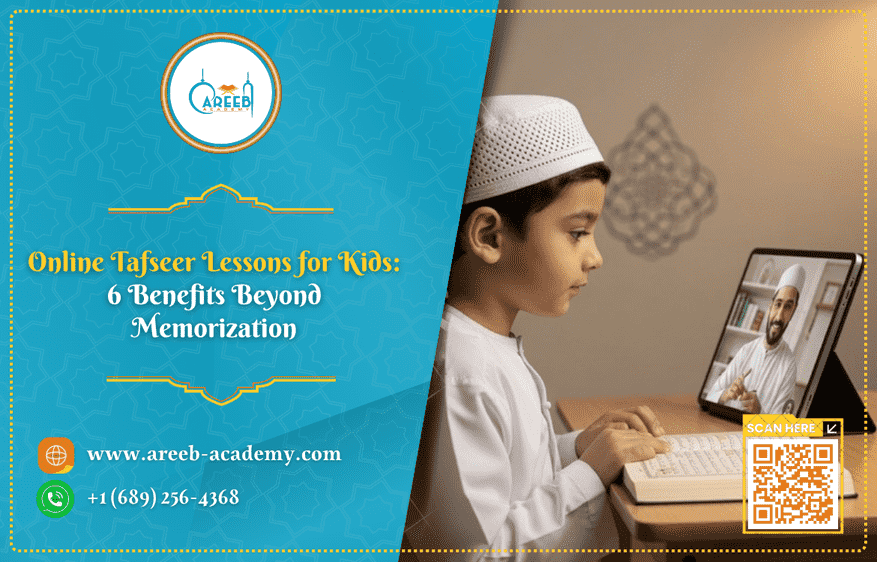
Online Tafseer lessons for kids help children move beyond memorizing Quranic verses to understanding their meanings, lessons, and guidance. When children learn why Allah revealed certain verses and how they relate to everyday life, they develop a stronger connection with the Quran and a deeper appreciation for their faith.
In this guide, you’ll discover what online Tafseer lessons are, their benefits, what kids learn, the best age to start, practical tips for parents, and how to choose the right online academy for your child’s Quranic journey.
What Are Online Tafseer Lessons for Kids?
Online Tafseer lessons for kids help children understand the Quran, not just memorize it. They explore the meanings of Quranic verses in age-appropriate and engaging ways.
These lessons are designed to match a child’s age and level. Younger learners often discover the Quran through engaging stories and visual activities, while older children gradually explore historical context, simple Arabic vocabulary, and deeper meanings. Since classes are held online, families can choose flexible schedules and learn from experienced teachers from the comfort of home.
What Is Tafseer?
Tafseer (also spelled Tafsir) is the explanation and interpretation of the Quran. It helps Muslims understand what Allah intended through His words by explaining the meanings of verses, the circumstances in which they were revealed, and the lessons they contain.
For children, Tafseer is presented in simple, age-appropriate language. Instead of studying complex scholarly discussions, they learn the main message of each verse through stories, examples, and real-life situations that make the Quran easier to understand and remember.
One well-known example is Tafseer Ayatul Kursi, often described as the greatest verse in the Quran.
Why Tafseer Matters for a Child’s Faith
Many children first learn how to read and memorize the Quran. Understanding its message takes that a step further — as they learn the meanings behind the verses they recite, they become more engaged in worship and build a personal connection with Allah’s words, rather than reciting without knowing their meaning.
Learning Tafseer helps children:
- Understand why certain verses were revealed.
- Recognize the values the Quran teaches, such as kindness, honesty, patience, and gratitude.
- Relate Quranic guidance to situations they experience at home, school, and with friends.
- Develop a lifelong love for reading and reflecting on the Quran instead of simply memorizing it.
Allah highlights the importance of reflecting on His words:
كِتَـٰبٌ أَنزَلْنَـٰهُ إِلَيْكَ مُبَـٰرَكٌۭ لِّيَدَّبَّرُوٓا۟ ءَايَـٰتِهِۦ وَلِيَتَذَكَّرَ أُو۟لُوا۟ ٱلْأَلْبَـٰبِ ٢٩
“˹This is˺ a blessed Book which We have revealed to you ˹O Prophet˺ so that they may contemplate its verses, and people of reason may be mindful.” (Surah Sad 38:29)
Tafseer helps children develop this habit of reflection from an early age. Through the stories of the prophets and the reasons behind different verses, they gain a deeper appreciation of Islam and grow more confident in practicing their faith. Over time, they learn to reflect on the Quran, ask thoughtful questions, and apply its teachings in everyday life, making their learning both meaningful and lasting.
Benefits of Online Tafseer Lessons for Kids
Online Tafseer lessons help kids build a deeper understanding of the Quran while making learning engaging and practical. Some of the biggest benefits include:
- Understanding the Quran beyond memorization: Children learn the meanings of verses, the reasons for revelation, and the lessons Allah teaches through them, making recitation more meaningful.
- Building a stronger connection with Allah: Understanding the Quran helps children appreciate Allah’s wisdom, mercy, and guidance, strengthening their faith from an early age.
- Developing good Islamic character: Tafseer teaches values such as honesty, patience, kindness, gratitude, and respect, encouraging children to practice them in everyday life.
- Applying Quranic teachings in daily situations: Children learn how to use the Quran as a guide when interacting with family, friends, and others.
- Making Quran learning more engaging: Interactive online lessons, discussions, stories, and activities keep children motivated and excited to learn.
- Learning in a comfortable and flexible environment: Online classes allow children to learn from home at a pace that suits their age and family schedule.
→ Curious how this works in practice? See how Areeb Academy structures its online Tafseer lessons.
What Children Learn in Online Tafseer Lessons
Online Tafseer lessons help kids understand the Quran through live, interactive classes, children explore the meanings of Quranic verses. They learn the stories behind their revelation and discover practical lessons they can apply in everyday life.
As they progress, they build a stronger connection with the Quran. They also develop good character and a deeper appreciation of their faith.
Stories of the Prophets
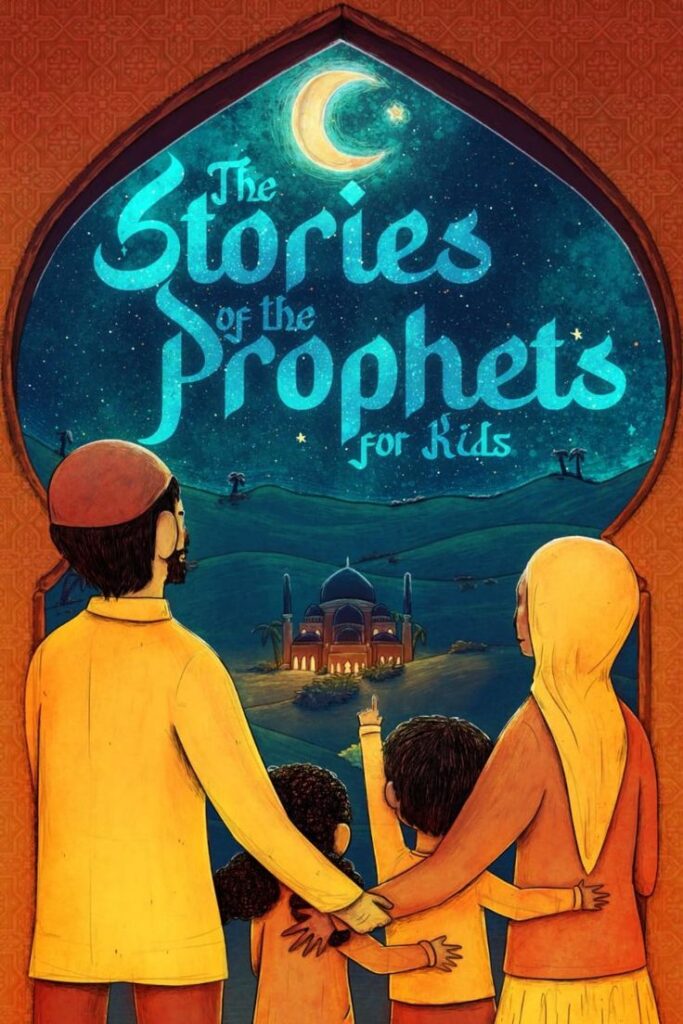
The stories of the prophets are one of the most engaging parts of Tafseer lessons. Through these stories, children learn how the prophets responded to challenges with faith, patience, honesty, and trust in Allah. Teachers also explain the lessons behind these stories and encourage children to apply them in their own lives.
In addition to the stories themselves, children often learn the historical context surrounding certain Quranic verses, A good example is Surah Al-Masad for Kids, which explains the story behind Abu Lahab in a simple way
Meanings of Short Surahs
Many Tafseer programs begin with the short surahs that children recite every day in their prayers, especially those from Juz’ Amma. For example, see how kids learn the story and lessons in Surah Al-Kawthar for Kids or Surah Al-Fil for Kids. Instead of memorizing these surahs without understanding them, children learn their meanings in simple, age-appropriate language.
Teachers explain important vocabulary, the themes of each surah, and the lessons they contain, helping children recite the Quran with greater understanding and reflection.
Quranic Values and Good Character
One of the main goals of online Tafseer lessons is to help kids live by the Quran’s teachings. Rather than learning values in theory, children discover how to practice them in everyday life. They learn to show kindness, honesty, patience, gratitude, forgiveness, and respect in different situations.
As they connect Quranic guidance to life at home, school, and in the community, they begin to see the Quran as a practical guide. It helps them make good choices and develop strong Islamic character.
Best Age to Start Online Tafseer Lessons for Kids
There is no single age that’s right for every child, but most children can begin learning the meanings of the Quran long before they study formal Tafseer. The key is introducing Quranic explanations in a way that matches their age, attention span, and level of understanding.
As children grow, Tafseer lessons gradually move from simple storytelling to deeper discussions about the meanings of verses, their historical context, and the lessons they teach.
Preschool Children
For preschoolers (ages 4–7), the goal is to help them develop a love for the Quran. At this stage, children should not be overwhelmed with detailed explanations.
Instead, Tafseer is introduced through simple stories, colorful visuals, and discussions about the short surahs they are already memorizing.
Lessons are usually brief and interactive, helping children connect Quranic stories with values like kindness, honesty, gratitude, and sharing. Building curiosity and positive feelings toward the Quran is more important than covering large amounts of information.
Elementary School Students
Elementary-aged children (around 8–11) are often ready for structured online Tafseer lessons. At this stage, children naturally begin asking deeper questions about the Quran. They are also able to understand the reasons for revelation, historical events, and the lessons behind different verses.
Teachers also introduce basic Quranic vocabulary. They encourage children to think about how the Quran’s teachings apply to everyday life. This helps make learning both meaningful and practical.
Pre-Teens and Teenagers
As children enter their pre-teen and teenage years, they become ready for more detailed Tafseer study. They can explore broader themes of the Quran, compare related verses, discuss moral and social lessons, and gain a deeper understanding of how Quranic guidance applies to different situations.
At this stage, learning with a qualified teacher becomes especially valuable, as older students often ask more complex questions that require scholarly explanations and a structured approach to Quranic study.
Tips for Parents to Support Quran Understanding at Home

Parents play an important role in helping children build a meaningful relationship with the Quran. While qualified teachers provide guidance during lessons, everyday support at home helps children develop consistency, confidence, and a genuine love for learning. Simple habits and encouraging conversations can make Tafseer more enjoyable and help children remember what they learn.
Discuss Quranic Lessons Together
Take a few minutes after each lesson to ask your child what they learned. Encourage them to explain it in their own words.
Talk about the meanings of verses, the stories of the prophets, and the lessons behind each surah. These conversations strengthen understanding and help children remember what they have learned.
Keep the conversation simple and age-appropriate, and encourage questions whenever your child is curious about a verse or Quranic story.
Connect Quranic Teachings to Everyday Life
Children understand the Quran best when they see how its teachings apply to real situations. When they learn about honesty, gratitude, patience, or kindness in Tafseer class, help them notice opportunities to practice these values at home, at school, and with friends.
Making these connections shows children that the Quran is not only meant to be recited but also lived through their words and actions.
Create a Positive Quran Learning Environment
A peaceful and encouraging atmosphere helps children enjoy learning and stay motivated. Set aside a quiet space for Quran study, keep lessons free from unnecessary distractions, and praise your child’s effort rather than expecting perfection.
Patience, consistency, and positive encouragement build confidence and make children look forward to their Quran lessons instead of feeling pressured.
Why Choose Areeb Academy for Online Tafseer Lessons?

At Areeb Academy, we believe that understanding the Quran is just as important as reciting it. Our online Tafseer lessons help children explore the meanings of the Quran through engaging, age-appropriate instruction that inspires a lifelong love for Islamic learning. Every lesson is designed to make the Quran meaningful, interactive, and relevant to your child’s daily life.
- Qualified Quran and Tafseer Teachers: Our instructors are qualified Quran and Islamic Studies teachers with the knowledge and training needed to explain Tafseer accurately and in a way children can easily understand. They simplify Quranic concepts while ensuring every lesson is based on authentic Islamic knowledge.
- Experience Teaching Children: Our teachers have extensive experience working with children of different ages and learning levels. They understand how young learners absorb information and adapt each lesson to match the child’s pace, interests, and level of understanding.
- Fun and Engaging Learning: We use storytelling, discussions, visual resources, and interactive activities to keep children actively involved throughout each lesson. This child-friendly approach helps students stay motivated while making Quran learning enjoyable and memorable.
- Interactive One-on-One Online Classes: Every child receives personalized attention in live one-on-one sessions. This allows teachers to answer questions, encourage participation, and tailor each lesson to the student’s individual learning goals and progress.
- Flexible Scheduling for Families Worldwide: We offer flexible class times to accommodate families across different countries and time zones. Parents can choose a schedule that fits their routine, making it easier for children to learn consistently from the comfort of home.
Ready to help your child move from memorizing to understanding? [Book a free trial lesson] and see the difference in their very first class.
Final Thoughts on Online Tafseer Lessons for Kids
Helping your child understand the Quran is one of the greatest investments you can make in their Islamic education. Memorization and recitation are important parts of learning the Quran. However, understanding the meanings behind Allah’s words helps children build a stronger connection with their faith. It also encourages them to apply Quranic teachings in their everyday lives.
With qualified teachers, engaging lessons, and consistent support at home, online Tafseer lessons can inspire children to love the Quran, reflect on its guidance, and carry its values with them as they grow. Starting early with age-appropriate instruction lays the foundation for a lifelong relationship with the Book of Allah.
Frequently Asked Questions
1- What are online Tafseer lessons for kids?
Online Tafseer lessons are live classes that teach children the meanings, context, and lessons of the Quran in an age-appropriate way. Instead of focusing only on memorization, children learn to understand Allah’s message and apply it in their daily lives.
2- At what age should children start learning Tafseer?
Children can begin learning simple Quranic meanings and stories from around ages 4–5. More structured Tafseer lessons are generally suitable for ages 8–11, when children are better able to understand context, ask questions, and reflect on Quranic teachings.
3- What do children learn in online Tafseer lessons?
Children learn the meanings of Quranic verses, the stories of the prophets, and the reasons for revelation (Asbab Al-Nuzul). They also build their Quranic vocabulary and learn Islamic values such as honesty, kindness, patience, gratitude, and respect.
4- Are online Tafseer lessons suitable for beginners?
Yes. Most online Tafseer programs are designed for different age groups and learning levels. Beginners typically start with short surahs, simple explanations, and interactive activities before progressing to more detailed Tafseer.
5- How can parents support their child’s Tafseer learning?
Parents can reinforce learning by discussing Quranic lessons after each class and encouraging daily reflection. They can also connect Quranic teachings to everyday situations and create a positive learning environment.
Regular communication with the teacher also helps support the child’s progress.
6- Why choose Areeb Academy for online Tafseer lessons?
Areeb Academy provides one-on-one online Tafseer lessons taught by qualified teachers experienced in working with children. Lessons are interactive, age-appropriate, and flexible, helping children understand the Quran while building strong Islamic character and a lifelong love for learning.