
Astaghfirullah is a phrase every Muslim turns to when they fall short — and falling short is part of being human. What matters is what comes next: Islam offers this simple, powerful way to turn back to Allah, carrying centuries of meaning, comfort, and hope in just two words.
In this guide, you’ll learn the deeper meaning of Astaghfirullah, why it holds such a special place in a Muslim’s daily life, the different forms of Istighfar taught by the Prophet Muhammad ﷺ, and the benefits the Quran and Sunnah promise to those who recite it sincerely. By the end, you’ll understand why this small phrase is one of the most powerful acts of worship a Muslim can practice daily.d
What Does Astaghfirullah Mean?
Astaghfirullah (أستغفر الله) is one of the most frequently recited phrases in a Muslim’s daily life. Whether after prayer, during moments of regret, or as part of daily remembrance (dhikr), it is a simple yet powerful way to turn back to Allah and seek His mercy.
More than just words, Astaghfirullah reflects humility. It reminds us that everyone makes mistakes, but Allah’s door of forgiveness is always open to those who sincerely repent.
Literal Meaning of Astaghfirullah
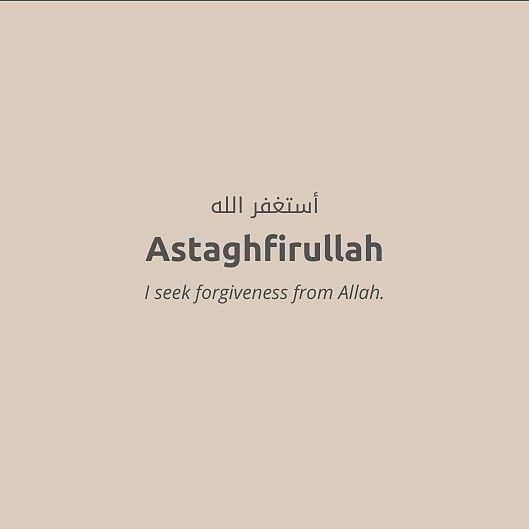
The phrase Astaghfirullah is made up of two parts:
- Astaghfiru (أستغفر) — “I seek forgiveness.”
- Allah (الله) — Allah, the One True God.
So, the literal translation is:
“I seek forgiveness from Allah.”
The word astaghfiru comes from the Arabic root gha-fa-ra (غ-ف-ر), which carries the meaning of covering, protecting, and forgiving. In Islamic understanding, asking Allah for forgiveness is not only about having sins erased but also asking Him to cover our faults with His mercy and protect us from repeating them.
Why Seeking Forgiveness Is Important in Islam
Seeking forgiveness (Istighfar) is a central act of worship in Islam. The Quran repeatedly reminds believers that no matter how great their mistakes may be, Allah is always ready to forgive those who sincerely repent.
Allah says:
وَٱسْتَغْفِرِ ٱللَّهَ ۖ إِنَّ ٱللَّهَ كَانَ غَفُورًۭا رَّحِيمًۭا ١٠٦
“And seek the forgiveness of Allah. Indeed, Allah is Ever-Forgiving, Most Merciful.” (Surah An-Nisa 4:106)
He also says:
وَمَن يَعْمَلْ سُوٓءًا أَوْ يَظْلِمْ نَفْسَهُۥ ثُمَّ يَسْتَغْفِرِ ٱللَّهَ يَجِدِ ٱللَّهَ غَفُورًۭا رَّحِيمًۭا ١١٠
“Whoever does evil or wrongs themselves then seeks Allah’s forgiveness will find Allah All-Forgiving, Most Merciful.” (Surah An-Nisa 4:110)
The Prophet Muhammad ﷺ also encouraged Muslims to seek forgiveness regularly. He said:
“Every son of Adam sins, and the best of those who sin are those who repent.” (Jami’ at-Tirmidhi)
Istighfar is not only about asking Allah to forgive past sins. It softens the heart, strengthens faith, brings inner peace, and reminds us to keep striving to become better.
Why Do Muslims Say Astaghfirullah?
Every Muslim makes mistakes. That’s part of being human. Islam teaches us to turn back to Allah whenever we fall short, and Astaghfirullah is one of the simplest and most beautiful ways to do that. It’s a daily reminder of Allah’s endless mercy and our constant need for His forgiveness.
Muslims commonly say Astaghfirullah:
- After Committing a Sin – To sincerely repent, ask Allah for forgiveness, and resolve to do better.
- During Daily Remembrance (Dhikr) – As part of daily worship to keep the heart connected to Allah and spiritually aware.
- To Seek Allah’s Mercy and Forgiveness – Hoping for His mercy, peace, protection, and blessings in this life and the Hereafter.
The Prophet Muhammad ﷺ, despite being free from sin, sought Allah’s forgiveness more than seventy times a day in one narration and one hundred times a day in another. His example reminds us that Istighfar is not only for major mistakes—it’s a daily act of humility, worship, and drawing closer to Allah.
One of the Sunnah practices after every obligatory prayer is saying “Astaghfirullah” three times.
Discover the complete Dhikr After Salat and learn the authentic supplications and their benefits.
Benefits of Saying Astaghfirullah
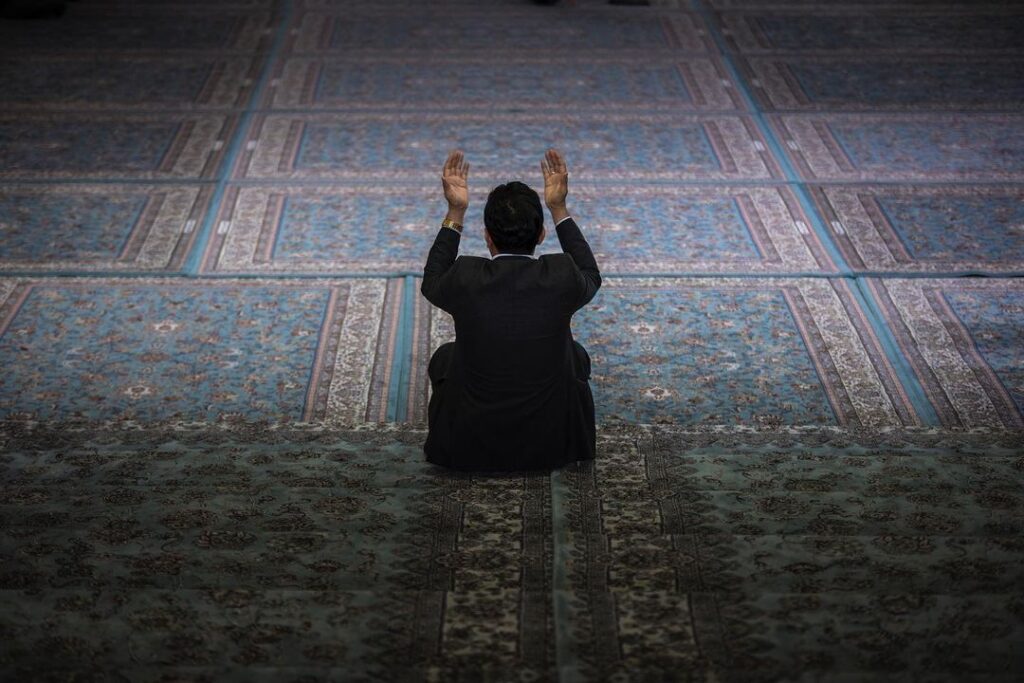
Although Astaghfirullah is a short phrase, its rewards are immense. The Quran and Sunnah repeatedly highlight the blessings that come from sincerely seeking Allah’s forgiveness. Beyond wiping away sins, regular Istighfar brings peace to the heart, strengthens faith, and reminds us that Allah’s mercy is always within reach.
Forgiveness of Sins
The greatest benefit of saying Astaghfirullah is earning Allah’s forgiveness.
Every person makes mistakes, but Allah loves those who turn back to Him in sincere repentance. No matter how many times someone falls into sin, the door of repentance remains open as long as they sincerely seek forgiveness and strive to change.
Allah says:
فَقُلْتُ ٱسْتَغْفِرُوا۟ رَبَّكُمْ إِنَّهُۥ كَانَ غَفَّارًۭا ١٠
“Ask forgiveness of your Lord. Indeed, He is Ever-Forgiving.” (Surah Nuh 71:10)
Seeking forgiveness regularly also helps believers stay humble, recognizing that they are always in need of Allah’s mercy.
Relief from Worries and Hardships
One of the beautiful promises connected to Istighfar is that it brings relief during difficult times.
The Prophet Muhammad ﷺ said:
“Whoever constantly seeks forgiveness, Allah will make for him a way out of every distress, relieve every anxiety, and provide for him from where he does not expect.” (Sunan Abi Dawud)
For this reason, many Muslims turn to Astaghfirullah when facing stress, sadness, uncertainty, or personal struggles. While challenges are part of life, seeking Allah’s forgiveness reminds believers to place their trust in Him and hope for His help.
Different Forms of Istighfar
There are many authentic ways to seek Allah’s forgiveness. Some are short and easy to repeat throughout the day, while others are longer supplications taught by the Prophet Muhammad ﷺ. All of them carry the same purpose: turning back to Allah with sincerity, humility, and hope in His mercy.
Astaghfirullah
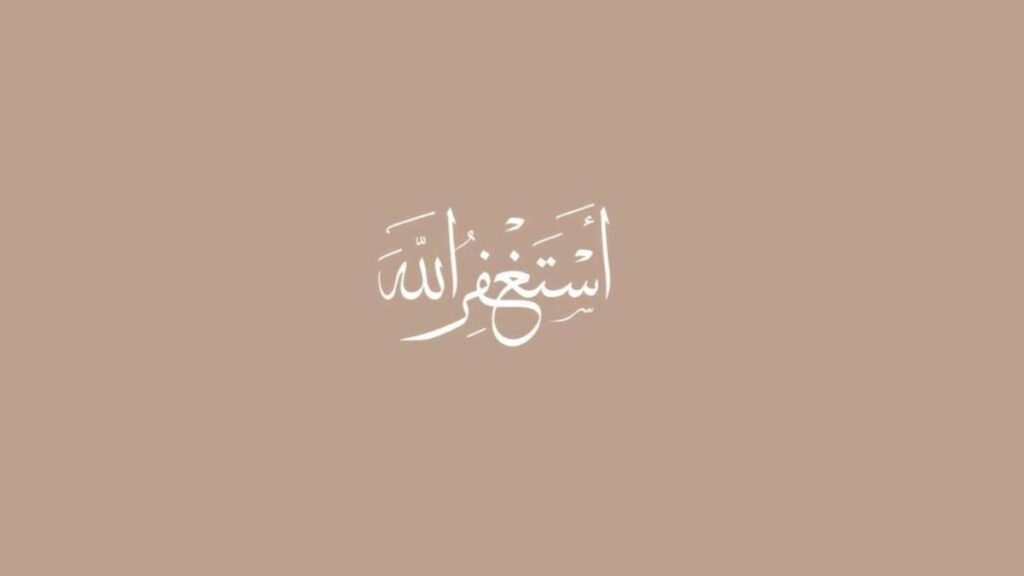
The simplest and most commonly recited form is:
أَسْتَغْفِرُ اللَّهَ
Astaghfirullah
“I seek forgiveness from Allah.”
Despite being just one short phrase, it is one of the most powerful forms of dhikr. Muslims say it after making a mistake, after prayer, during moments of reflection, or whenever they want to draw closer to Allah.
The Prophet ﷺ also made it a habit to say Astaghfirullah three times after each of the five daily prayers.
Astaghfirullaha wa Atubu Ilayh
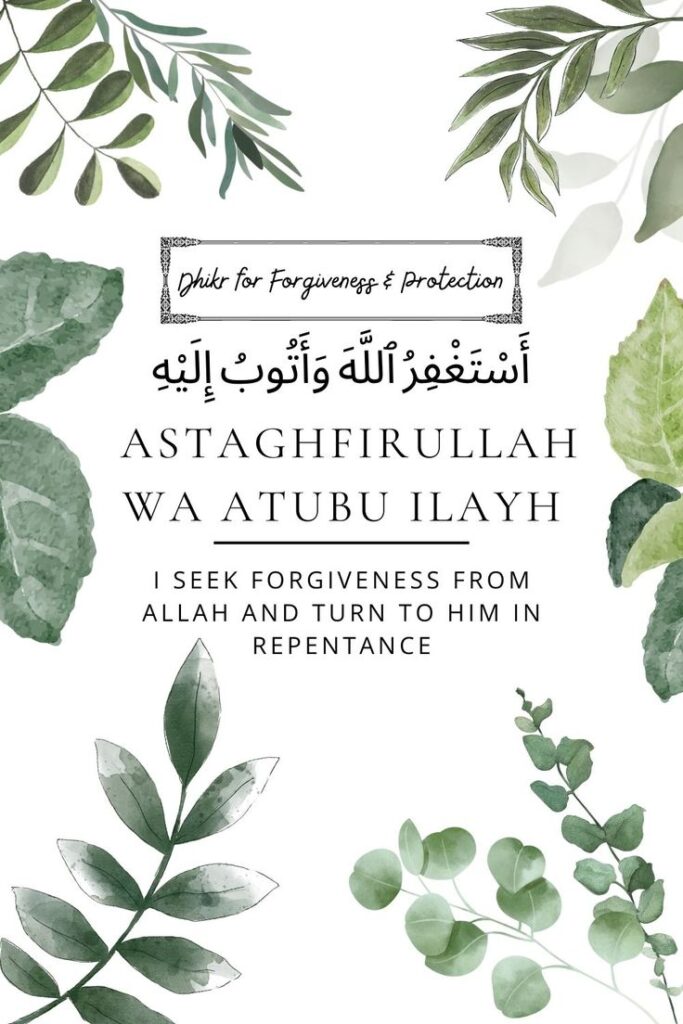
Another beautiful form is:
أَسْتَغْفِرُ اللَّهَ وَأَتُوبُ إِلَيْهِ
Astaghfirullaha wa Atubu Ilayh
“I seek forgiveness from Allah and repent to Him.”
This supplication combines Istighfar (seeking forgiveness) with Tawbah (repentance), expressing not only a request for Allah’s pardon but also a sincere intention to leave sins behind and return to Him.
The Prophet ﷺ frequently sought Allah’s forgiveness and repented throughout the day, making this an excellent supplication to recite regularly.
Sayyidul Istighfar
The greatest and most comprehensive supplication for seeking forgiveness is Sayyidul Istighfar, often translated as “The Master of Seeking Forgiveness.”
The Prophet Muhammad ﷺ described it as the best form of Istighfar and recommended reciting it in the morning and evening with sincere faith.
Arabic:
اللَّهُمَّ أَنْتَ رَبِّي لَا إِلٰهَ إِلَّا أَنْتَ، خَلَقْتَنِي وَأَنَا عَبْدُكَ، وَأَنَا عَلَىٰ عَهْدِكَ وَوَعْدِكَ مَا اسْتَطَعْتُ، أَعُوذُ بِكَ مِنْ شَرِّ مَا صَنَعْتُ، أَبُوءُ لَكَ بِنِعْمَتِكَ عَلَيَّ، وَأَبُوءُ بِذَنْبِي، فَاغْفِرْ لِي، فَإِنَّهُ لَا يَغْفِرُ الذُّنُوبَ إِلَّا أَنْتَ.
Transliteration:
Allahumma anta Rabbi, la ilaha illa Anta, khalaqtani wa ana ‘abduka, wa ana ‘ala ‘ahdika wa wa’dika mastata’tu. A’udhu bika min sharri ma sana’tu, abu’u laka bini’matika ‘alayya, wa abu’u bidhanbi, faghfir li, fa innahu la yaghfiru adh-dhunuba illa Ant.
Meaning:
O Allah, You are my Lord. There is no god worthy of worship except You. You created me, and I am Your servant. I remain faithful to Your covenant and promise as much as I am able. I seek refuge in You from the evil of what I have done. I acknowledge Your blessings upon me, and I acknowledge my sins. So forgive me, for no one forgives sins except You.
Other Authentic Supplications for Forgiveness
Besides these well-known forms, the Sunnah contains many authentic duas for seeking Allah’s forgiveness. Among them are:
- Astaghfirullah al-‘Azim alladhi la ilaha illa Huwa al-Hayyul-Qayyum wa atubu ilayh
“I seek forgiveness from Allah, the Most Great, besides whom there is no god worthy of worship, the Ever-Living, the Sustainer, and I repent to Him.” - Rabbi-ghfir li wa tub ‘alayya innaka Antat-Tawwabur-Raheem
“My Lord, forgive me and accept my repentance. Indeed, You are the Accepter of repentance, the Most Merciful.”
These authentic supplications can be recited throughout the day, especially during personal dua, after worship, and whenever a believer wishes to seek Allah’s forgiveness with sincerity.
Final Thoughts on Astaghfirullah
Astaghfirullah is much more than a phrase we repeat—it is a lifelong habit that strengthens our relationship with Allah. Every time we seek His forgiveness, we acknowledge our shortcomings, place our trust in His mercy, and take a step toward becoming better Muslims.
No matter where you are in your faith journey, making Istighfar a daily habit can bring peace to your heart, increase your connection with Allah, and remind you that His mercy is always greater than your mistakes.
Teaching children to say Astaghfirullah from an early age helps them develop humility, accountability, and the habit of turning back to Allah after making mistakes.
Looking for more ways to nurture your child’s Islamic character? Read our guide on Islamic Etiquettes for Kids: 30+ Manners Every Child Should Learn to discover practical Islamic manners every young Muslim should know.
Learn Islamic Duas and Dhikr with Areeb Academy
If you’d like guided support in building this habit and deepening your Islamic knowledge, Areeb Academy is here to help.
At Areeb Academy, we help children and adults build a strong foundation in Islam through engaging, authentic, and personalized online classes.
- Online Islamic Studies for Kids and Adults with qualified native Arabic teachers.
- Learn Authentic Daily Duas and Adhkar from the Quran and Sunnah with their meanings and practical application.
- Build Strong Islamic Knowledge through one-on-one lessons designed to strengthen faith and confidence.
Book your FREE trial class today and begin your journey toward learning Islam with authentic guidance from experienced teachers.
⁉️FAQs
1- Is it okay to say Astaghfirullah every day?
Yes. In fact, making Istighfar a daily habit is highly encouraged in Islam. The Prophet Muhammad ﷺ regularly sought Allah’s forgiveness throughout the day, teaching Muslims that seeking forgiveness is a continuous act of worship, not only something done after committing a sin.
2- How many times should you say Astaghfirullah?
There is no fixed number that every Muslim must follow. However, authentic hadith mention that the Prophet ﷺ sought Allah’s forgiveness more than seventy times, and in another narration, one hundred times a day. He also said Astaghfirullah three times after each of the five daily prayers.
3- Can you say Astaghfirullah without wudu?
Yes. Astaghfirullah is a form of dhikr (remembrance of Allah), so it can be recited with or without wudu. While being in a state of purification is recommended for many acts of worship, it is not a requirement for making Istighfar.
4- What is the difference between Astaghfirullah and Tawbah?
Astaghfirullah means “I seek forgiveness from Allah,” while Tawbah refers to sincere repentance. Tawbah includes feeling genuine regret, stopping the sin, asking Allah for forgiveness, and making a firm intention not to return to it. Saying Astaghfirullah is often the first step in making Tawbah.