
Egyptian Colloquial Vocabulary is your gateway to speaking like a local and understanding the true spirit of Egypt. Learning Masri is not just about memorizing words—it’s about feeling the rhythm of conversations, enjoying the humor, and connecting with the culture. From everyday greetings to popular expressions in movies and songs, mastering Egyptian vocabulary allows you to communicate naturally and confidently. Whether you’re a beginner or aiming to refine your fluency, this guide will help you build a strong foundation and speak Egyptian Arabic with ease.
What Makes Egyptian Colloquial Vocabulary Unique?
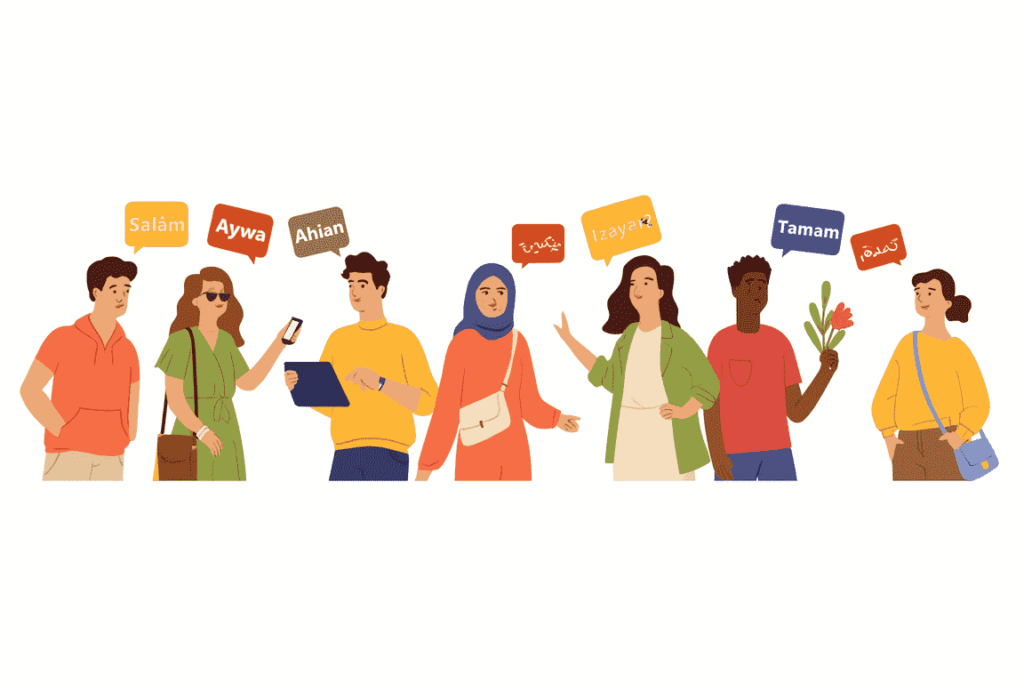
Egyptian Colloquial Arabic, or Masri, has a vocabulary that stands out among Arabic dialects. Its uniqueness comes from centuries of cultural exchange, which brought in words from Coptic, Turkish, French, English, Italian, and Greek. Everyday expressions, colorful slang, and idioms like fil-mišmiš (“when pigs fly”) or dammu khafiif (“he’s fun to be around”) give conversations humor, warmth, and local flavor. Masri also uses flexible connectors and reaction words like ya3ni and keda, which make speech fluid and expressive, distinguishing it clearly from the more formal Modern Standard Arabic.
Why Masri Is the Easiest Arabic Dialect to Learn
Many learners find Egyptian Arabic approachable because it prioritizes practical communication. Its grammar is simpler and more regular than Modern Standard Arabic, with straightforward verb conjugations, a distinctive negation system (ma…sh), and shortened pronouns and articles. Additionally, Egypt’s dominance in film, music, and TV means learners are often exposed to authentic Masri naturally, helping them understand idioms, humor, and everyday speech quickly.
Difference Between Fusha and Egyptian Colloquial Vocabulary
While Modern Standard Arabic (Fusha) is formal and primarily used in writing and official settings, Egyptian Arabic is a living, spoken language full of unique words, slang, and idiomatic expressions. Masri blends classical Arabic roots with local innovations, allowing Egyptians to communicate naturally and humorously in daily life. Vocabulary in Masri is shaped by practical needs and cultural interactions, making it more expressive and flexible than the rigid, rule-based Fusha.
Want to learn Fusha Arabic step-by-step from home? Check out this blog post for a clear, practical guide to get you started— here
How Egyptians Naturally Mix Classical Arabic With Slang
Egyptians have a unique way of blending Modern Standard Arabic (Fusha) with their everyday colloquial speech, Masri. In daily conversation, they often insert classical words, expressions, or grammatical structures into casual dialogue, giving their speech a playful or expressive twist. For example, a formal word like sah (“correct”) might appear alongside slang like keda (“like this”) in the same sentence. This mix makes conversations lively and flexible, reflecting both cultural knowledge and a sense of humor. It also allows Egyptians to communicate nuanced ideas quickly, balancing clarity with personality—a feature that learners notice immediately when listening to native speakers.
Essential Egyptian Colloquial Vocabulary for Daily Conversations
Greetings and Common Expressions

- إزيّك؟ (Ezzayyak? / How are you?)
- صباح الفل (Sabah el-full / Good morning!)
- تمام (Tamaam / Fine, okay)
- ماشي (Mashi / Okay, got it)
- خلاص (Khalas / Done, enough, okay)
- إيه الأخبار؟ (Eh el-akhbar? / What’s up?)
- يسعد صباحك (Yesa‘id Sabahak / Good morning, lit. “May your morning be happy”)
Everyday Verbs Used in Masri
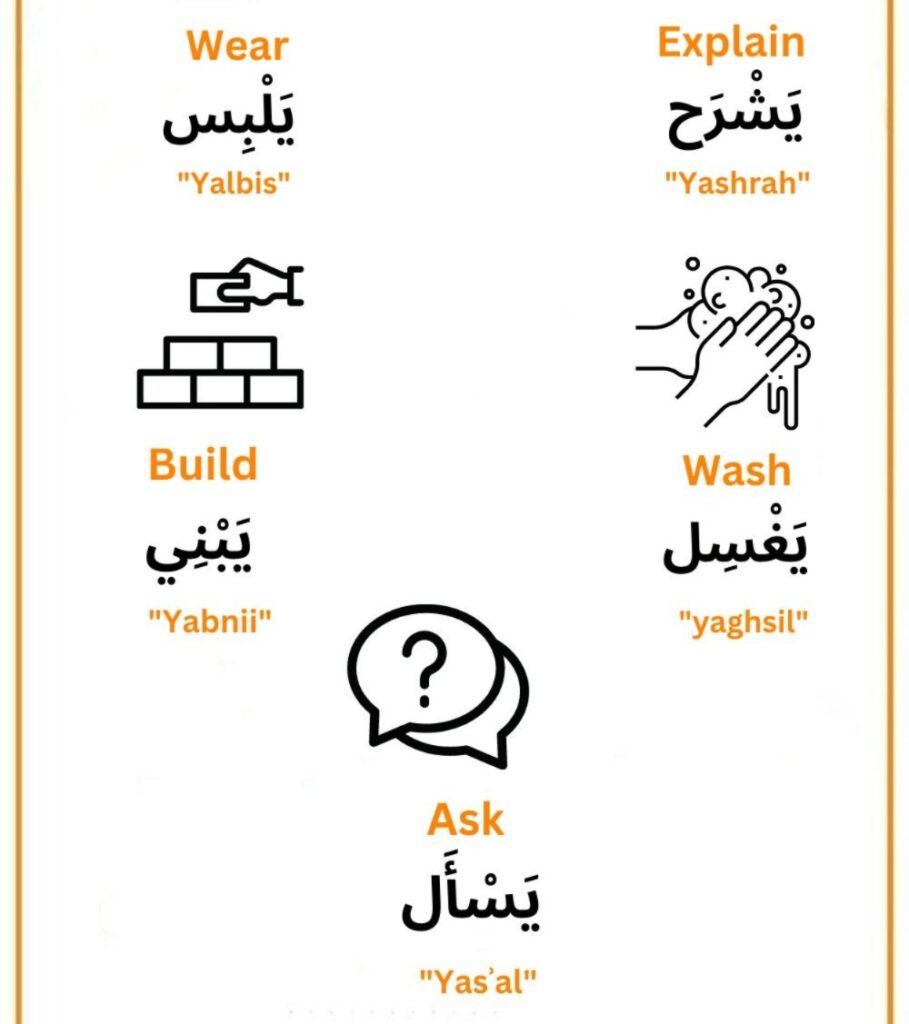
- عايز (‘Ayez / I want)
- رايح (Rayeh / Going)
- جاي (Gayi / Coming)
- عامل (‘Aamel / Doing / How are you doing?)
- فاكر (Fakir / Remember)
- ناسي (Nasi / Forgetting)
- قول (‘Ol / Say / Tell)
- شوف (Shoof / Look / See)
- أكل (Akal / Ate / Eat)
Useful Masri Nouns for Daily Life
- أكل (Akl / Food)
- قهوة (Ahwa / Coffee)
- عربية (‘Arabiya / Car)
- أوضة (Oda / Room)
- شارع (*Share‘ / Street)
- محطة (Mahatta / Station)
- مشاعر (Masha‘ir / Emotions / Feelings)
- فلوس (Flous / Money)
Polite Words and Cultural Expressions
- من فضلك (Min fadlak/fadlik / Please)
- بعد إذنك (Ba‘d iznak/iznik / Excuse me / May I…?)
- ميّت شكر (Mayyit shokr / Many thanks)
- مع السلامة (Ma‘a el-salama / Goodbye)
- توصل بالسلامة (Tewasel bel-salama / Safe travels)
Egyptian Colloquial Vocabulary for Real-Life Situations
At the Market (Souq) – Buying & Bargaining

- How much is this? – بكم ده؟ (Bikam da?)
- Too expensive! – كتير أوي! (Kitir awi!)
- I’ll pay… – أنا بدفع… (Ana badfa3…)
- Done / Enough – خلاص (Khalas!)
- Money – فلوس (Flous)
- Tip – بقشيش (Baksheesh)
- It’s fine / to close a deal – خلاص (Khalas)
At a Café or Restaurant – Ordering Like a Local

- I want this – عايز / عايزة ده (Ayez / Ayezah da)
- Can I have…? – ممكن…؟ (Moomkin…?)
- I’m hungry / thirsty – أنا جعان / أنا عطشان (Ana ga‘an / Ana ‘atshan)
- Menu – منيو (Menu)
- Coffee – قهوة (Ahwa)
- Water – مياه (Maya)
Using Transportation – Taxi, Metro, Uber Vocabulary

- Hey, driver! – يا اسطى (Ya usta!)
- Let’s go – يلا بينا (Yalla beena)
- Where to? – على فين؟ (‘Ala fein?)
- Here – هنا (Hena)
- Straight ahead – على طول (‘Ala tool)
- Left / Right – شمال / يمين (Shamal / Yameen)
- How expensive is the ticket? – التذكرة بكم؟ (Eltazkara bikam?)
- Can I pay by card? – ممكن أدفع بالكارت؟ (Moomkin adfa‘ bel-kart?)
Social Conversations with Friends and Neighbors
- What’s your name? – اسمك إيه؟ (Esmak eh? m / Esmik eh? f)
- Where are you from? – إنت منين؟ (Enta menin? m / Enti menin? f)
- Where do you live? – ساكن فين؟ (Sakin fein? m / Sakina fein? f)
- I am from… – أنا من… (Ana men…)
- I am… years old – عندي… سنة (3andi… sana)
- Do you speak English? – بتتكلم إنجليزي؟ (Betetkallim Englizee? m / Betetkallimi Englizee? f)
- Sometimes – ساعات (Sa‘at)
- Always – على طول (‘Ala tool)
- Never – أبدًا (Abadan)
Popular Slang in Egyptian Colloquial Vocabulary (Fun & Common Words)
Egyptian Arabic is full of lively and fun slang that makes conversations more colorful. In everyday speech, Egyptians use playful expressions that add warmth and personality. Moreover, many of these slang words appear in movies, songs, and social media, which makes them even more popular. As a result, learners quickly pick them up and start sounding more natural. Below, you’ll find some of the most common slang words you’ll hear almost everywhere in Egypt.
- Ahlan – أهلاً (Ahlan) – A casual “hello” or “welcome”
- Yalla – يلا (Yalla) – “Let’s go,” “hurry up,” or “come on”
- Eshta – قشطة (Eshta) – “Cool,” “awesome,” or “sounds good”
- Khalas – خلاص (Khalas) – “Enough,” “done,” or “okay”
- Ma’alesh – معلش (Ma’alesh) – “Never mind,” “it’s okay,” or a soft apology
- Meyya Meyya – مية مية (Meyya Meyya) – “Perfect,” “100%,” or “flawless”
- Asal – عسل (Asal) – “Sweet,” a compliment for someone nice or kind
- Ya Basha – يا باشا (Ya Basha) – “Boss,” “chief,” or “my friend” in a friendly/respectful way
- Fukkak – فكك (Fukkak) – “Leave it,” “chill out,” or “don’t worry”
- Men 3enaya – من عنيا (Men 3enaya) – “Sure, I’d be happy to” (literally: “from my eyes”)
- Bas – بس (Bas) – “But” or “just”
- Tab / Tayyeb – طب / طيب (Tab / Tayyeb) – “Then,” “so,” or “okay”
Trending Modern Masri Slang
Modern Egyptian slang is always evolving, especially among youth. Some trending phrases you’ll hear:
- Dah mashy – ده ماشي (Dah mashy) – “It’s fine,” “all good”
- Floosy – فلوسي (Floosy) – “My money” or casually talking about cash
- Shwaya shwaya – شوية شوية (Shwaya shwaya) – “Slowly, take it easy”
- 3andak eh? – عندك إيه؟ (3andak eh?) – “What do you have?” / “What’s up?”
- Keteer awi – كتير أوي (Keteer awi) – “Too much” or “very”
- Mesh fahem – مش فاهم (Mesh fahem) – “I don’t get it”
Expressions Egyptians Use for Humor
Egyptians love jokes, puns, and funny sayings. Some expressions often used in humor:
- Fil-mishmish – في المشمش (Fil-mishmish) – “When pigs fly” (literally: “in the apricot season”)
- Dammu khafeef – دمه خفيف (Dammu khafeef) – “He’s fun to be around” (literally: “his blood is light”)
- Zayy il-full – زي الفل (Zayy il-full) – “Perfect” (literally: “like jasmine”)
- Ha2oolak eh? – هاقولك إيه؟ (Ha2oolak eh?) – “Guess what?” / “I’ll tell you something funny”
- Mafeesh mushkela – مفيش مشكلة (Mafeesh mushkela) – “No problem,” often used jokingly to lighten a situation
Youth Phrases You Hear Everywhere
Young Egyptians have their own casual way of speaking, full of energy and slang:
- 3ala el-rad – على الرد (3ala el-rad) – “On it” / “I got you”
- Ta3ala – تعالى (Ta‘ala) – “Come here”
- Haram 3leik – حرام عليك (Haram 3leik) – “Shame on you” / jokingly scolding a friend
- Mish 3awez – مش عايز (Mish 3awez) – “I don’t want”
- Ya gamaa3a – يا جماعة (Ya gamaa3a) – “Guys / everyone” (used to call friends)
- Fadya? – فاضية؟ (Fadya?) – “Are you free?” / “Got time?”
How to Learn Egyptian Colloquial Vocabulary Effectively

Learning Egyptian Arabic is not just about memorizing words—it’s about living the language. To begin with, you need to surround yourself with the sounds, rhythm, and expressions of daily Masri. Additionally, try to listen to native speakers as often as possible, because this helps you catch natural intonation and real conversational flow. Moreover, using the phrases you learn in small, everyday situations will make them stick faster. Eventually, with consistent practice, you’ll find yourself speaking more confidently and naturally. Here’s how you can do it effectively:
Listen to Egyptian Series, Songs, and Podcasts
Immersing yourself in Egyptian media is one of the fastest ways to pick up everyday vocabulary and slang.
- Watch Egyptian TV shows (Mosalsalat) and films with subtitles at first, then try watching without them.
- Listen to Egyptian music—from classic icons to modern hits on YouTube or Spotify. Pay attention to repeated phrases and expressions.
- Follow Egyptian podcasts on daily life, comedy, or pop culture. Listening daily improves your ear for the rhythm, tone, and pronunciation of the dialect.
Practice With Native Speakers Daily

Speaking with Egyptians is the key to mastering real-world vocabulary.
- Join online communities or groups where Egyptians gather to chat about movies, culture, or current events.
- Don’t fear mistakes—every error is an opportunity to learn. Ask for feedback on pronunciation, word choice, and sentence structure.
- Use phrases immediately in conversation, even if imperfect, to reinforce memory.
Use Flashcards, Repetition, and Real Situations

Active practice helps you retain vocabulary faster.
- Create flashcards using apps like Anki or Quizlet with Egyptian phrases, not just single words. Include Arabic + transliteration + English for easier recall.
- Use spaced repetition: review older cards more often to keep them fresh in your memory.
- Practice in real-life situations—order food in Egyptian Arabic, ask for directions, or greet neighbors. The more context, the stronger the retention.
- Shadow native speakers: repeat lines from shows, videos, or podcasts immediately after hearing them to mimic natural rhythm and intonation.
Join an Online Egyptian Arabic Course
Structured courses give you guidance, accountability, and expert feedback. Moreover, they help you stay organized and follow a clear learning path instead of guessing what to study next. In addition, having a teacher correct your pronunciation and grammar early on prevents mistakes from becoming habits. Finally, structured lessons keep you motivated, because you always know what your next step is and how far you’ve progressed.
- Follow a program with daily practice exercises in listening, speaking, reading, and writing.
- Interact with instructors and peers to clarify doubts and learn proper usage of slang and expressions.
- Track your progress: courses like Areeb Academy provide lesson plans, quizzes, and review sessions to ensure you master vocabulary step by step.
- Combine with self-study: use flashcards, media, and conversation practice alongside your course for faster results.
Pro Tip: The key to learning Egyptian Colloquial vocabulary is consistency and immersion. Even 20–30 minutes a day, practiced the right way, will get you speaking like a local faster than you think!
Egyptian Colloquial Vocabulary vs Other Dialects
Egyptian Arabic (Masri) stands out among Arabic dialects due to its rich vocabulary influenced by centuries of history and diverse cultures. It incorporates words from Coptic and Ancient Egyptian, like nounou (little) or bo3bo3 (ghost), which are rare or absent in other dialects. Egypt’s long interactions with Greek, Turkish, French, British, and recently English speakers have introduced unique loanwords, giving Masri expressions that may not exist in Levantine, Gulf, or Maghrebi Arabic.
Masri also has distinct everyday expressions and cultural terms, like ya ged’an (friend) or ya batal (hero), which reflect the humor and warmth of Egyptian culture. Additionally, grammatical and phonetic traits such as the hard ‘g’ sound for ج, vowel shifts (bayt → beit), and the ma…sh negation make Egyptian vocabulary instantly recognizable.
Why Masri Is Widely Understood Across the Arab World

Egyptian Arabic has achieved wide recognition across Arab countries primarily due to Egypt’s strong media industry, including films, music, and TV shows. Audiences from Morocco to the Gulf are familiar with Masri expressions, even if they don’t speak it natively. Its simple grammar, clear pronunciation, and relatable cultural expressions make it accessible and easy to follow. Masri’s popularity in pop culture has made it a “lingua franca” among Arabs in informal contexts, especially for humor, storytelling, and music.
Main Differences Between Masri, Levantine, and Gulf Arabic
While all Arabic dialects share roots in Classical Arabic, each region has developed its own flavor:
| Region | Dialect | Example (How are you?) | Pronunciation |
|---|---|---|---|
| Egypt | Masri (مصري) | أزيك | Ezayyak? |
| Levant (Syria, Lebanon, Jordan, Palestine) | Levantine (شامي) | كيفك | Keefak? |
| Gulf (Saudi Arabia, UAE, Kuwait) | Khaleeji (خليجي) | شلونك | Shlonak? |
| Morocco / North Africa | Maghrebi (مغربي) | كيداير | Kidayr? |
| Classical Arabic | FusHa (فصحى) | كيف حالك | Kayfa haluk? |
Key differences:
- Vocabulary: Masri uses unique words influenced by Coptic, Turkish, Greek, and English, while Levantine and Gulf dialects have their own borrowed terms.
- Pronunciation: Masri often softens or shifts sounds (ج → g, ق → glottal stop), making it distinct from Levantine or Gulf Arabic.
- Grammar: Masri’s ma…sh negation and simplified verb structures differ from the more conservative Gulf forms or the Levantine dialect.
Despite these differences, Classical Arabic remains the common factor, understood by all Arabs, while dialects give it life and character. Misunderstandings can occur, but the diversity adds richness and humor to everyday communication.
Final Tips to Master Egyptian Colloquial Vocabulary
Learning Egyptian Arabic (Masri) is an exciting journey into the heart of Egyptian culture. It’s more than just words—it’s the rhythm of everyday life, the laughter in the streets, and the warmth of friendly conversations. Whether you’re starting from scratch or building on what you already know, mastering vocabulary is the key to speaking naturally and confidently.
In the following tips, we’ll guide you through practical ways to learn efficiently, sound authentic, and enjoy the process. By focusing on small steps, paying attention to cultural nuances, and practicing consistently, you’ll not only remember words but also feel at home speaking Egyptian Arabic.
Learn Slowly, Speak Naturally
Learning a new language, especially a vibrant dialect like Egyptian Arabic, is a journey, not a race. Don’t overwhelm yourself by trying to memorize too many words at once. Focus on small, manageable chunks of vocabulary each day. Speak out loud, even if it’s just to yourself, to get comfortable with the sound, rhythm, and flow of the language. Repetition is essential—hearing and using words in real contexts helps your brain retain them more effectively. Remember, it’s better to master a few words completely than to know many words superficially.
Pay Attention to Tone and Cultural Nuances
Egyptian Arabic is not only about words—it’s about emotion, humor, and cultural context. In fact, how you say something is often as important as what you say. For instance, a simple greeting like “Ezayyak?” can feel warm and friendly if your tone matches the casual, welcoming style Egyptians use. Therefore, learn phrases in real-life context by watching Egyptian movies, TV shows, or listening to podcasts. Moreover, notice how locals joke, express emotions, and respond politely or humorously. As a result, understanding these subtleties will make your speech sound natural and prevent misunderstandings.
Consistency Is the Key to Becoming Fluent
Fluency doesn’t come overnight—instead, it grows through daily practice and steady exposure. First, even 10–15 minutes each day is far more effective than long, irregular study sessions. Next, you should use your vocabulary actively: speak with friends, write short dialogues, or even narrate your day in Masri. Furthermore, revisit the words you’ve learned regularly and try to use them in different sentences. As a result, over time, your brain will naturally start to think in Egyptian Arabic, making your conversations smoother and more effortless. Finally, remember that learning a language is like planting a garden—consistent care and practice always lead to beautiful results.
Final Thought
Mastering Egyptian Colloquial Vocabulary is a journey, not a race. Therefore, give yourself the time to learn slowly, practice regularly, and speak naturally. Moreover, pay attention to the tone, expressions, and cultural nuances that make Masri so rich and vibrant. After all, consistency is your best friend—daily practice, active listening, and using new words in real conversations will gradually turn your vocabulary into effortless fluency. Ultimately, embrace the language with curiosity and patience, and soon you’ll be able to enjoy authentic conversations and feel the warmth of Egyptian culture through words.
Ready to start learning Egyptian Arabic and talk like a native? 🌟
Join Areeb Academy and enjoy:
- Lessons with native Egyptian Arabic speakers
- Flexible timings that fit your schedule
- Interactive, fun, and practical learning for real-life conversations
- Personalized guidance to boost your confidence quickly
🎉 Book your FREE trial today and start speaking Egyptian Arabic naturally!
FAQs – Learning Egyptian Arabic
1. What is Egyptian Arabic (Masri)?
Egyptian Arabic, or Masri, is the spoken language of Egypt. It blends classical Arabic roots with local slang, expressions, and cultural nuances, making it lively, emotional, and widely understood across the Arab world.
2. How is Masri different from Classical Arabic (Fusha)?
Fusha is formal, standardized, and used in writing, media, and official settings. Masri, on the other hand, is informal, flexible, and full of everyday expressions, making conversations natural and expressive.
3. Can I learn Masri if I already know Fusha?
Absolutely! Knowing Fusha helps you understand the roots of the words, but Masri introduces colloquial pronunciations, slang, and cultural expressions that Fusha doesn’t cover.
4. How long does it take to become fluent in Egyptian Arabic?
Fluency depends on consistency, practice, and immersion. Daily practice of 10–30 minutes can lead to noticeable improvement within a few months. Using Masri in real conversations speeds up learning significantly.
5. What’s the best way to learn Egyptian Arabic?
- Start with common words and phrases.
- Listen to Egyptian media: shows, songs, and podcasts.
- Practice speaking daily with native speakers or language partners.
- Use structured courses for guidance and feedback.
6. Can I learn Masri online?
Definitely! Online courses allow flexible timings, access to native instructors, and interactive sessions. You can practice speaking, listening, and writing from home at your own pace.
7. Is Masri widely understood in the Arab world?
Yes! Egyptian media like movies, music, and TV shows have made Masri one of the most widely recognized and understood dialects across Arab countries.