
If you’re just starting your Arabic journey, Arabic Harakat for Beginners is the perfect place to start. These small but essential marks — Fatha, Damma, Kasra, Shadda, Sukūn, and Tanween — guide pronunciation, preserve meaning, and help you read Arabic confidently, especially Quranic texts. With clear explanations and practical exercises, even kids and adults can learn at their own pace and build a strong foundation in reading and speaking Arabic.
At Areeb Academy, we focus on teaching Harakat in a clear, step-by-step way, making learning fun and effective for both kids and adults.
What Are Arabic Harakat?
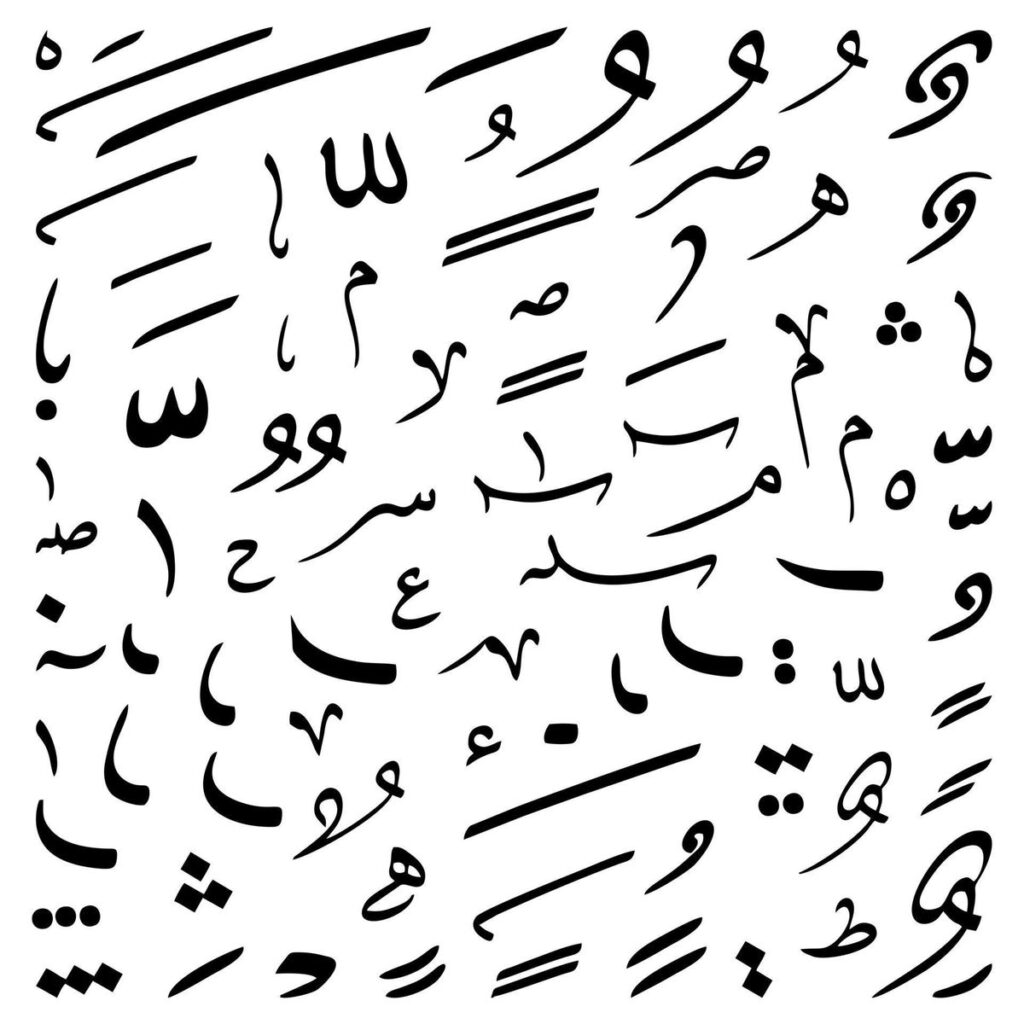
Arabic harakat for beginners are the small vowel marks placed above or below Arabic letters to guide correct pronunciation. Since Arabic letters mainly represent consonants, harakat play a crucial role in adding vowel sounds and clarifying how a word should be read. For a complete overview of all Arabic letters and how they compare with English, check out our guide Alphabet in Arabic and English: Full Comparison.
These tiny marks may look simple, but they carry a huge responsibility in the Arabic language. A single haraka can completely change the sound, grammar, and meaning of a word. That’s why harakat are considered the foundation of reading Arabic correctly—especially for non-native learners and Quran beginners.
Without harakat, Arabic text can feel confusing and overwhelming. With them, words suddenly make sense, sounds become clear, and reading turns into an achievable and enjoyable process.
Simple Definition of Arabic Harakat
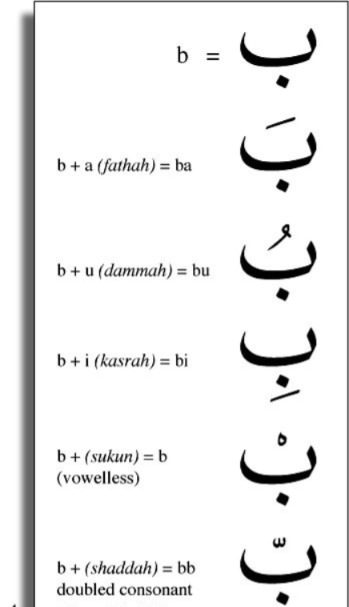
Arabic harakat (حركات) are short vowel signs that show how a letter is pronounced. Instead of writing vowels as separate letters like English (A, E, I, O, U), Arabic uses these small marks to represent vowel sounds.
The three main harakat are:
- Fatha (َ) → short “a” sound
- Kasra (ِ) → short “i” sound
- Damma (ُ) → short “u” sound
For example:
- بَ = ba
- بِ = bi
- بُ = bu
Think of harakat as pronunciation guides. They “move” the letter’s sound, which is exactly why they’re called harakat—a word that literally means movement in Arabic.
Why Harakat Are Essential for Beginners
For beginners, Arabic harakat are not optional—they are essential.
When you’re new to Arabic, you don’t yet recognize words by context the way native speakers do. Harakat give you clarity, confidence, and accuracy from day one. They prevent guessing and help you pronounce words exactly as they’re meant to be spoken.
Without harakat:
- The same word can have multiple meanings
- Beginners may mispronounce letters
- Reading becomes stressful and slow
With harakat:
- You read smoothly and confidently
- You avoid major meaning mistakes
- You build strong pronunciation habits early
That’s why Arabic harakat for beginners are often described as training wheels—they support you until reading becomes natural.
How Harakat Help You Read Arabic Correctly
Harakat guide your tongue, not just your eyes.
They tell you:

- Which vowel sound to use
- Whether a letter is silent (sukun)
- Whether a letter is doubled (shadda)
For example:
- كَتَبَ (kataba) → he wrote
- كُتِبَ (kutiba) → it was written
- كُتُب (kutub) → books
The letters are the same, but the harakat completely change the meaning.
This is especially important in Quranic Arabic and Tajweed, where a small vowel mistake can alter the meaning of an entire verse. That’s why mastering harakat early helps learners read accurately, understand better, and develop a deep connection with the language. For beginners who want a structured step-by-step approach, our guide on Noorani Qaida book shows how to practice reading Arabic with full harakat from day one.
In short, Arabic harakat for beginners turn Arabic from a confusing script into a clear, logical, and beautiful system you can actually enjoy learning.
Why Beginners Struggle Without Arabic Harakat
Beginners struggle to read Arabic without harakat because Arabic writing usually removes short vowels, leaving readers to guess pronunciation and meaning from context alone. While this feels natural for native speakers, it creates major confusion for new learners who haven’t yet built enough vocabulary, grammar awareness, or reading intuition.
Arabic harakat for beginners act as a roadmap. Without them, words can sound completely different, sentences can be misunderstood, and reading becomes slow and frustrating. This is why learners often feel confident when reading vowelled text but lost when harakat suddenly disappear.
Common Reading Mistakes
When beginners read Arabic without harakat, several common mistakes appear again and again:
- Guessing pronunciation incorrectly: Words with the same letters can be read in multiple ways, leading to wrong sounds and meanings.
- Mixing up verbs and nouns: Without vowel clues, learners may not recognize whether a word is an action, a subject, or an object.
- Misreading similar words: Many Arabic words look identical when unvowelled but mean entirely different things once harakat are added.
- Incorrect emphasis and stress: Beginners may stress the wrong syllable or use the wrong vowel length, which can confuse listeners.
These mistakes are normal—but they highlight why Arabic harakat for beginners are essential before moving on to unvowelled text.
Difference Between Reading With and Without Harakat
Reading Arabic with harakat is guided and precise. Each letter clearly shows how it should be pronounced, making it easier to focus on fluency and understanding. This is why beginner books, children’s materials, and the Quran include full harakat.
Reading Arabic without harakat, on the other hand, depends on:
- Vocabulary knowledge
- Grammar awareness
- Sentence structure
- Context clues
For example, the word علم can mean:
- عَلِمَ (ʿalima) → he knew / he learned
- عُلِمَ (ʿulima) → it was known / it became known
- عَلَم (ʿalam) → flag / sign
When learning Arabic, Arabic Harakat for Beginners are essential. With harakat, each word’s meaning is instantly clear, making reading accurate and confident. Without them, beginners often have to guess the pronunciation and meaning—and mistakes are common. That’s why anyone starting their Arabic journey should focus on Arabic Harakat for Beginners, mastering these vowel marks before moving on to unvowelled text. This approach ensures a solid foundation for both reading and speaking Arabic correctly.
Why Native Speakers Learn Them First
Many people assume native speakers never needed harakat—but that’s not true.
Native Arabic speakers learn with harakat first, just like beginners. Children start reading Arabic with full tashkeel to connect sounds with letters correctly. Only after years of exposure do they naturally read without harakat.
What gives native speakers an advantage later is:
- A large internal vocabulary
- Constant exposure to spoken Arabic
- Automatic recognition of word patterns
Beginners simply haven’t developed these skills yet—and that’s completely normal. This is why Arabic harakat for beginners are not a weakness, but a necessary learning stage.
Harakat build the foundation. Once pronunciation, patterns, and grammar become familiar, reading without harakat becomes a natural next step—not a struggle.
Types of Arabic Harakat for Beginners
Arabic harakat for beginners are the basic vowel and sound marks that tell you how to read each letter correctly. These small symbols may look simple, but they control pronunciation, meaning, and flow when reading Arabic.
At the beginner level, mastering these harakat is the key to reading Arabic smoothly and confidently. Let’s break them down one by one in the simplest way possible.
Fatha (َ) and How It Sounds
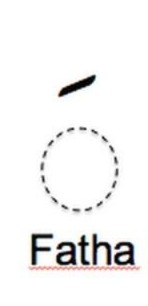
Fatha (َ) is a small diagonal line written above the letter.
It gives the letter a short “a” sound, similar to the a in “cat” or “apple”.
Examples:
- بَ = ba
- كَ = ka
- فَ = fa
Fatha is usually the first Arabic haraka for beginners to learn because it’s light, clear, and easy to pronounce. It opens the mouth slightly, which is why it’s called fatha—a word that means opening in Arabic.
Kasra (ِ) and How to Pronounce It
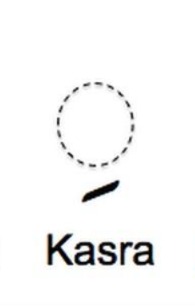
Kasra (ِ) is a small diagonal line written below the letter.
It creates a short “i” sound, like the i in “sit” or “bit”.
Examples:
- بِ = bi
- كِ = ki
- فِ = fi
When pronouncing kasra, the mouth is slightly closed and the sound feels lighter than fatha. For beginners, kasra helps train the ear to hear subtle vowel differences—an important skill when learning Arabic pronunciation.
Damma (ُ) Explained Simply
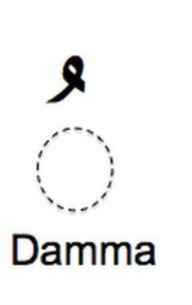
Damma (ُ) looks like a small loop or comma written above the letter.
It gives a short “u” sound, similar to the u in “put”.
Examples:
- بُ = bu
- كُ = ku
- فُ = fu
When pronouncing damma, the lips round slightly. This haraka may feel unfamiliar at first for beginners, but with practice, it becomes natural. Damma is essential for correct pronunciation and grammar, especially in formal Arabic and Quranic recitation.
Sukoon (ْ) – When There Is No Vowel
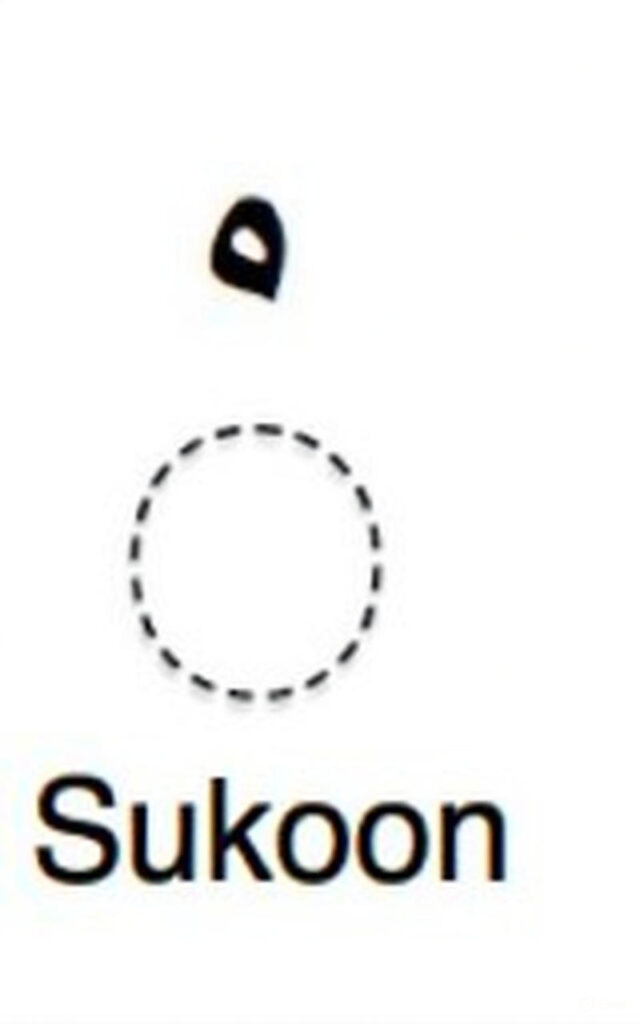
Sukoon (ْ) is a small circle written above a letter.
It means the letter has no vowel sound at all.
Examples:
- بْ = b
- مْ = m
Sukoon tells you to stop the vowel and pronounce only the consonant. This is very important in Arabic because words often combine letters with vowels and letters without vowels.
For beginners, sukoon helps you understand how Arabic syllables are formed and prevents adding extra vowel sounds that don’t belong there.
Tanween (ً ٍ ٌ) for Beginners
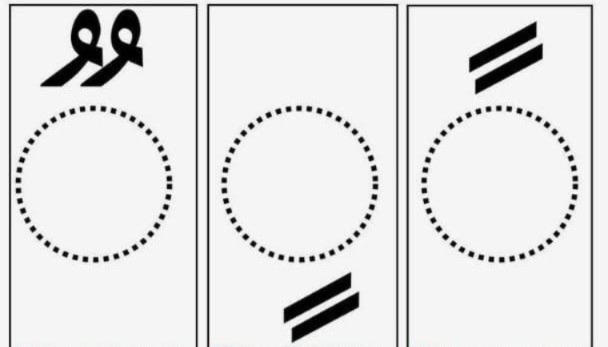
(ً ٍ ٌ) is the double form of the main harakat:
- ً (tanween fatha)
- ٍ (tanween kasra)
- ٌ (tanween damma)
Tanween adds a soft “n” sound at the end of a word and usually appears on nouns.
Examples:
- كِتَابٌ = kitābun
- كِتَابًا = kitāban
- كِتَابٍ = kitābin
For beginners, tanween may look advanced, but it’s simply a combination of a vowel sound plus an n. Learning tanween early helps with grammar awareness and prepares learners to understand formal Arabic texts more confidently.
✨ In short:
Mastering these types of Arabic harakat for beginners—fatha, kasra, damma, sukoon, and tanween—creates a strong foundation for accurate reading, clear pronunciation, and confident progress in Arabic.
How to Pronounce Arabic Harakat Correctly
Pronouncing Arabic harakat correctly is the foundation of clear and confident Arabic reading. These short vowels may seem small, but they control how words sound, flow, and even what they mean. For beginners, learning the correct mouth and tongue positions is just as important as memorizing the symbols themselves.
When harakat are pronounced accurately, Arabic becomes rhythmic and logical. When they’re not, words can sound unnatural or even turn into completely different meanings.
Mouth and Tongue Position Basics
Correct pronunciation starts with how you shape your mouth and move your tongue. Each haraka has a specific physical position:
- Fatha (َ)
- Mouth: Open vertically
- Lips: Relaxed, not stretched
- Sound: Short “a”
This openness gives the sound its clarity and strength.
- Kasra (ِ)
- Mouth: Slightly closed
- Tongue: Raised in the middle
- Sound: Short “i”
Kasra feels lighter and sharper than fatha.
- Damma (ُ)
- Mouth: Rounded
- Lips: Pushed forward
- Sound: Short “u”
This rounding is essential—without it, the sound becomes incorrect.
For beginners, practicing these mouth shapes in front of a mirror can make a big difference. Arabic pronunciation relies heavily on physical articulation, not just listening.
Short Vowels vs Long Vowels
One of the most common beginner challenges is confusing short vowels (harakat) with long vowels.
- Short vowels (harakat)
- Quick and light
- Examples: بَ (ba), بِ (bi), بُ (bu)
- Long vowels
- Extended and stretched
- Examples:
- بَا (baa)
- بِي (bee)
- بُو (boo)
This difference is critical because vowel length can change meaning completely.
For example:
- kataba (he wrote)
- kātaba (he corresponded)
Beginners should always practice short vowels first, then move to long vowels once the contrast becomes clear to the ear.
Common Pronunciation Errors to Avoid
When learning Arabic harakat, beginners often make similar mistakes. Being aware of them early helps you avoid bad habits:
- Stretching short vowels too long, making them sound like long vowels
- Ignoring Shadda, which causes letters to sound weak or incomplete
- Skipping Sukoon, leading to extra vowel sounds that don’t belong
- Applying native language accent, especially English vowel habits
- Blending vowels together, instead of pronouncing each clearly
Arabic harakat must be short, precise, and controlled. Each sound deserves its own space—neither rushed nor exaggerated.
✨ In summary:
To pronounce Arabic harakat correctly, focus on mouth position, clearly distinguish short and long vowels, and avoid common beginner errors. With consistent practice, your pronunciation will sound natural, confident, and accurate—laying a strong foundation for fluent Arabic reading and speaking.
Arabic Harakat With Examples
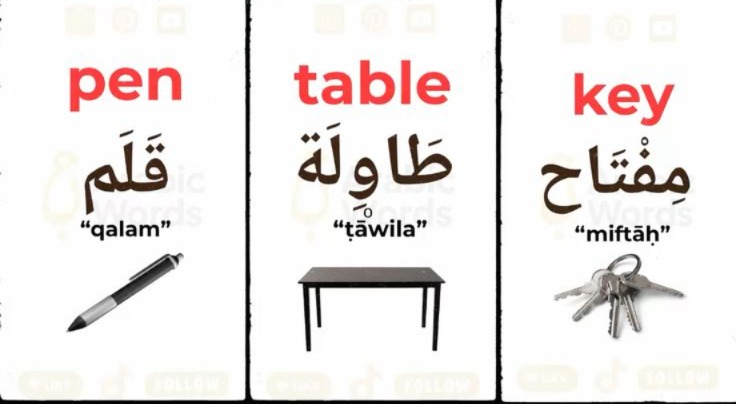
Seeing Arabic Harakat for Beginners in action is the fastest way to understand how they work. The same Arabic letter can sound completely different depending on the haraka placed on it. This is exactly why examples are essential for learners of Arabic Harakat for Beginners—they turn abstract rules into clear, audible patterns.
Let’s look at how Arabic Harakat for Beginners change sounds step by step.
One Letter, Different Harakat, Different Sounds
In Arabic, one letter can produce multiple sounds simply by changing the haraka. The letter itself stays the same, but the pronunciation changes.
Take the letter ب as an example:
- بَ → ba (with Fatḥa)
- بِ → bi (with Kasra)
- بُ → bu (with Ḍamma)
- بْ → b (with Sukūn, no vowel)
- بّ → bb (with Shadda, doubled sound)
This shows why harakat are so powerful. Without them, beginners wouldn’t know which sound to use, and the word could be read in multiple incorrect ways.
Simple Words Using Harakat
Here are easy, beginner-friendly words that show how harakat work inside real Arabic words:
- كَتَبَ (kataba) – he wrote
- Fatḥa gives the short “a” sound throughout the word.
- كُتُب (kutub) – books
- Ḍamma creates the short “u” sound.
- كِتَاب (kitāb) – book
- Kasra + long vowel Alif changes both sound and meaning.
- اِبْن (ibn) – son
- Sukūn stops the vowel on بْ.
- فَرَّ (farra) – he fled
- Shadda doubles the ر sound.
These examples show how harakat don’t just affect pronunciation—they directly affect meaning.
Practice Reading Step by Step
For beginners, reading with harakat should follow a gradual process:
- Start with single letters
Practice: بَ / بِ / بُ slowly and clearly. - Move to short words
Examples:- بَاب (baab)
- كُتُب (kutub)
- عِلْم (ʿilm)
- Pay attention to vowel length
Notice the difference between:- بَ (ba)
- بَا (baa)
- Read aloud, not silently
Speaking helps your mouth and tongue remember the sounds. - Repeat daily
Short, consistent practice builds accuracy faster than long sessions.
(You can also hear the correct pronunciation of Arabic words on Forvo, a helpful tool for listening practice.)
Arabic Harakat in Quran Reading
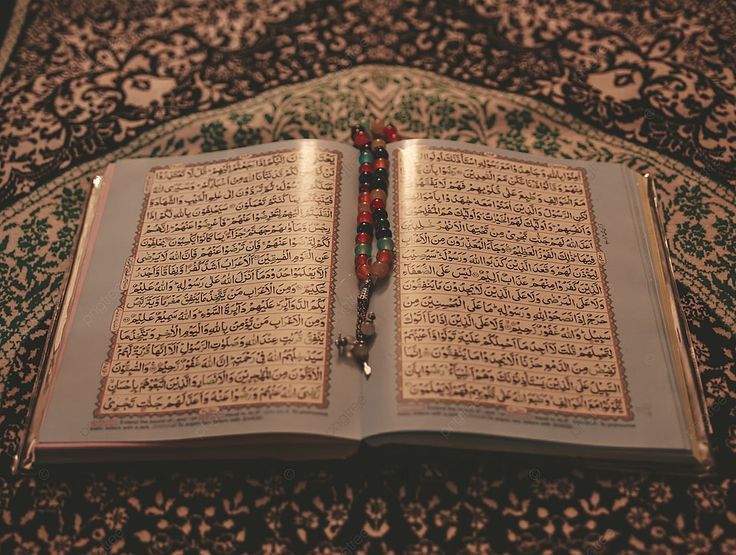
Why Harakat Are Critical in the Quran
Arabic Harakat are essential in Quran reading because they preserve the exact meaning intended by Allah. The Quran was revealed with precise pronunciation, and even a small change in a vowel can completely alter the meaning of a word. Learning Arabic Harakat for Beginners ensures you read each letter correctly and understand the true message of the text.
Quran Example:
(أَنْعَمْتَ عَلَيْهِمْ)
Surah Al-Fātiḥah (1:7)
- أَنْعَمْتَ (an‘amta) – You have blessed
- If read incorrectly as أَنْعَمْتُ (an‘amtu) – I have blessed ❌
👉 A single change in the Harakah changes who is acting in the sentence, which is a serious mistake in Quran recitation.
This is why Harakat are not optional in the Quran—they are mandatory for accuracy and respect.
Avoiding Meaning-Changing Mistakes
Many Arabic words share the same letters but have different meanings depending on the Harakat. Misreading a vowel can result in saying something Allah did not intend.
Quran Example:
(قُتِلَ ٱلْإِنسَـٰنُ مَآ أَكْفَرَهُۥ ١٧)
Surah ‘Abasa (80:17)
- قُتِلَ (qutila) → passive voice, meaning “Man was killed/destroyed” ✅
- Changing the Harakat to قَتَلَ (qatala) → active voice, meaning “He killed”, which changes the grammatical subject and completely alters the meaning ❌
Another powerful example:
(مَـٰلِكِ يَوْمِ ٱلدِّينِ ٤)
Surah Al-Fātiḥah (1:4)
- مَالِكِ (Māliki) – Owner of the Day of Judgment
- In another authentic recitation: مَلِكِ (Maliki) – King of the Day of Judgment
👉 Both readings are correct, but only when recited with the proper Harakat and Tajweed rules.
Harakat and Basic Tajweed Rules
Tajweed is the science of reciting the Quran correctly, and Harakat are one of its foundations. They determine:
- How long a sound is held (Madd)
- Whether a letter is doubled (Shaddah)
- Whether a letter is silent (Sukūn)
- How letters connect smoothly
Quran Example (Shaddah):
(إِيَّاكَ نَعْبُدُ وَإِيَّاكَ نَسْتَعِينُ ٥)
Surah Al-Fātiḥah (1:5)
- إِيَّاكَ (iyyāka)
The Shaddah on ي means the letter is doubled.
If read without Shaddah, the word becomes incorrect.
Example with Sukūn:
(لَمْ يَلِدْ وَلَمْ يُولَدْ)
Surah Al-Ikhlāṣ (112:3)
- The Sukūn stops the sound properly
- Adding a vowel here would change the word and break Tajweed rules
7 Tips to Learn Arabic Harakat for Beginners

Learning Arabic harakat doesn’t need to feel overwhelming. With the right approach, beginners can master these vowel marks faster and with more confidence. Here are seven practical tips that make learning Arabic harakat easier, clearer, and more effective.
1️⃣ Practice a Little Every Day (Not All at Once)
Daily practice is the fastest way to master Arabic harakat for beginners. Studying for just 10–15 minutes a day is far more effective than long, irregular sessions.
Focus on consistency. Even short daily exposure helps your brain recognize vowel patterns, your tongue adjust to new sounds, and your reading become smoother over time. Arabic is built on repetition, not memorization marathons.
2️⃣ Start With Single Letters Before Full Words
Many beginners rush into reading words before mastering the basics. Start with one letter + one haraka at a time:
بَ / بِ / بُ
This trains your ear and mouth to clearly distinguish between fatha, kasra, and damma. Once single-letter sounds feel natural, moving to words becomes much easier and less confusing.
3️⃣ Read Out Loud, Even When It Feels Slow
Silent reading doesn’t help much when learning Arabic harakat. Pronunciation is physical — your tongue, lips, and throat all need practice.
Reading out loud may feel awkward at first, but it’s essential. It helps you:
- Build muscle memory
- Catch pronunciation mistakes early
- Gain confidence with sounds
Speed will come later. Accuracy comes first.
4️⃣ Use Listening and Repetition Daily
Arabic is a language that must be heard, not just seen. Listening to correct pronunciation trains your ear before your mouth fully catches up.
Listen to:
- Slow Arabic reading
- Clear Quran recitation for beginners
- Pronunciation recordings
Many beginners find that working with an Arabic tutor helps them apply this listening–repetition method correctly, especially when learning Arabic and Quran together with proper pronunciation and confidence.
Then repeat out loud, copying the rhythm and vowel sounds. This listen–repeat method is one of the fastest ways for Arabic harakat for beginners to sound natural and accurate.
5️⃣ Focus on Short vs Long Vowels Early
One of the biggest beginner mistakes is confusing short vowels (harakat) with long vowels.
For example:
- بَ (ba) ≠ بَا (baa)
This difference can change meaning completely, so it’s important to train your ear early. Practice hearing and pronouncing short vowels clearly before moving on to long vowels like Alif, Yaa, and Waw.
6️⃣ Learn Harakat With Real Examples, Not Isolated Rules
Rules alone don’t stick. Real examples do.
Instead of memorizing harakat definitions, practice them inside:
- Simple words
- Short phrases
- Familiar vocabulary
Seeing Arabic harakat for beginners used in real words helps you understand how pronunciation, flow, and meaning work together. This turns abstract rules into practical reading skills.
7️⃣ Learn With a Teacher to Avoid Bad Habits
Self-study can help you recognize harakat, but a teacher helps you apply them correctly. Many pronunciation mistakes feel right to beginners, even when they’re wrong.
A teacher can:
- Correct mistakes early
- Explain subtle sound differences
- Guide proper Tajweed from the start
This is especially important for Quran learners, where accuracy matters deeply. Correct guidance early saves years of correction later.
✨ In summary:
Arabic harakat for beginners are best learned through daily practice, listening, repetition, and guided correction. When learned step by step and with the right support, harakat stop being confusing and become the key to confident Arabic reading.
Teaching Arabic Harakat to Kids
Fun and Simple Learning Methods
Children learn best when lessons feel light and enjoyable. Harakat should be introduced gradually, using clear sounds and repetition rather than heavy explanations.
Short sessions, familiar words, and lots of encouragement help kids stay engaged. When learning feels easy, children gain confidence faster and develop a positive connection with Arabic.
Games and Visual Techniques
Visual learning plays a big role with children. Color-coded Harakat, flashcards, and picture-based words help kids recognize patterns quickly.
Games like matching sounds, reading aloud together, or spotting Harakat in words turn learning into an activity instead of a task. When children are having fun, they absorb information without pressure.
Building Confidence Early
Confidence is the key to long-term success in Arabic learning. When children feel proud of reading correctly, they become more motivated to continue.
Starting with Harakat gives kids a sense of control over the language. They’re not guessing — they’re reading with understanding. That early confidence creates a strong foundation for Quran reading, pronunciation, and future Arabic studies.
Final Thoughts on Arabic Harakat for Beginners
Mastering Arabic Harakat is more than just learning vowel marks — it’s the foundation of correct pronunciation, confident reading, and meaningful understanding of Arabic and the Quran.
When Harakat are learned the right way, reading stops being confusing and starts to feel clear and natural. Each word becomes easier to recognize, pronounce, and connect with.
Whether you are a beginner, improving your Tajweed, or helping your child take their first steps in Arabic, strong guidance makes all the difference. Learning with proper support ensures accuracy, builds confidence, and creates steady progress from day one.
Learn Arabic with Confidence at Areeb Academy
At Areeb Academy, we make learning Arabic simple, structured, and enjoyable.
- Native Arabic-speaking teachers
- Fluent English communication for easy understanding
- Flexible scheduling that fits your lifestyle
- Suitable for both kids and adults
- Personalized lessons focused on pronunciation, Harakat, and Tajweed
We believe Arabic learning should feel comfortable, supportive, and effective — no pressure, no confusion.
👉 Book your FREE trial now and start your Arabic journey with confidence at Areeb Academy.
FAQs: Learning Arabic Harakat
Q1: What are Harakat and why are they important?
Harakat are short vowel marks in Arabic that show how each letter should be pronounced. They are essential for correct reading, understanding, and recitation, especially in the Quran.
Q2: Can adults learn Harakat easily?
Absolutely! With consistent practice, guidance from native speakers, and a structured approach, adults can learn Harakat quickly and confidently.
Q3: How long does it take to master Arabic Harakat?
It depends on your practice schedule, but with daily exercises and focused lessons, beginners can gain a strong understanding in a few weeks.
Q4: Do kids need a different approach?
Yes. For children, learning Harakat works best with games, songs, visuals, and short interactive lessons to keep them engaged while building pronunciation skills.
Q5: Can I learn Harakat online?
Definitely. At Areeb Academy, our flexible online classes allow you to choose schedules that fit your lifestyle, with native Arabic-speaking teachers who are fluent in English for easy communication.
Q6: Is there a free trial?
Yes! You can book your FREE trial to experience personalized lessons and see how learning Harakat can be fun and effective for you or your child.