
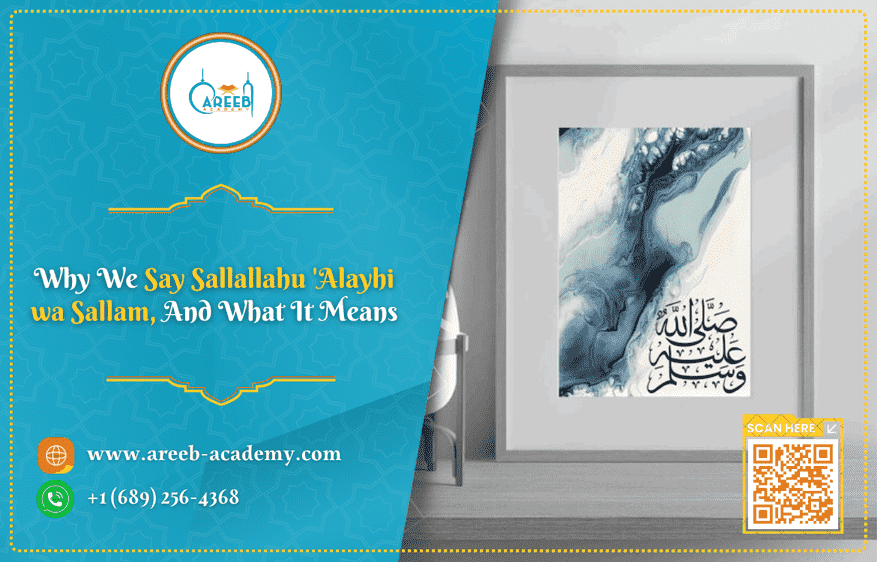
If you’ve ever read an Islamic book or listened to a Muslim speak, you’ve probably noticed the phrase Sallallahu ‘Alayhi wa Sallam (ﷺ) after the name of Prophet Muhammad ﷺ. This beautiful supplication is much more than a respectful expression—it’s an act of worship that Allah commands in the Quran and one of the easiest ways to earn immense rewards.
In this guide, you’ll learn the meaning of Sallallahu ‘Alayhi wa Sallam, when Muslims say it, its rewards in Islam, how to pronounce it correctly, and the different authentic ways to send blessings upon the Prophet ﷺ.
What Does Sallallahu ‘Alayhi wa Sallam Mean?
Sallallahu ‘Alayhi wa Sallam (صلى الله عليه وسلم) is one of the most well-known Islamic phrases. Muslims say it whenever they mention Prophet Muhammad ﷺ as a way of honoring him and following Allah’s command in the Quran. It is both a prayer and an expression of love, respect, and gratitude for the Messenger who delivered Islam.
You’ll often hear this phrase during Quran recitation, Islamic lectures, daily conversations, and prayers. It is also commonly written after the Prophet’s name as ﷺ.
Literal Meaning of Sallallahu ‘Alayhi wa Sallam

The phrase can be understood by looking at each part individually:
- Sallallahu (صلى الله): May Allah bestow His blessings, praise, and honor.
- ‘Alayhi (عليه): Upon him.
- Wa Sallam (وسلم): And grant him peace.
Together, Sallallahu ‘Alayhi wa Sallam means:
“May Allah send His blessings and peace upon him.”
This beautiful supplication is reserved specifically for Prophet Muhammad ﷺ. For other prophets, Muslims commonly say ‘Alayhis Salam (“Peace be upon him”).
Meaning in English
In English, Sallallahu ‘Alayhi wa Sallam is usually translated as:
- “Peace and blessings of Allah be upon him.”
- “May Allah send blessings and peace upon him.”
- “May Allah honor him and grant him peace.”
You may also see the phrase abbreviated as:
- PBUH – Peace Be Upon Him
- SAW or SAWS – Short forms of Sallallahu ‘Alayhi wa Sallam
While these abbreviations are widely recognized, many scholars encourage writing or saying the full phrase whenever possible. Doing so reflects greater respect and reminds us of the beautiful meaning behind this prayer.
Why Muslims Say Sallallahu ‘Alayhi wa Sallam

Saying Sallallahu ‘Alayhi wa Sallam after mentioning Prophet Muhammad ﷺ is far more than tradition — it’s an act of worship that reflects a Muslim’s faith, love, and obedience to Allah. By sending blessings upon the Prophet ﷺ, Muslims:
- Show their love and respect for the Messenger who delivered Islam.
- Express gratitude for his guidance and the sacrifices he made.
- Follow the Sunnah in their daily lives.
- Hope for Allah’s mercy and reward.
Mentioning his name without sending blessings means missing an easy opportunity to earn Allah’s reward. This is why the phrase naturally follows his name whether Muslims are reading the Quran, studying hadith, listening to a lecture, or simply speaking in conversation.
The Quranic Command to Send Blessings
The importance of Sallallahu ‘Alayhi wa Sallam begins with a direct command from Allah in the Quran:
إِنَّ ٱللَّهَ وَمَلَـٰٓئِكَتَهُۥ يُصَلُّونَ عَلَى ٱلنَّبِىِّ ۚ يَـٰٓأَيُّهَا ٱلَّذِينَ ءَامَنُوا۟ صَلُّوا۟ عَلَيْهِ وَسَلِّمُوا۟ تَسْلِيمًا ٥٦
“Indeed, Allah and His angels send blessings upon the Prophet. O you who believe, send blessings upon him and greet him with peace.” (Surah Al-Ahzab 33:56)
This verse makes sending blessings upon Prophet Muhammad ﷺ an act of devotion for every believer. Unlike ordinary greetings, Muslims offer this supplication as an act of worship to obey Allah’s command.
The Prophet ﷺ said:
“Whoever sends blessings upon me once, Allah will send blessings upon him ten times, erase ten of his sins, and raise him ten degrees in status.”
(Sunan An-Nasa’i, 1297)
This hadith highlights the immense rewards of sending blessings upon the Prophet ﷺ and encourages Muslims to recite Sallallahu ‘Alayhi wa Sallam whenever they mention or remember him.
When Should You Say Sallallahu ‘Alayhi wa Sallam?
Muslims should say Sallallahu ‘Alayhi wa Sallam whenever they mention or hear the name of Prophet Muhammad ﷺ. Although Muslims can send blessings upon the Prophet ﷺ at any time, the Quran and Sunnah place special emphasis on certain occasions.
You should say Sallallahu ‘Alayhi wa Sallam:
- After mentioning or hearing the name of Prophet Muhammad ﷺ.
This is the most common occasion and reflects a Muslim’s love, respect, and obedience to Allah’s command. - During the Tashahhud in Salah.
Muslims recite Salawat Ibrahimiyyah in the final sitting of every prayer, making it one of the most important daily acts of sending blessings upon the Prophet ﷺ. - Frequently on Fridays.
Friday is one of the best times to increase your Salawat upon the Prophet ﷺ. The Prophet ﷺ said:
“Among the best of your days is Friday. On it, Adam was created, on it he died, on it the Trumpet will be blown, and on it all creation will fall unconscious. So send abundant blessings upon me on that day, for your blessings are presented to me.”
(Sunan Abu Dawud, 1047).
For this reason, many Muslims make a habit of sending extra blessings upon the Prophet ﷺ throughout Friday and its night. - Throughout the day.
Whether reading the Quran, studying Islamic knowledge, listening to an Islamic lecture, or simply remembering the Prophet ﷺ, sending blessings upon him is a simple act of worship that brings continuous rewards.
Benefits of Saying Sallallahu ‘Alayhi wa Sallam
Sending Sallallahu ‘Alayhi wa Sallam upon Prophet Muhammad ﷺ is a simple act of worship with tremendous rewards. Every time a Muslim sends blessings upon the Prophet ﷺ, they obey Allah’s command, express their love for His Messenger, and earn countless blessings in return.
The benefits include:
- Allah sends blessings upon you.
The Prophet ﷺ taught that whoever sends one blessing upon him receives ten blessings from Allah in return. - Your sins are forgiven.
Sending Salawat is a means for Allah to erase ten sins, increasing a believer’s hope for His mercy and forgiveness. - Your rank is raised.
Along with forgiveness, Allah raises the believer ten degrees in status for every blessing sent upon the Prophet ﷺ. - You grow closer to the Prophet ﷺ.
Frequently sending blessings strengthens your connection with the Messenger of Allah ﷺ and increases the hope of being close to him on the Day of Judgment. - Your dua is more likely to be accepted.
Scholars recommend beginning and ending supplications with blessings upon the Prophet ﷺ, following authentic prophetic guidance. - It brings peace and comfort to the heart.
Remembering Prophet Muhammad ﷺ through Salawat helps strengthen faith, eases worries, and encourages Muslims to follow his Sunnah. - It is an easy act of worship with lasting rewards.
Whether you’re reading the Quran, making dua, attending an Islamic lecture, or mentioning the Prophet ﷺ in conversation, this short supplication allows you to earn continuous rewards in just a few seconds.
Sending Salawat is one of the easiest forms of dhikr that brings immense rewards. If you’d like to learn another powerful remembrance that Muslims recite every day, read our guide on Astaghfirullah Meaning: Why Muslims Say It and Why It Matters.
How to Pronounce Sallallahu ‘Alayhi wa Sallam
If you’re new to Arabic, don’t worry about pronouncing the phrase perfectly the first time. With a little practice, Sallallahu ‘Alayhi wa Sallam becomes easy to say and quickly becomes a natural part of mentioning Prophet Muhammad ﷺ.
Pronunciation Guide for Beginners
To make pronunciation easier, break the phrase into three parts:
- Sallallahu (Sal-lal-LAH-hoo) – End with a soft “hoo” sound.
- ‘Alayhi (Ah-LAY-hee) – The Arabic letter ‘Ayn (ع) has no exact English equivalent, so beginners can pronounce it as “Ah-lay-hee.”
- Wa Sallam (wa SAL-lam) – Say “wa” clearly, then finish with “SAL-lam.”
When spoken together, it flows naturally as:
Sal-lal-LAH-hoo Ah-LAY-hee wa SAL-lam
Common Pronunciation Mistakes
Beginners often make a few small mistakes when learning this phrase. Try to avoid:
- Saying “Salam” instead of “Sallam” (notice the doubled l sound).
- Rushing through “Sallallahu” without clearly pronouncing each syllable.
- Skipping “wa”, which means “and” in Arabic.
- Worrying too much about pronouncing the letter ‘Ayn (ع) perfectly. As your Arabic improves, your pronunciation will naturally become more accurate.
Remember, the goal is to recite the phrase sincerely and respectfully while continuing to improve your pronunciation over time.
Different Ways to Send Blessings Upon the Prophet ﷺ
Islam teaches several authentic ways to send blessings upon Prophet Muhammad ﷺ. Each wording is a beautiful form of Salawat, and Muslims may use different authentic narrations at different times. Varying between these forms is part of following the Sunnah.
Allahumma Salli ‘Ala Muhammad
Another authentic and widely used supplication is:
اللَّهُمَّ صَلِّ عَلَىٰ مُحَمَّدٍ وَعَلَىٰ آلِ مُحَمَّدٍ
Allahumma salli ‘ala Muhammad wa ‘ala aali Muhammad
Meaning: “O Allah, send Your blessings upon Muhammad and the family of Muhammad.”
You can use this concise form outside of Salah during dua, while remembering the Prophet ﷺ, or throughout the day. Many scholars mention that any authentic wording of Salawat fulfills the purpose of sending blessings upon the Prophet ﷺ.
Salawat Ibrahimiyyah
The most complete and well-known form of sending blessings upon the Prophet ﷺ is Salawat Ibrahimiyyah, which the Prophet ﷺ himself taught to his Companions. Muslims recite it during the Tashahhud in every Salah.
It begins with:
Allahumma salli ‘ala Muhammadin wa ‘ala aali Muhammad, kama sallayta ‘ala Ibrahima wa ‘ala aali Ibraheem…
This is the wording taught in authentic narrations recorded by Sahih al-Bukhari and Sahih Muslim, making it the preferred form to recite during prayer.
What’s the Difference Between Sallallahu ‘Alayhi wa Sallam and Radiyallahu ‘Anhu?
Sallallahu ‘Alayhi wa Sallam (ﷺ) and Radiyallahu ‘Anhu (RA) are both Islamic honorifics, but they are used for different people.
- Sallallahu ‘Alayhi wa Sallam (ﷺ) means “May Allah’s blessings and peace be upon him.” It is reserved exclusively for Prophet Muhammad ﷺ.
- Radiyallahu ‘Anhu (RA) means “May Allah be pleased with him.” It is said after mentioning the Companions (Sahabah) of the Prophet ﷺ, such as Abu Bakr (RA), Umar ibn Al-Khattab (RA), and Aisha (RA). For women, Muslims say Radiyallahu ‘Anha, and for multiple people, Radiyallahu ‘Anhum.
Using the correct honorific reflects proper Islamic etiquette and shows respect for the Prophet ﷺ and his noble Companions.
Final Thoughts
Sallallahu ‘Alayhi wa Sallam is one of the most beautiful and meaningful phrases in Islam. Although it only takes a few seconds to say, it reflects love for Prophet Muhammad ﷺ, obedience to Allah, and hope for His countless blessings.
By making this simple supplication a regular habit, Muslims strengthen their connection with the Prophet ﷺ, follow the Sunnah, and earn tremendous rewards in both this life and the Hereafter.
Looking for more Islamic resources? Explore our articles on Daily Duas for Kids, Islamic Etiquettes for Kids, and How to Teach Islam to Children.
Learn Islamic Etiquette with Areeb Academy
Understanding Islamic phrases like Sallallahu ‘Alayhi wa Sallam is just the beginning of a lifelong journey of learning. At Areeb Academy, our qualified native Arabic teachers make learning the Quran, Arabic, Tajweed, and Islamic Studies simple, engaging, and suitable for both children and adults.
We offer:
- ✅ Certified and experienced teachers
- ✅ One-on-one live online classes
- ✅ Flexible schedules that fit your routine
- ✅ Personalized learning plans for every student
- ✅ A FREE trial class with no obligation
Book your FREE trial today and begin learning Islam and Arabic with confidence from the comfort of your home.
Frequently Asked Questions
- Is Sallallahu ‘Alayhi wa Sallam Only for Prophet Muhammad ﷺ?
Yes. Sallallahu ‘Alayhi wa Sallam (ﷺ) is an honorific reserved exclusively for Prophet Muhammad ﷺ. Allah instructed believers to send blessings and peace upon him in the Quran (Surah Al-Ahzab 33:56), and Muslims say this phrase whenever they mention his name.
For other Prophets, Muslims commonly say ‘Alayhis Salam (AS), which means “Peace be upon him.” After mentioning the Prophet’s Companions, Muslims say Radiyallahu ‘Anhu (RA), meaning “May Allah be pleased with him.” They say Radiyallahu ‘Anha for female Companions and Radiyallahu ‘Anhum for groups of Companions.
Using the appropriate honorific is part of Islamic etiquette and reflects respect for the Prophet ﷺ, the other Prophets, and the noble Companions.
2. Can I write “PBUH” or “SAW” instead of the full phrase?
Many Muslims use abbreviations such as PBUH, SAW, or the symbol ﷺ. However, many scholars recommend writing or saying the full phrase whenever possible because it reflects greater respect and reminds us of its beautiful meaning.
3. What are the rewards of saying Sallallahu ‘Alayhi wa Sallam?
Authentic hadith mention several rewards, including:
- Receiving ten blessings from Allah.
- Having ten sins erased.
- Being raised ten degrees in rank.
- Hoping to be among those closest to the Prophet ﷺ on the Day of Judgment.
4. Why do Muslims send blessings upon Prophet Muhammad ﷺ?
Muslims send blessings upon Prophet Muhammad ﷺ because Allah commands it in the Quran, and it is a way to show love, gratitude, and respect for the Messenger who conveyed Islam. It is also a simple act of worship with immense rewards.