
Online Tajweed lessons in English have become an essential resource for Muslims who want to recite the Quran correctly while understanding the rules in a language they are comfortable with. Although learning Tajweed can feel challenging at first for many non-Arabic speakers, because the Arabic language includes unique sounds and pronunciation rules that are unfamiliar, with proper guidance it becomes an achievable and rewarding goal.
Furthermore, learning Tajweed is not only about improving pronunciation; it is also about preserving the beauty and accuracy of the Quran as it was revealed. By applying Tajweed rules, every letter is pronounced from its correct articulation point, which ensures that the meaning of the verses remains intact. Consequently, Muslims worldwide seek reliable ways to learn Tajweed properly and consistently.
Today, online learning has made it easier than ever to study Tajweed from home. Through interactive classes, personalized instruction, and structured lessons, students can gradually build their recitation skills while simultaneously receiving guidance from qualified teachers. Whether you are a beginner starting your journey with the Quran or someone looking to refine your recitation, learning Tajweed online provides the flexibility and support needed so that you can progress with confidence.
Teenagers who want to improve their recitation quickly can also read our post:
[Quran Lessons Online for Teenagers: Learn Recitation Faster] for tips tailored to young learners.
What Are Online Tajweed Lessons in English?

Online Tajweed lessons in English are structured digital courses designed for non-Arabic speakers so that they can learn the rules of proper Quranic recitation. Specifically, these lessons focus on accurate pronunciation of letters (Makharij), elongation (Madd), articulation points, and applying the correct Tajweed rules, ensuring that the Quran is recited as it was revealed.
These courses typically offer:
- Live 1-on-1 with certified teachers for real-time feedback.
- Flexible schedules accommodating different time zones and busy lifestyles.
- Structured curriculum ranging from beginner lessons like Noorani Qaida to advanced Tajweed concepts (Noon/Meem Sakinah, Qalqalah, etc.).
- Specialized tools to help English-speaking students master difficult Arabic sounds.
Understanding Tajweed and Its Importance
Moreover, Tajweed literally means “to make better” or “beautify.” In other words, it ensures that every letter and word of the Quran is recited with correct pronunciation, intonation, and clarity, thereby preserving the meaning of Allah’s words.
Key components include:
- Makharij al-Huroof: Exact articulation points of letters.
- Sifat al-Huroof: Characteristics of letters (light, heavy, whispering).
- Rules of Recitation: Idgham (merging), Ikhfa (hiding), Izhar (clarity).
- Waqf & Ibtida: Proper stopping and starting points.
- Elongation (Madd), Qalqalah, and Ghunnah for proper rhythm and sound.
Learning Tajweed is essential because improper articulation can alter the meaning of Quranic words. Online lessons provide structured guidance to correct and refine recitation under expert supervision.
Why Learning Tajweed in English Helps Beginners
For non-Arabic speakers, learning Tajweed in English makes complex rules easier to understand and apply. Benefits include:
- Clear explanations of Arabic letters and sounds.
- Step-by-step guidance for beginners to master difficult rules gradually.
- Interactive tools, visual aids, and examples that reinforce learning.
- Personalized feedback tailored to each learner’s level.
- Flexibility to learn at your own pace without travel constraints.
By using English as the medium, learners can focus on pronunciation, elongation, and letter articulation without getting overwhelmed by unfamiliar Arabic terms.
Why Choose Online Tajweed Lessons in English

Choosing online Tajweed lessons in English with Areeb Academy provides a convenient, personalized, and effective way for non-Arabic speakers to master Quranic recitation. Not only do these lessons ensure that the holy text is recited with the accuracy and beauty it was revealed, but they also remove geographical and logistical barriers. Furthermore, students benefit from expert guidance provided by qualified tutors, which means progress is structured, consistent, and tailored to individual learning needs.
Learn Quran Recitation with Online Tajweed Lessons in English
Online Tajweed lessons allow students to learn from the comfort of home, eliminating the need to travel to a local mosque or academy. This flexibility is ideal for:
- Busy professionals
- Parents managing children’s schedules
- Students in areas without local Tajweed teachers
Students can practice at their own pace, review lessons repeatedly, and access guidance from anywhere in the world.
Clear Online Tajweed Lessons in English for Non-Arabic Speakers
For learners who are not fluent in Arabic, Online Tajweed Lessons in English provides Tajweed lessons in simple, clear English. As a result, beginners can grasp complex rules more easily and at the same time understand proper pronunciation and elongation (Madd). Moreover, these lessons allow students to apply Tajweed rules correctly without confusion, while also building confidence in their recitation. By using English as the medium of instruction, students can focus on accuracy and rhythm without feeling overwhelmed by Arabic terminology.
Flexible Schedules for Busy Students
Online Tajweed lessons offers flexible scheduling options to fit every learner’s lifestyle. Benefits include:
- Choosing lesson times that suit work, school, or family commitments
- Self-paced learning, progressing from basics like Noorani Qaida to advanced Tajweed rules
- Trial classes to experience teaching style before committing
This flexibility ensures consistent practice, steady progress, and a strong foundation in Quranic recitation.
What You Will Learn in Online Tajweed Lessons in English
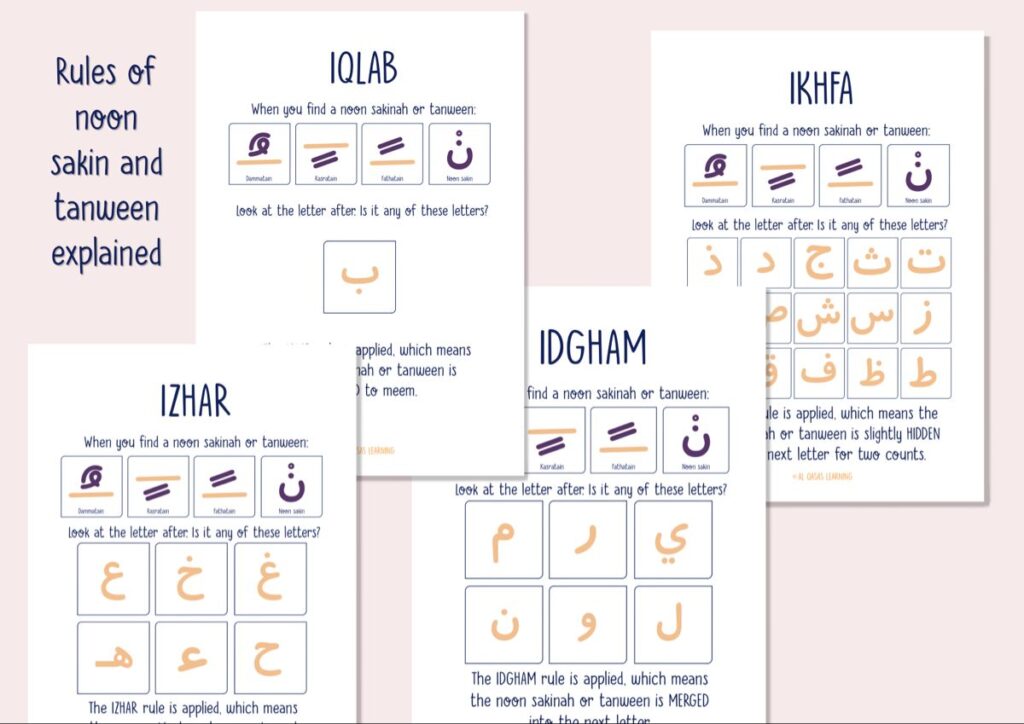
At Areeb Academy, our online Tajweed lessons in English are carefully designed to teach the precise rules for reciting the Quran as it was revealed. Through these lessons, students learn correct letter articulation (Makharij), letter characteristics (Sifaat), and essential phonetic rules such as Ghunnah, Madd, and Noon/Meem Saakinah. Moreover, with live instruction from qualified teachers, learners can correct pronunciation mistakes, improve fluency, and at the same time master pausing rules (Waqf) for accurate and beautiful recitation. As a result, students gain both confidence and skill, enabling them to recite the Quran correctly and elegantly.
Correct Pronunciation of Arabic Letters (Makharij)
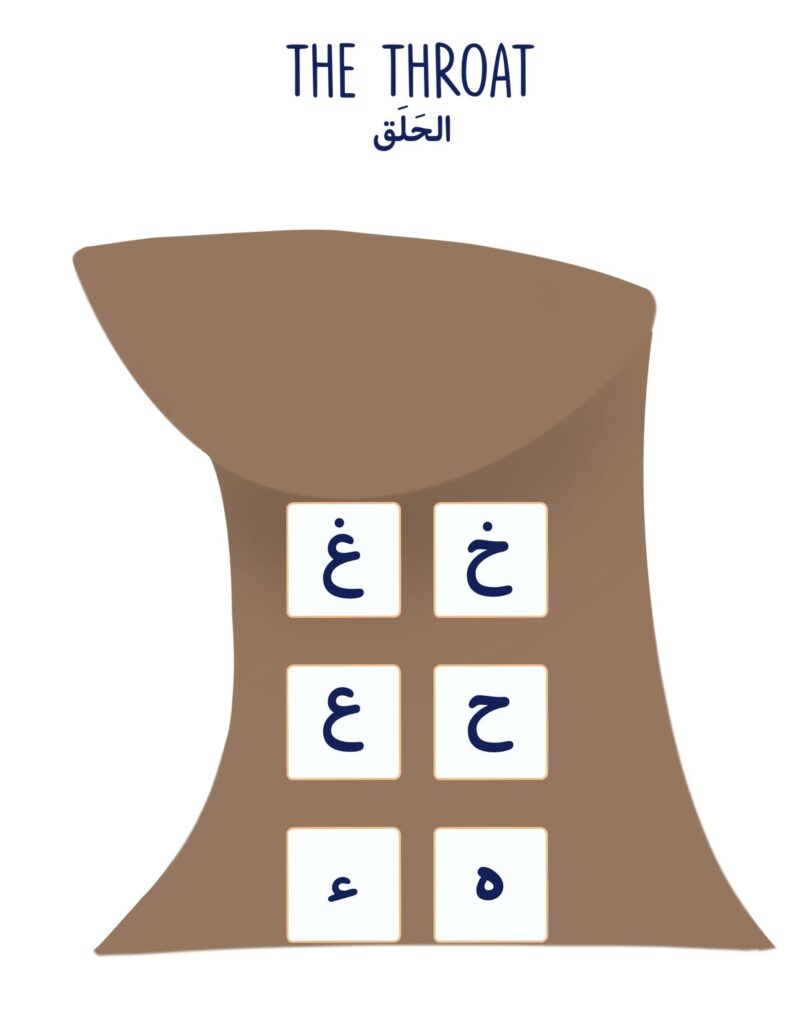
In online Tajweed lessons in English, students learn the exact articulation points in the mouth and throat from which each Arabic letter is produced. This ensures:
- Proper sound and clarity
- Avoidance of mispronunciations that change meaning
- Strong foundation for advanced Tajweed rules
Rules of Noon Sakinah and Tanween
Learners master the rules of Izhār, Idghām, Iqlāb, and Ikhfā for Noon Saakinah and Tanween. These lessons help:
- Maintain correct recitation flow
- Apply rules consistently during real Quran reading
- Improve confidence in reciting complex verses
Rules of Meem Sakinah
Students practice the proper pronunciation rules for Meem Saakinah, including:
- Iqlāb and Idghām rules when applicable
- Correct application of Ghunnah for smooth recitation
- Reinforcement of letter characteristics for accuracy
Madd Rules and Proper Elongation in Online Tajweed Lessons in English

Learn how to elongate sounds properly according to Tajweed rules:
- Natural Madd, lengthened vowels, and special elongations
- Avoiding over or under-stretching sounds
- Maintaining rhythm and melody in recitation
Stopping and Starting Rules in Quran Recitation
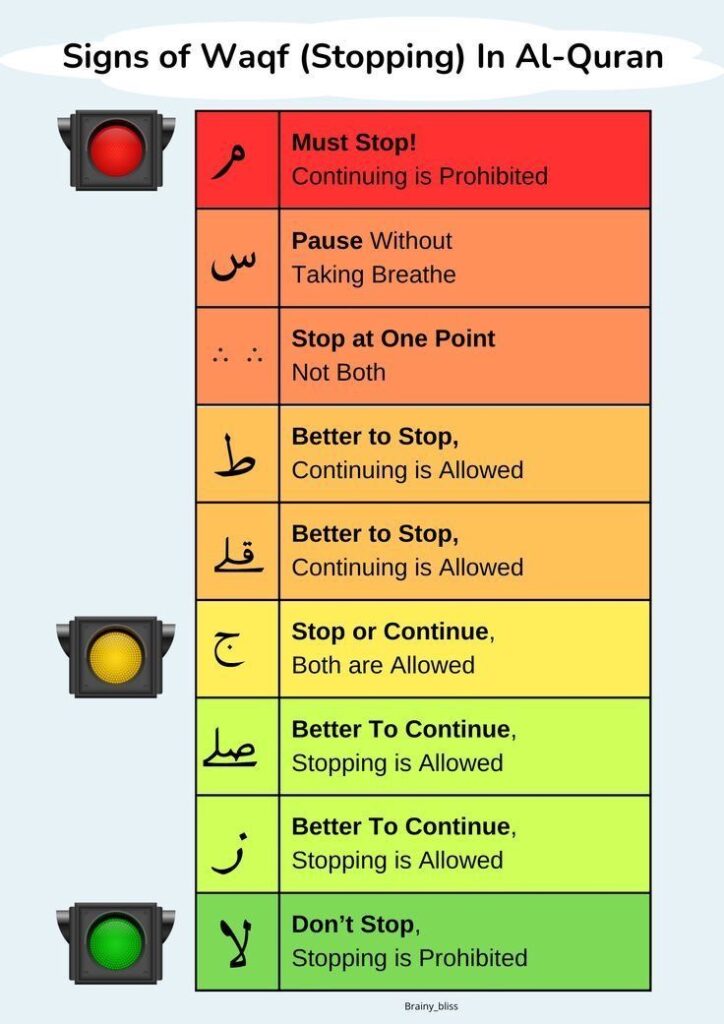
Pausing (Waqf) and starting correctly is essential to convey meaning accurately:
- Identify Waqf signs and symbols
- Pause at correct points without breaking meaning
- Begin smoothly for continuous flow of recitation
- Strengthen comprehension and spiritual connection
Who Are Online Tajweed Lessons in English For?

Online Tajweed lessons in English are carefully designed to cater to learners of all ages and backgrounds. Whether you are a beginner just starting your Quranic journey or an adult looking to refine your recitation, these lessons provide the guidance, flexibility, and personalized support you need to master Tajweed with confidence. Additionally, students benefit from structured lessons, one-on-one feedback, and practical exercises that reinforce correct pronunciation and Tajweed rules. Consequently, learners can progress steadily while maintaining both accuracy and fluency in their recitation.
Beginners Who Want to Read the Quran Correctly
These lessons are perfect for learners who are new to the Quran or Tajweed. Beginners will:
- Learn the Arabic letters and their correct articulation (Makharij)
- Understand basic Tajweed rules step by step
- Develop a strong foundation for accurate and beautiful recitation
- Gain confidence to recite independently in daily prayers
Kids Learning Quran Recitation

Online Tajweed lessons are ideal for children, making learning engaging and interactive:
- Fun, structured sessions that hold attention and encourage practice
- Visual aids and digital tools to help kids recognize letters and rules
- Personalized guidance to correct mistakes early and build proper habits
- Fosters love and connection to the Quran from a young age
Adults Improving Their Tajweed Skills
For adults who already read the Quran but want to improve:
- Refine pronunciation and correct frequent mistakes
- Master advanced Tajweed rules like Ghunnah, Madd, and Waqf
- Flexible schedules to fit around work or family commitments
- Enhance spiritual connection and recitation confidence in Salah and daily reading
How Online Tajweed Lessons in English Work
Online Tajweed lessons in English are designed to make learning the Quran accessible, effective, and engaging for learners of all levels. These courses combine live interaction, structured lessons, and continuous feedback to ensure proper recitation and mastery of Tajweed rules.
One-on-One Live Classes with Qualified Teachers
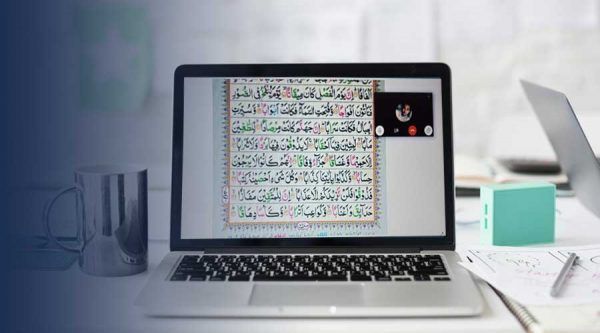
In online Tajweed lessons in English, each student receives personalized attention from experienced Quran instructors:
- Corrects pronunciation errors in real-time
- Provides guidance on difficult letters and Tajweed rules
- Ensures that learners fully understand the proper articulation (Makharij) and characteristics (Sifaat) of letters
Structured Tajweed Curriculum
Lessons follow a step-by-step curriculum that gradually builds your skills:
- Start with Arabic alphabets and basic pronunciation
- Progress to rules of Noon Saakinah, Meem Saakinah, Madd, and Qalqalah
- Learn stopping and starting rules (Waqf) to maintain meaning and fluency
- Incorporate listening and recitation practice alongside theoretical learning
Continuous Recitation Practice and Feedback

Practical application is key to mastering Tajweed:
- Recite Quranic verses in real-time with tutor guidance
- Receive immediate feedback and correction on mistakes
- Use recorded sessions to practice independently and track improvement
- Build confidence and fluency through consistent, structured practice
Common Challenges When Learning Tajweed

Learning Tajweed is a rewarding journey, and online Tajweed lessons in English can help overcome its unique challenges, especially for non-Arabic speakers. Being aware of these difficulties helps you approach your studies with patience and strategy, ensuring steady progress in your recitation.
Pronouncing Arabic Letters Correctly
Arabic contains letters that have no direct equivalent in English, making pronunciation tricky for beginners. Letters such as ʿAyn (ع), Ghayn (غ), Khaa (خ), Qaaf (ق), and Saad (ص) require careful articulation from their correct places in the throat or mouth.
Many learners initially substitute these sounds with familiar English equivalents, which can unintentionally change the meaning of words. Correct Makharij (articulation points) training, ideally with a qualified teacher, is essential. Using visual aids, videos, or apps that show tongue and throat positioning can significantly help beginners internalize these sounds.
Applying Tajweed Rules During Recitation
Tajweed is more than pronouncing letters; it involves applying a structured set of rules consistently. Some of the most challenging rules for learners include:
- Ikhfā (hidden sound): where certain letters are pronounced softly, blending with the following letter.
- Idghām (assimilation): merging letters in a smooth, correct manner without breaking the flow.
- Iqlāb (switching): transforming a letter sound in specific contexts.
- Madd (elongation): stretching letters for proper duration.
Without guidance, these rules can feel overwhelming, and learners may skip or misapply them, leading to inconsistent recitation. Step-by-step instruction and repetition are key to mastering these rules.
Maintaining Consistency in Practice
Consistency is one of the biggest challenges when learning Tajweed. Busy schedules, lack of motivation, or impatience can lead to sporadic practice. However, Tajweed mastery depends on:
- Daily recitation: even 30–45 minutes a day strengthens memory and pronunciation.
- Gradual progression: focusing on one rule or letter at a time prevents overwhelm.
- Reviewing past lessons: helps reinforce memory and avoid mistakes becoming permanent habits.
Remember, the Prophet ﷺ emphasized consistency:
” وَأَنَّ أَحَبَّ الأَعْمَالِ أَدْوَمُهَا إِلَى اللَّهِ، وَإِنْ قَلَّ”
“The most beloved deeds to Allah are those that are consistent, even if they are small.” (Sahih al-Bukhari)
Tips to Improve Your Tajweed Faster

While Tajweed may seem challenging, online Tajweed lessons in English offer proven strategies to accelerate improvement and make your recitation more beautiful and accurate.
Practice Quran Recitation Daily
Regular practice is the cornerstone of improvement. Set a fixed time each day, even if it’s short, to read with attention to:
- Correct articulation of letters.
- Applying all Tajweed rules for each verse.
- Maintaining the proper rhythm and pauses (Waqf and Wasl).
Breaking your practice into small, focused segments allows you to master difficult letters and rules without feeling overwhelmed. Over time, even brief daily sessions create lasting fluency.
Listen to Skilled Quran Reciters
Your ear is a powerful tool in learning Tajweed. Listening to proficient reciters in online Tajweed lessons in English helps you internalize the correct:
- Sounds and pronunciation: recognize the subtle differences between letters like Saad (ص) vs Seen (س).
- Rhythm and flow: understand how verses should be recited with pauses and emphasis.
- Intonation and melody: enhance the beauty and spiritual impact of your recitation.
Try to listen actively, then recite along with the Qari. Recording your own recitation and comparing it to professional reciters like Sheikh Al-Minshawi or Sheikh Mishary Rashid Alafasy can help correct errors in real-time.
Review Tajweed Rules Regularly
Tajweed rules can fade without continuous reinforcement. Build a review system into your routine by:
- Revisiting Makharij (articulation points) weekly.
- Practicing Madd, Idghām, Ikhfā, and Iqlāb in short, focused sessions.
- Using visual aids or color-coded Tajweed charts to reinforce memory.
Reviewing helps solidify your knowledge, improves confidence, and prevents mistakes from becoming habits. It also allows you to identify weak areas and work on them consistently.
Teach and Share to Strengthen Mastery

One of the most effective ways to retain knowledge is by teaching others. Even simple acts like helping a sibling or friend practice Tajweed will:
- Reinforce your understanding.
- Increase confidence in recitation.
- Make learning interactive and enjoyable.
The Prophet ﷺ said:
“The best among you are those who learn the Qur’an and teach it.” (Sahih al-Bukhari 5027)
Final Thoughts on Online Tajweed Lessons in English

Mastering Tajweed is a journey of patience, consistency, and sincere effort. For English speakers, learning to recite the Quran correctly may seem challenging at first, but with the right guidance, tools, and structured lessons, it becomes a deeply rewarding experience. Online Tajweed lessons offer the flexibility to learn at your own pace while receiving expert feedback, ensuring that every letter is pronounced correctly and every rule is applied beautifully.
Whether you are a beginner, a parent helping your child, or an adult aiming to improve your recitation, the benefits of online learning are clear: you can progress steadily, fit your studies around your schedule, and connect with qualified teachers from anywhere in the world.
For those looking to get certified, check out our guide [Quran Ijazah Online – Learn & Get Certified with Expert Teachers] to learn and earn your Ijazah with qualified instructors.
Start Online Tajweed Lessons in English at Areeb Academy Today
- Learn with Certified Quran Teachers: Receive personalized guidance from experienced instructors who specialize in teaching Tajweed to non-Arabic speakers. Their feedback ensures that your recitation is accurate and spiritually uplifting.
- Flexible Lessons for Kids and Adults: Choose schedules that fit your lifestyle. Short daily sessions, weekend classes, or intensive programs are all designed to accommodate both children and adults.
- Join Online Tajweed Lessons in English: Experience a structured and engaging learning environment that combines theory, practice, and one-on-one instruction. With Areeb Academy, mastering Tajweed has never been more convenient or rewarding.
Start your journey today and transform your Qur’an recitation into a beautiful, confident, and spiritually enriching practice.
FAQs About Online Tajweed Lessons in English
1. Who can benefit from online Tajweed lessons in English?
Online Tajweed lessons are suitable for everyone, whether you are a beginner, a teenager, or an adult looking to refine your recitation. Moreover, students who are not fluent in Arabic find these lessons especially helpful because they provide explanations in clear, simple English.
2. How do online lessons help improve pronunciation?
By focusing on Makharij (articulation points) and Sifaat (letter characteristics), these lessons correct pronunciation mistakes in real-time. In addition, practicing with a qualified teacher ensures that difficult letters like ʿAyn (ع) or Qaaf (ق) are pronounced accurately, which ultimately improves overall fluency.
3. Are these lessons flexible for busy schedules?
Absolutely. Online Tajweed lessons allow you to choose times that suit your lifestyle. Consequently, whether you are a working professional, a student, or a parent, you can attend lessons without disrupting your daily routine.
4. Can children learn Tajweed online effectively?
Yes. In fact, online lessons are designed to engage kids with interactive sessions, visual aids, and structured practice. Furthermore, early guidance helps them build proper pronunciation habits and fosters a love for the Quran from a young age.
5. How can I track my progress in online Tajweed lessons?
Students receive continuous feedback from their instructors during live sessions. Additionally, recorded lessons and review exercises allow learners to monitor improvement over time. Therefore, combining real-time guidance with independent practice ensures steady progress.