

Arabic Lessons for UAE residents are becoming increasingly important for anyone living in the United Arab Emirates, whether you are an expat, student, or working professional in cities like Dubai or Abu Dhabi. While English is widely spoken, Arabic remains the official language and plays a key role in daily communication, cultural understanding, and professional growth across the country.
Learning Arabic is no longer just an added skill—it’s a way to feel more connected, confident, and integrated into everyday life in the UAE. From simple conversations in local shops to deeper cultural appreciation, Arabic opens the door to a richer experience of living in Dubai, Abu Dhabi, and beyond, helping you navigate both social and professional situations with ease.
Why Arabic Lessons Are Important for UAE Residents

Learning Arabic in the UAE isn’t just an extra skill—it’s a practical advantage that shapes how you live, work, and connect with others. While English is widely used, Arabic remains the official language and the heart of communication, culture, and identity in the country.
For UAE residents, taking Arabic lessons means gaining independence in daily life, unlocking better career opportunities, and building genuine relationships within the community. It’s not about perfection—it’s about connection, confidence, and cultural awareness.
Living in an Arabic-Speaking Environment
Living in the UAE means being surrounded by Arabic everywhere—from street signs and official documents to conversations in public spaces. Even if you can get by with English, understanding Arabic helps you feel more grounded and less like an outsider.
When you start learning the language, simple things begin to make more sense—greetings, expressions, and even cultural references. Over time, this creates a stronger sense of belonging and helps you engage more naturally with the environment around you.
Better Communication in Daily Life Through Arabic Lessons for UAE Residents
Arabic lessons make everyday life significantly easier. Tasks like shopping, visiting clinics, handling paperwork, or speaking with service staff become smoother and less stressful.
Even basic phrases can:
- Reduce misunderstandings
- Help you express your needs clearly
- Make interactions more friendly and respectful
Instead of relying on translation or switching languages, you become more confident handling real-life situations on your own—which is a huge advantage for any resident.
Cultural and Professional Benefits

Learning Arabic is one of the fastest ways to understand the UAE beyond the surface. It gives you insight into Emirati traditions, hospitality, and values—something you simply can’t fully experience through translation.
On the professional side, Arabic can set you apart in a competitive job market. Many industries in the UAE—like business, hospitality, education, and government—value employees who can communicate in Arabic.
By learning the language, you can:
- Build stronger relationships with clients and colleagues
- Show respect and cultural awareness
- Increase your chances of career growth and new opportunities
For Muslim residents, it also adds a deeper layer—helping them understand the Quran, improve prayer, and connect more meaningfully with Islamic teachings.
Who Needs Arabic Lessons for UAE Residents?

Arabic lessons in the UAE are not limited to one specific group—they’re valuable for anyone who wants to live, work, or integrate more smoothly into society.
Even though English is widely used, Arabic remains essential for deeper communication, cultural understanding, and long-term success in the country. From expats to students and professionals, learning Arabic serves different purposes depending on your lifestyle and goals.
Expats Living in Dubai and Abu Dhabi
Expats make up the majority of the population in cities like Dubai and Abu Dhabi, where life is modern, fast-paced, and highly international.
While it’s possible to rely on English, many long-term residents choose to learn Arabic to break out of the “expat bubble.” It helps them:
- Connect better with locals
- Understand cultural norms and traditions
- Navigate daily life with more confidence
In cities where lifestyle, business, and social interactions are constantly evolving, even basic Arabic can make a noticeable difference in how comfortable and integrated you feel.
Kids and Students in International Schools

For children, Arabic lessons are often not optional—they’re part of the education system. Regulations from authorities like KHDA and UAE Ministry of Education require non-Arab students in private schools to study Arabic for several years.
This means that:
- Students need structured Arabic learning from an early age
- Parents often look for extra support outside school
- Strong foundations in Arabic can improve academic performance
Starting early also helps children pick up pronunciation and vocabulary naturally, making the learning process much easier over time.
For younger learners, structured programs like Arabic Lessons Online for Teenagers: Learn Fast & Speak Today are designed to make Arabic learning more interactive and age-appropriate.
Professionals and Business Owners
For professionals working in government, customer service, or local businesses, Arabic is a powerful advantage.
Speaking Arabic can help you:
- Build trust with clients and colleagues
- Communicate more effectively in formal settings
- Stand out in competitive job markets
Many industries in the UAE value bilingual professionals, especially those who can switch between English and Arabic confidently. For business owners, it also strengthens relationships with local partners and customers.
Travelers and New Residents Learning Arabic in the UAE

If you’re new to the UAE or planning to stay for a while, learning basic Arabic can significantly improve your experience.
Simple phrases and everyday expressions can help you:
- Handle daily interactions easily
- Feel more confident in public spaces
- Show respect for the local culture
Beginner-level Arabic lessons are often designed specifically for this group, focusing on practical communication—like greetings, directions, and common conversations.
Types of Arabic Lessons for UAE Residents
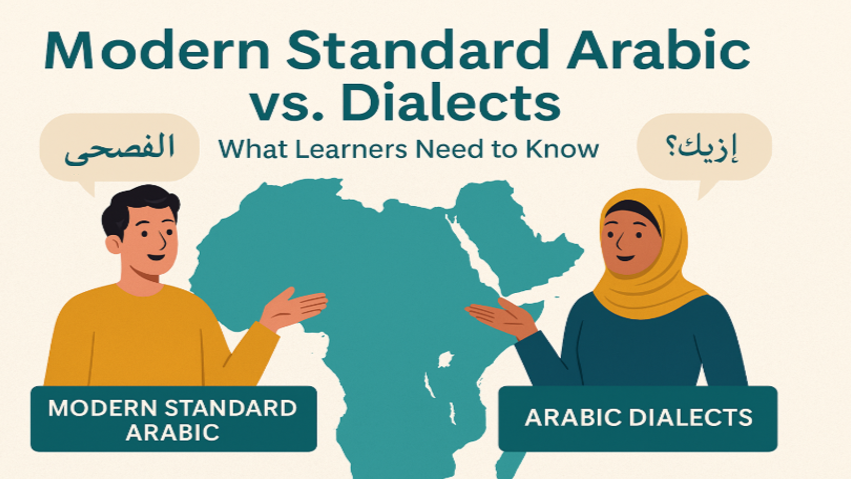
When it comes to Arabic Lessons for UAE residents, there isn’t just one path to follow. The type of lesson you choose depends on your goals—whether you want to communicate in daily life, grow professionally, or deepen your understanding of the language for religious or academic purposes.
In the UAE, Arabic courses are designed to suit different needs, levels, and lifestyles, making it easier for every learner to find the right fit.
Arabic Fusha (Modern Standard Arabic)
Modern Standard Arabic (MSA), also known as Fusha, is the formal version of Arabic used across the Arab world. It’s commonly found in:
- News and media
- Books and literature
- Official documents and government communication
This type of Arabic is ideal if you want to:
- Work in professional or formal environments
- Read and write Arabic accurately
- Communicate across different Arab countries
Although it’s not typically used in casual conversations, learning Fusha builds a strong foundation that supports all other forms of Arabic.
If you want to understand the difference between spoken fluency and formal Arabic, you can explore our blog post “Conversational Fusha Arabic” to learn how MSA can be used fluently in real communication.
Conversational Arabic (Dialects)
If your goal is to handle everyday situations, conversational Arabic—especially Gulf or Emirati dialect—is the most practical choice.
This is the Arabic you’ll hear in daily life across cities like Dubai and Abu Dhabi. It focuses on:
- Real-life conversations
- Common expressions and slang
- Pronunciation used by locals
Learning a dialect helps you:
- Speak naturally with native speakers
- Navigate daily interactions easily
- Feel more confident in social situations
Many learners actually combine dialect + Fusha to get the best of both worlds.
Quran and Tajweed Classes
For those interested in religious learning, Quranic Arabic focuses on understanding the language of the Quran along with proper pronunciation through Tajweed rules.
These classes are especially important for:
- Muslims who want to improve their recitation
- Learners seeking deeper spiritual understanding
- Students focusing on classical Arabic texts
Unlike conversational Arabic, this type emphasizes accuracy, pronunciation (makharij), and correct recitation.
Arabic for Kids
Arabic lessons for children are structured differently to match their learning style—more interactive, engaging, and gradual.
In the UAE, Arabic is often part of the school curriculum under authorities like KHDA, which means many kids need additional support outside school.
These lessons usually focus on:
- Building vocabulary through games and activities
- Improving reading and writing skills
- Supporting school performance
Starting early helps children become more comfortable with the language and develop stronger long-term skills.
Benefits of Online Arabic Lessons for UAE Residents
With busy schedules and fast-paced lifestyles in cities like Dubai and Abu Dhabi, many learners are turning to online options when it comes to Arabic Lessons for UAE residents.
Online learning isn’t just a convenient alternative—it’s become one of the most effective ways to build real language skills while balancing work, school, and personal commitments.
Flexible Scheduling Across UAE Time Zones

One of the biggest advantages of online Arabic lessons is flexibility. Whether you’re a working professional, a student, or a parent managing a busy household, you can schedule lessons at times that actually suit your routine.
Instead of adjusting your day around a fixed class, online learning allows you to:
- Choose morning, evening, or even late-night sessions
- Learn at your own pace without pressure
- Stay consistent without missing classes
This flexibility makes it much easier to stay committed and see real progress over time.
Learn from Home Comfortably
Online Arabic lessons remove the need for commuting, saving both time and energy. You can learn from the comfort of your home, office, or anywhere that suits you.
This creates a more relaxed learning environment where you can:
- Focus better without distractions
- Practice speaking with confidence
- Build a consistent study routine
For families, it also means no more rushing to language centers or adjusting daily schedules around travel time.
Personalized One-on-One Lessons

Unlike traditional classrooms, online Arabic lessons often offer personalized learning experiences. Whether you choose private sessions or small groups, the lessons are usually tailored to your level and goals.
This means you can:
- Focus on what you actually need (conversation, reading, or writing)
- Get immediate feedback and correction
- Progress faster with targeted practice
Personalized lessons are especially helpful for beginners who need extra support, as well as advanced learners aiming for fluency.
Access to Qualified Teachers
Online platforms connect you with experienced, native Arabic-speaking instructors—no matter where you are.
Learning with native teachers helps you:
- Improve pronunciation and accent naturally
- Learn real-life expressions used in daily conversations
- Understand cultural context, not just vocabulary
This kind of exposure is essential for anyone who wants to go beyond basic phrases and truly communicate with confidence in the UAE.
How to Choose the Best Arabic Lessons for UAE Residents
Choosing the right Arabic lessons for UAE residents depends on your personal goals, learning style, and how you plan to use the language in daily life. Whether you want formal fluency or practical conversational skills, the right course can make a huge difference in your progress and confidence.
In a country like the UAE, where both Modern Standard Arabic (MSA) and dialects are widely used, selecting the right learning path is the first step toward real improvement.
Check Teacher Qualifications
One of the most important factors is the quality of instructors. Always look for courses taught by certified, experienced, native Arabic speakers who understand how to teach non-native learners effectively.
Good teachers can help you:
- Improve pronunciation accurately
- Understand grammar in a simple way
- Practice real-life conversations confidently
Institutes that focus on professional teaching standards tend to give learners faster and more stable progress.
Look for Flexible Timings
Flexibility is essential, especially for learners balancing work, studies, or family responsibilities in cities like Dubai and Abu Dhabi.
The best Arabic programs offer:
- Evening and weekend classes
- Online and in-person options
- Self-paced or live sessions
This flexibility helps you stay consistent without disrupting your daily routine.
Read Reviews and Testimonials
Before choosing a course, it’s important to check what other learners are saying. Reviews and testimonials give you insight into:
- Teaching quality
- Student experience
- Real progress outcomes
This step helps you avoid ineffective programs and choose institutes that actually deliver results.
Try a Free Trial Class
Many Arabic learning providers offer free trial lessons, which is a great way to test whether the teaching style suits you.
A trial class allows you to:
- Experience the instructor’s method
- Check class structure and difficulty level
- Decide if the course matches your learning goals
This is especially useful for beginners who are still exploring whether to focus on Fusha, dialect, or both.
What to Expect from Arabic Lessons for UAE Residents at Areeb Academy
When enrolling in Arabic lessons for UAE residents at Areeb Academy, learners can expect a structured and highly personalized learning experience designed to suit different goals, ages, and proficiency levels. The focus is not just on teaching the language, but on building real communication skills through guided practice and consistent progress.
Classes are delivered online by qualified native instructors, including graduates from reputable institutions such as Al-Azhar, ensuring both linguistic accuracy and strong academic grounding.
Level Assessment Before Starting

Before beginning the course, students typically go through an initial level assessment with a free trial. This helps determine their current proficiency in Arabic—whether they are complete beginners or more advanced learners.
This step ensures that:
- Students are placed in the correct level
- Learning gaps are identified early
- The course starts at the right difficulty level for steady progress
As a result, learners avoid repetition and move forward at a comfortable, effective pace.
Customized Learning Plan

One of the key strengths of Areeb Academy is its tailored learning approach. Each student receives a learning plan based on their goals, such as:
- Conversational fluency
- Academic Arabic (Fusha)
- Quranic reading and understanding
- Dialect-focused communication (e.g., Egyptian Arabic)
This makes the learning experience more focused and practical, especially for learners who want to apply Arabic in daily life in cities like Dubai and Abu Dhabi.
Interactive and Engaging Teaching Style Through Arabic Lessons for UAE Residents

Lessons at Areeb Academy go beyond traditional memorization. The teaching style is interactive and designed to keep learners engaged throughout the process.
Students can expect:
- Live conversations with instructors
- Multimedia-based explanations
- Quizzes and practice activities
- Real-life scenario training
This approach helps reinforce vocabulary and grammar naturally, making it easier to retain what is learned and use it in real situations.
Regular Progress Tracking

To ensure consistent improvement, students receive ongoing progress tracking and feedback. This helps them understand how they are developing in different language skills, including:
- Speaking
- Listening
- Reading
- Writing
Regular feedback also allows instructors to adjust the learning plan when needed, ensuring that each student continues to improve without feeling overwhelmed or stuck at one level.
Common Challenges in Arabic Lessons for UAE Residents
Learning Arabic can be highly rewarding, but it also comes with a few predictable challenges—especially for new learners in the UAE. The key is not to avoid these difficulties, but to understand them early and apply the right strategies to overcome them.
With consistent practice and the right approach, most learners gradually move from confusion to confidence in their Arabic journey.
Difficulty in Pronunciation
One of the most common challenges in Arabic is pronunciation. The language includes sounds that don’t exist in English, such as letters like ع (ʿAyn), ح (Ḥaa), and ق (Qaf). These require training your mouth and listening carefully to native speakers.
To improve pronunciation:
- Repeat sounds slowly and consistently
- Watch native speakers and imitate their mouth movements
- Record yourself and compare your pronunciation
- Focus on difficult letters instead of rushing through vocabulary
Over time, your speech becomes more natural with regular exposure and practice.
Lack of Practice Opportunities
Many learners struggle because they don’t use Arabic outside the classroom. Without practice, progress becomes slow and vocabulary is easily forgotten.
To solve this, try to create daily exposure even in a non-Arabic environment like Dubai or Abu Dhabi:
- Speak simple Arabic phrases in daily life
- Watch Arabic shows or listen to podcasts
- Practice with tutors or language partners
- Use Arabic in real situations like shopping or ordering food
The more you use the language, the faster it becomes natural.
Staying Consistent
Consistency is often the biggest challenge—not the language itself. Many learners start strong but lose motivation over time due to busy schedules or lack of structure.
To stay consistent:
- Set small, realistic daily goals (not perfection)
- Study for short periods regularly instead of long sessions occasionally
- Track your progress to stay motivated
- Accept mistakes as part of the learning process
Arabic becomes much easier when it’s treated as a daily habit rather than a one-time study task.
Tips to Learn Arabic Faster for UAE Residents

Learning Arabic can feel challenging at first, but in a country like Dubai or Abu Dhabi, you actually have one of the best environments in the world to improve quickly. The key is not just studying Arabic, but living it through daily exposure, practice, and consistency.
With the right approach, your progress can speed up significantly—especially when you combine structured lessons with real-life use.
Practice Daily Conversations
The fastest way to improve Arabic is to start speaking from day one. Even simple phrases can make a big difference in your confidence and fluency.
Try to:
- Greet people in Arabic daily
- Use basic phrases in shops or cafés
- Practice with native speakers whenever possible
- Focus on conversational Emirati or Gulf dialect for daily life
Don’t worry about making mistakes—most people appreciate the effort and may even help you improve.
Watch Arabic Content
Listening to real Arabic helps train your ear and improves vocabulary naturally. Instead of only studying textbooks, expose yourself to the language through media.
You can:
- Watch Arabic series and shows on platforms like Shahid
- Follow Arabic YouTube channels and learning content
- Listen to Arabic podcasts during your day
This helps you understand pronunciation, rhythm, and everyday expressions used by native speakers.
Use Arabic in Real-Life Situations
One of the biggest advantages of living in the UAE is constant access to real-life practice opportunities. You don’t need to wait for class—you can use Arabic everywhere.
For example:
- Ordering food in Arabic
- Talking to shopkeepers or drivers
- Asking for directions
- Practicing short conversations with colleagues
The more you use Arabic in real situations, the faster it becomes natural and automatic.
Stay Consistent with Lessons
Consistency is more important than intensity. Studying a little every day is far more effective than long, irregular sessions.
To stay on track:
- Set small, realistic goals each week
- Review vocabulary regularly
- Attend structured classes at institutes like Eton Institute or Zabeel Institute
- Mix online learning with real-life practice
Over time, this steady approach builds strong, long-lasting fluency.
Final Thoughts on Arabic Lessons for UAE Residents
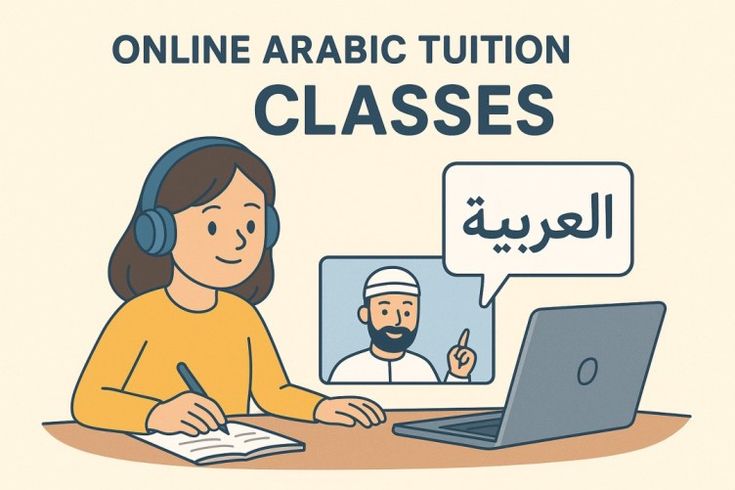
Learning Arabic in the UAE is more than just picking up a new language—it’s about unlocking a deeper connection with the culture, people, and daily life around you. From navigating everyday situations with ease to building stronger professional relationships, Arabic gives you a real advantage whether you’re a new resident, a long-term expat, or a student growing up in the region.
The journey may feel challenging at first, but with the right guidance, consistent practice, and exposure to real conversations, progress comes much faster than most learners expect. The key is to start simple, stay consistent, and keep using the language in real-life situations.
If you’re ready to take your Arabic learning seriously and want structured support with expert guidance, Areeb Academy is here to help you every step of the way. With experienced native Arabic instructors, personalized learning plans, and flexible online schedules that fit your lifestyle, you can learn at your own pace without pressure.
Whether you’re a complete beginner or looking to improve your fluency, Areeb Academy offers a supportive and interactive learning environment designed to help you speak confidently and naturally.
✨ Don’t wait to start your journey—take the first step today and experience how enjoyable learning Arabic can be.
👉 Book your FREE trial now with Areeb Academy and start learning Arabic with confidence, flexibility, and expert native teachers.
Frequently Asked Questions (FAQs)
1. Are Arabic lessons important for UAE residents?
Yes, Arabic lessons are important for UAE residents because they improve daily communication, cultural understanding, and career opportunities, even though English is widely used.
2. What type of Arabic should I learn in the UAE?
It depends on your goal. Modern Standard Arabic (MSA) is used for formal communication, while Emirati or Gulf dialect is best for daily conversations.
3. Can I learn Arabic online in the UAE?
Yes, online Arabic lessons are widely available and offer flexible schedules, native teachers, and personalized learning from anywhere.
4. How long does it take to learn Arabic?
It varies based on consistency and practice. With regular lessons and daily exposure, learners can start basic conversations within a few months.
5. What is the fastest way to learn Arabic in the UAE?
The fastest way is combining structured lessons with daily practice—speaking with locals, watching Arabic content, and using the language in real-life situations.