

Learning Conversational Fusha Arabic (Modern Standard Arabic) can feel challenging at first, especially since it’s usually reserved for formal writing, news, and literature. But what if you could actually speak it in real-life situations, understand native speakers, and use it confidently for travel, work, or social interactions?
In this article, we’ll guide you through the essential phrases, practical tips, and effective strategies to help you learn Fusha Arabic in a way that’s useful, engaging, and conversation-ready. Whether you’re a beginner or looking to improve your fluency, you’ll discover how to bridge the gap between classroom learning and real conversations.
What Is Conversational Fusha Arabic?

Conversational Fusha Arabic is the spoken form of Modern Standard Arabic (MSA), the formal and standardized version of Arabic used across the Arab world. It acts as a bridge between regional dialects, offering a clear, grammatical, and universally understood language. While Fusha proves incredibly useful for formal communication, literature, and media, speakers rarely use it in casual daily conversation, as local dialects dominate.
Conversational Fusha is more than just a set of rules—it’s the language of formal speeches, TV news, educational programs, and religious texts, including the Quran. By learning it, you gain access to a form of Arabic that connects you to the rich literary and cultural heritage of the Arab world.
- Universal Understanding: It is understood by educated Arabic speakers across different countries, serving as a “lingua franca” that unites speakers of diverse dialects.
- Context of Use: Primarily spoken in formal settings such as news broadcasts, interviews, documentaries, and classrooms, rather than casual conversations.
- Vocabulary and Grammar: It follows strict classical Arabic grammar and features a rich, formal vocabulary. Using it casually can sometimes sound overly formal, poetic, or even “Shakespearean” to native speakers.
- Difference from Dialects: Unlike informal regional dialects, which vary widely and have no standardized spelling, Fusha is standardized and consistent, making it reliable for reading, writing, and formal communication.
Understanding Modern Standard Arabic (Fusha)
Modern Standard Arabic (MSA) is the contemporary form of Fusha. While both share the same grammatical and vocabulary roots, MSA adapts these foundations for modern use in newspapers, education, and official communication. Learning Fusha makes it easier to understand MSA while also opening the door to classical texts that modern Arabic alone cannot fully convey.
If you’re introducing Arabic to younger learners, starting with clear and simple grammar explanations can make a big difference. You can explore some practical tips in our guide “Arabic Grammar for Kids: Fun, Easy Ways to Learn From Home.”
Differences Between Fusha and Arabic Dialects
Conversational Fusha Arabic stands apart from local dialects in several key ways:
- Formality vs. Casualness: Dialects are informal and used in everyday life, whereas Fusha is formal and reserved for professional or educational contexts.
- Consistency: Dialects differ significantly from region to region, but Fusha remains uniform, so texts and speech are universally understood.
- Literary Connection: Fusha connects you to the Quran, classical poetry, and scholarly works, which dialects cannot.
Why Conversational Fusha Arabic Matters for Learners

Mastering Conversational Fusha Arabic offers multiple benefits:
- Broad Comprehension: You can understand formal media, literature, and written materials like books, newspapers, and websites.
- Strong Foundation: Provides a solid grammatical base that makes learning any regional dialect easier.
- Global Communication: Breaks regional language barriers, allowing clear communication across the Arab world.
- Access to Classical Texts and the Quran: Essential for those who want to study religious or classical literature deeply.
- Academic and Professional Growth: Enhances credibility in education, research, and international work settings.
Why Learn Conversational Fusha Arabic?
Learning Conversational Fusha Arabic opens the door to a universal form of Arabic that speakers across all Arabic-speaking countries—from Morocco to Oman—understand. It builds a strong grammatical foundation, unlocks classical literature and the Quran, and equips you for professional, academic, and media-based communication. By mastering Fusha, you can navigate formal settings that demand clear, standardized Arabic and handle different regional dialects effectively.
Communicating Across the Arab World
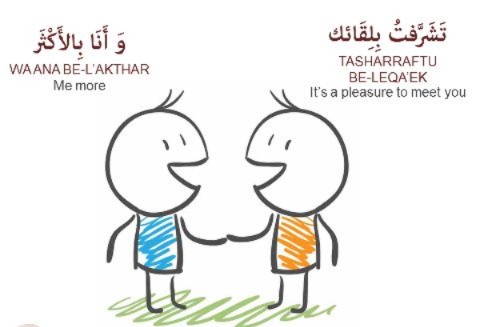
One of the biggest advantages of learning Conversational Fusha is its universality. Unlike local dialects, which can vary dramatically from country to country, Fusha is understood by educated speakers everywhere. It allows you to communicate across regions without the confusion of dialect differences, giving you a neutral and respected register suitable for professional and academic interactions. Using Fusha also demonstrates effort and respect, often encouraging native speakers to respond in a more accessible and supportive form of Arabic.
Understanding News, Media, and Formal Speech

Conversational Fusha is the standard language of news broadcasts, literature, formal speeches, political discussions, and official documents. Arabic serves as the language of education and media across the Arab League, making it essential for anyone who wants to follow current events, read newspapers, or participate in formal discussions. By learning Fusha, you gain the ability to understand both Modern Standard Arabic and classical texts, bridging the gap between historical literature and contemporary communication.
Improving Quran and Islamic Studies Comprehension
Fusha is derived from Classical Arabic, the language of the Quran, and is central to Islamic scholarship. Mastering Conversational Fusha allows learners to read and comprehend religious texts more deeply, engage with classical literature, and fully appreciate the linguistic and cultural richness of Islamic heritage. For practicing Muslims and anyone studying Arabic for religious purposes, this skill is invaluable, providing a foundation that supports both spiritual understanding and academic study.
Is Conversational Fusha Arabic Actually Spoken?

Many learners wonder if Conversational Fusha Arabic appears in everyday speech. Native speakers rarely use it in casual life, but they actively use it in formal settings. Fusha forms the backbone of Arabic education, media, and official communication, even though people don’t speak it at home or in coffee shops.
In reality, Fusha spans a spectrum between fully formal Arabic and everyday dialects. Speakers sometimes blend it with local speech, creating what is called ‘White Arabic’ (اللهجة البيضاء). Understanding this dynamic helps learners navigate Arabic more effectively.
Where Fusha Is Used in Daily Life
Even though Fusha isn’t used for casual conversations, it appears regularly in certain contexts:
- Formal Settings: News broadcasts, documentaries, lectures, speeches, and educational programs all use Fusha.
- Written Communication: Books, newspapers, academic texts, and official correspondence rely on Fusha for clarity and standardization.
- Bridge Between Dialects: When speakers from very different dialect regions (e.g., Morocco and Iraq) need to communicate, they may simplify their Fusha or mix it with a neutral tone to understand each other.
Situations Where Conversational Fusha Arabic Is Useful
Learning Fusha has very practical benefits even if it’s not a native spoken language:
- Formal Communication: Essential for presentations, news reading, or professional discussions.
- Religious and Cultural Studies: Provides access to the Quran, classical literature, and Islamic scholarship.
- Media and Academic Work: Understanding formal media, academic articles, and official documents becomes much easier with a strong Fusha foundation.
- Foundational Learning for Dialects: While it won’t replace learning a regional dialect, knowing Fusha helps learners grasp the root structures, grammar, and vocabulary shared across dialects.
How Native Speakers Adapt Fusha in Conversations
Even native Arabic speakers rarely use full, grammatically perfect Fusha in spoken interactions. Here’s how it appears in real life:
- Partial Usage: Speakers often blend Fusha with their local dialect or simplify case endings for easier communication.
- Respectful Effort: When learners attempt to speak Fusha, native speakers usually understand and may even adjust their own language to accommodate, sometimes using a simpler, semi-formal version.
- Practical Myth-Busting: Contrary to popular belief, Arabs do not always switch to Fusha when dialects differ. Instead, they mix dialects and Fusha strategically, showing that Fusha is a tool, not a daily conversational default.
Essential Foundations for Conversational Fusha Arabic
Mastering Conversational Fusha Arabic (Modern Standard Arabic) requires learners to build a foundation that connects formal, literary Arabic with real-world spoken usage. Traditional Fusha focuses mainly on writing, but a conversational approach emphasizes practical vocabulary, functional grammar, and immersive practice, helping learners speak and understand Arabic in everyday contexts. By concentrating on these core foundations, learners can confidently move from studying texts to engaging in meaningful conversations.
Learning Core Vocabulary for Everyday Conversations
Vocabulary is the building block of communication. In Conversational Fusha Arabic, the focus should be on high-frequency words and functional phrases that appear in daily life or formal interactions.

- High-Frequency Vocabulary: Prioritize common words over literary or poetic terms to maximize usability.
- Functional Phrases: Learn expressions for greetings, self-introductions, asking directions, ordering food, and expressing preferences.
- Contextual Learning: Memorize vocabulary within sentences and dialogues rather than in isolation, so you immediately understand how words are used in conversation.
By grounding your learning in practical words and expressions, you create a toolkit for real communication while retaining the formal structure of Fusha.
Understanding Basic Sentence Structure
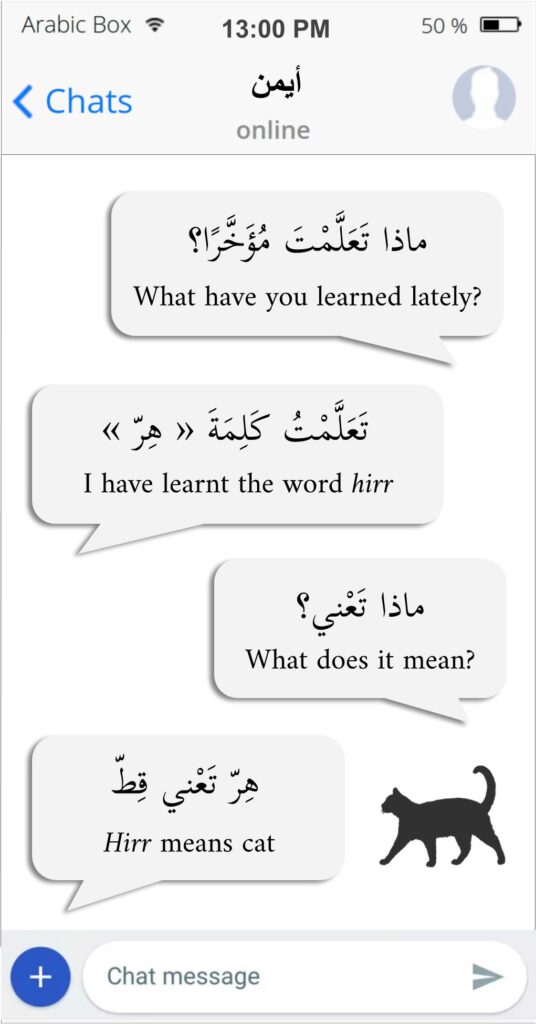
Grammar provides the framework for clarity in both writing and speech. Focus on core grammatical patterns that are most relevant for conversation:
- Sentence Order: Learn how subject-verb-object (SVO) and verb-subject-object (VSO) structures function in MSA.
- Noun-Adjective Agreement: Understand gender, number, and case agreements to form grammatically correct sentences.
- Tense and Conjugation: Master simple present, past, and future verb forms to describe everyday actions.
- Root System: Familiarize yourself with the three-letter root system that underpins most Arabic words, enabling you to infer meanings of new words.
A solid grasp of sentence structure allows learners to construct meaningful sentences confidently, bridging the gap between reading and speaking.
Mastering Pronunciation and Harakat
You must pronounce Arabic correctly to be understood and to connect written Arabic with spoken Arabic.
- Alphabet & Sounds: Learn the 28 letters of the Arabic alphabet and their contextual variations. Pay special attention to unique sounds like ع (ʿayn), ق (qāf), and غ (ghayn).
- Harakat (Vowels): Start with texts that include short vowels to internalize correct pronunciation.
- Speaking Practice: Engage in active listening to news, podcasts, and educational videos in Fusha, and practice speaking from day one to develop fluency and confidence.
- Hybrid Approach: Combine standard Fusha with widely understood vocabulary from dialects to communicate naturally while maintaining formal correctness.
By combining consistent practice, pronunciation drills, and immersive listening, learners can move from theoretical understanding to real conversational ability.
Basic Conversational Fusha Arabic Phrases for Beginners

Starting your journey in Conversational Fusha Arabic begins with learning practical phrases that allow you to greet, introduce yourself, and handle everyday interactions. These foundational expressions are understood across the Arab world, making them essential for beginners.
Greetings and Introductions

Polite greetings and self-introductions form the first step in any conversation:
- Hello: Marhaban (مرحبا)
- Peace be upon you (formal): As-salamu alaykum (السلام عليكم)
- Response to Peace: Wa alaykum as-salam (وعليكم السلام)
- Good morning: Sabah al-khayr (صباح الخير)
- Good evening: Masa’ al-khayr (مساء الخير)
- Goodbye: Ma’a as-salama (مع السلامة)
- Welcome: Ahlan wa sahlan (أهلاً وسهلاً)
- My name is…: Ismi… (اسمي)
- What is your name? (Male/Female): Ma ismuka? / Ma ismuki? (ما اسمك؟)
These phrases allow you to start conversations politely and make a good first impression.
Asking Questions and Giving Answers

Knowing how to ask questions and respond is key for smooth interaction:
- How are you? (Male/Female): Kayfa haluka? / Kayfa haluki? (كيف حالك؟)
- I’m fine, thanks: Ana bikhayr, shukran (أنا بخير، شكراً)
- Where is…? (bathroom, station, hotel): Ayna…? (أين…؟)
- I don’t understand: La afham (لا أفهم)
- Please speak more slowly: Takallam bibut’ min fadlak (تكلم ببطء من فضلك)
- Do you speak English? Hal tatakallam bel-ingliziya? (هل تتكلم بالإنجليزية؟)
Mastering these phrases will help you navigate both daily situations and more urgent needs while traveling.
Common Expressions Used in Conversations
Polite expressions and practical vocabulary allow you to interact naturally:
- Thank you: Shukran (شكراً)
- Thank you very much: Shukran jazeelan (شكراً جزيلاً)
- You’re welcome: Afwan (عفواً)
- Please: Min fadlik (من فضلك)
- Yes / No: Na’am / La (نعم / لا)
- Excuse me / Sorry: Asef / Ma’adhira (آسف / معذرة)
- I love you: Ohebuka / Ohebuki (انا احبك)
- I miss you: Aftaqeduka / Aftaqeduki (افتقدك)
- I’m lost: Ana ta’eh (أنا تائه)
- Help! Mosa’adah! (مساعدة!)
These phrases form a basic toolkit that allows beginners to communicate politely and effectively in multiple contexts, from socializing to travel emergencies.
Best Way to Learn Conversational Fusha Arabic Online

Learning Conversational Fusha (Modern Standard Arabic – MSA) online is most effective when you combine structured learning with active speaking practice. Using a mix of one-on-one tutoring, interactive apps, and immersive resources ensures that learners develop both fluency and confidence.
Structured One-on-One Lessons
One-on-one lessons give learners direct access to a native speaker’s guidance, allowing them to receive personalized feedback and support. This approach helps build confidence in speaking, ensures mistakes are corrected immediately, and adapts to each learner’s pace and goals. By focusing on the learner’s needs, tutors can cover practical topics such as greetings, daily life conversations, family, travel, and even news discussions, making grammar and vocabulary easier to absorb in context.
Interactive Conversation Practice
Speaking regularly with a partner or tutor helps internalize pronunciation, sentence patterns, and common expressions. Techniques like listening and repeating phrases, role-playing everyday situations, and short daily speaking exercises reinforce fluency and retention. Even 20–30 minutes of consistent practice can significantly improve comprehension, pronunciation, and confidence in real-life conversations.
Personalized Learning Plans for Every Level
Tailoring lessons to the learner’s current level ensures steady progress. Beginners start with foundational skills like the alphabet, basic phrases, and essential sounds, while more advanced learners focus on discussing personal experiences, opinions, work, and current events. Combining structured lessons with exposure to formal Arabic through reading, listening, and revision strengthens understanding and allows learners to confidently communicate in classical Arabic across a variety of contexts.
Learning Arabic online works best when lessons match the learner’s age and learning style. Younger learners and teenagers often benefit from structured lessons that include interactive activities, speaking practice, and personalized feedback. If you’re looking for age-specific guidance, you may also find these resources helpful: “Arabic Lessons Online for Teenagers: Learn Fast & Speak Today” and “Arabic Conversation Course for Kids: Help Your Child Speak Arabic Confidently.” These guides explore practical approaches that help young learners build confidence and develop real conversational skills.
Common Challenges in Learning Conversational Fusha Arabic

Learning conversational Fusha (Modern Standard Arabic – MSA) comes with unique challenges. While Fusha is essential for formal writing, literature, and media, it is rarely used in everyday conversation. Learners often face obstacles such as complex grammar, pronunciation difficulties, and limited real-world speaking opportunities.
Mixing Dialects With Fusha
- Diglossia Issue: Native speakers usually communicate in regional dialects (Egyptian, Levantine, Gulf, etc.) rather than Fusha.
- Formal Barrier: Speaking Fusha casually can feel overly formal, like using Shakespearean English in a coffee shop.
- Comprehension Confusion: Learners may speak correctly in Fusha but receive responses in a dialect, which can make understanding difficult.
💡Practical Tip: Consider learning a specific dialect alongside Fusha for everyday conversation while retaining Fusha for formal contexts.
Difficulty Speaking Without Harakat
- Pronunciation Challenges: Arabic has guttural sounds (e.g., ع ‘ayn, ق qaf) and emphatic consonants (ص, ض, ط, ظ) not found in English.
- Vowel Ambiguity: Short vowels are often omitted in writing, making memorization and correct pronunciation essential.
- Grammar Complexity: Mastering verb conjugations, noun-adjective agreements, and the root-and-pattern system requires consistent practice.
💡Practical Tip: Use texts with harakat (vowels) initially and practice with audio-based resources
Limited Speaking Opportunities
- Scarcity of Partners: Few people speak Fusha in daily life, so finding conversation partners can be hard.
- Contextual Misalignment: Many courses and textbooks focus on formal scenarios rather than practical interactions like ordering food or asking for directions.
- Fear of Mistakes: Learners often hesitate to speak aloud, slowing progress.
💡Practical Tip: Engage in daily speaking practice, even short sessions, and use tutors or language exchange apps to gain real-world conversational experience.
By understanding these challenges and adopting active learning strategies, hybrid approaches, and consistent practice, learners can overcome obstacles and gradually gain confidence in conversational Fusha Arabic.
Final Thought
Mastering Conversational Fusha Arabic opens doors to fluent communication across the Arab world. When you focus on speaking daily, practicing real-life phrases, and engaging with native speakers, you not only strengthen your vocabulary and grammar but also gain the confidence to participate in formal and semi-formal conversations. Understanding Fusha helps you follow the news, read literature, and navigate professional or academic settings with ease, while also giving you the tools to connect across different Arabic dialects. The key is consistent practice, contextual learning, and interaction with fluent speakers who can correct mistakes and guide you naturally.
Speak Arabic Confidently with Areeb Academy
At Areeb Academy, our native Arabic-speaking teachers provide one-on-one lessons tailored to your level. They speak fluent English and understand how to make learning smooth, practical, and enjoyable. With personalized guidance, immersive practice, and real conversation scenarios, you’ll speak Fusha confidently in no time.
Book a free trial now and start your Arabic journey today!
FAQs
1. Is Conversational Fusha Arabic used in everyday conversations?
Native speakers rarely use full Fusha in casual daily conversations. People usually speak their local dialects at home and in social settings. However, you will hear Fusha in formal contexts such as news broadcasts, speeches, documentaries, and educational programs.
2. Can I communicate with people across the Arab world using Fusha?
Yes. Educated Arabic speakers across different countries understand Fusha, which makes it a useful bridge between dialects. Even if people respond in their local dialect, they will usually understand what you say in Fusha.
3. Is it better to learn Fusha or a dialect first?
It depends on your goal. If you want to read Arabic, understand media, or study the Quran, starting with Fusha is the best choice. If your main goal is everyday conversation in a specific country, learning a local dialect alongside Fusha can help you communicate more naturally.
4. How long does it take to learn Conversational Fusha Arabic?
The learning time varies depending on your dedication, study method, and practice frequency. With consistent study and regular speaking practice, beginners can start forming basic conversations within a few months.
5. What is the best way to practice Conversational Fusha Arabic?
The most effective approach combines structured lessons, active speaking practice, listening to native content, and learning vocabulary in context. Regular conversation with native speakers or tutors can significantly improve pronunciation, fluency, and confidence.