
Sukoon in Arabic is essential to understand for anyone learning how to read Arabic or recite the Quran. Although this small symbol (ـْ) may look simple—a tiny circle placed above a letter—it actually plays a major role in correct pronunciation, rhythm, and meaning.
In simple terms, Sukoon indicates that a consonant has no vowel sound, creating a moment of “stillness” or a silent stop. As a result, the letter connects smoothly with the sound before it. Without mastering Sukoon, beginners often struggle; for example, they may add extra vowel sounds, mispronounce words, or break the natural flow of reading.
Therefore, learning how Sukoon works is a crucial step for every beginner. In this article, we will walk you through everything you need to know about Sukoon—starting with its symbol and meaning, then moving on to its rules, pronunciation, and examples. In addition, we’ll cover common mistakes, along with easy teaching tips for beginners and children.
By the end of this guide, not only will you understand how Sukoon functions, but you’ll also be able to read Arabic letters and Quranic words more accurately. Most importantly, you’ll feel confident enough to start practicing with proper guidance and structured lessons.
Sukoon in Arabic Explained: The Secret of Stillness
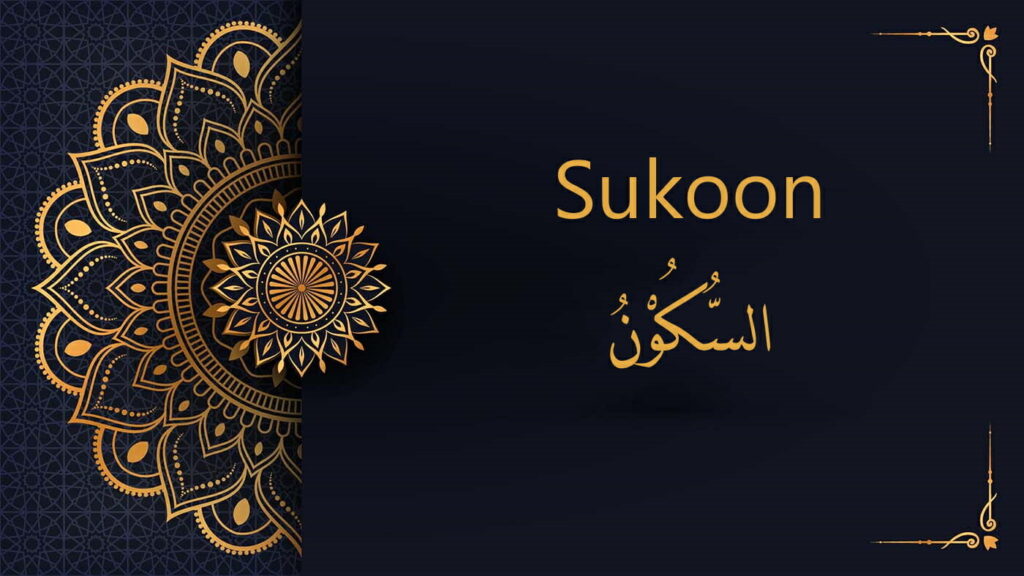
Sukoon (سُكُون) is a diacritical mark in Arabic that shows a letter has no vowel sound. In other words, it tells the reader that the consonant should be pronounced without any movement, meaning it is still or at rest.
Normally, most Arabic letters are pronounced with a short vowel—such as fatha, kasra, or damma. However, when a letter carries a Sukoon, the sound stops on that letter, and no vowel follows it. As a result, the consonant is pronounced clearly and briefly, without adding an extra “a,” “i,” or “u” sound.
Because of this, Sukoon plays a crucial role in forming correct syllables, connecting sounds smoothly, and maintaining the natural rhythm of Arabic—especially in Quranic recitation.
For example:
- بَ = ba (with a vowel)
- بْ = b (no vowel, just the consonant sound)
Sukoon plays a major role in forming correct syllables, joining sounds smoothly, and ensuring accurate pronunciation—especially in Quranic recitation and classical Arabic reading.
Meaning of Sukoon in Simple Terms
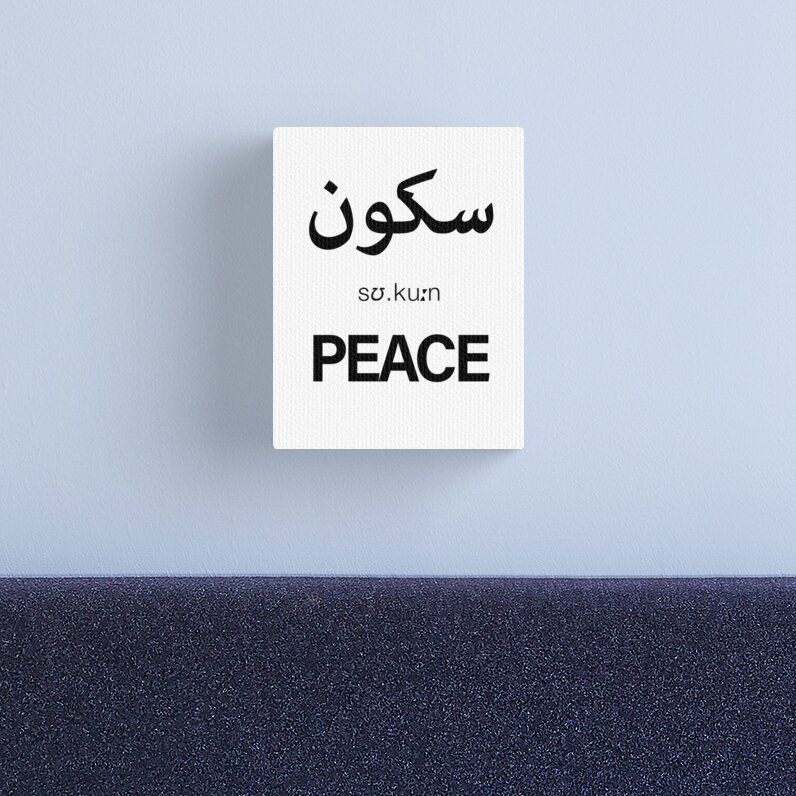
The word Sukoon in Arabic literally means calm, peace, or stillness. Linguistically, it carries the same idea: the letter is at rest and does not move with a vowel.
In simple words:
- A letter with a vowel = moving sound (ba, bi, bu)
- A letter with Sukoon = stopped sound (b)
Think of it like this:
Vowels make letters move, but Sukoon makes the letter pause.
For beginners, Sukoon can be understood as:
“This letter is pronounced clearly, but without adding any vowel sound to it.”
This concept is essential for reading Arabic correctly, because many Arabic words depend on these stopped sounds to form their meaning and rhythm.
What the Sukoon Symbol (ْ) Looks Like

The Sukoon symbol is written as a small circle placed above a letter: ـْ
Example:
- بْ
- مْ
- نْ
This small circle visually tells you:
“Stop here. Don’t add a vowel.”
Unlike other diacritics:
- َ (Fatha) = adds “a” sound
- ُ (Damma) = adds “u” sound
- ِ (Kasra) = adds “i” sound
The Sukoon (ْ) adds no sound at all—it simply marks the absence of a vowel.
So if you see:
- بَ → ba
- بْ → b (no vowel)
This tiny symbol has a huge impact on how Arabic words are pronounced and understood.
Why Sukoon Is Important for Beginners
Sukoon is one of the most essential concepts for anyone starting to learn Arabic. In fact, it teaches learners that not every letter has a vowel sound—instead, some letters must stop clearly and remain still.
Without this understanding, beginners often add extra sounds, mispronounce words, and, as a result, struggle with reading fluently. Although Sukoon looks like a small and simple symbol, it actually plays a big role in shaping correct pronunciation, natural word flow, and accurate meaning.
In simple terms, Sukoon trains the learner to stop, connect, and pronounce Arabic the right way.
Sukoon in Arabic Explained How It Shapes Perfect Sounds

Sukoon directly controls how sounds stop and connect in Arabic. When a letter has Sukoon, it is pronounced as a pure consonant sound, without any vowel.
For example:
- تَ = ta
- ُت= tu
- ِت= ti
- ْت= t (no vowel)
This clean stop is essential for proper pronunciation. Beginners often struggle because they instinctively want to add a vowel after every letter. Sukoon teaches them that Arabic doesn’t work this way.
Sukoon in Arabic Explained How It Shapes Perfect Sounds
- Eliminates extra sounds
Learners often say kal-ba instead of kalb (dog). Sukoon fixes this by forcing a clean stop. - Creates natural word flow
Arabic words depend on smooth sound transitions. Sukoon acts like a connector between syllables. - Prevents over-pronunciation
Without Sukoon, learners tend to exaggerate sounds, making speech unnatural. - Builds correct rhythm
Especially in Quranic recitation, Sukoon helps maintain the intended rhythm and balance of sounds.
When you master Sukoon, your Arabic immediately sounds more authentic and accurate.
Sukoon in Arabic Explained: One Tiny Mark, Big Meaning Change
One of the most powerful roles of Sukoon is its effect on meaning. In Arabic, sound patterns are not random—every vowel and pause matters.
Changing or ignoring Sukoon can:
- Change verb forms
- Alter grammatical meaning
- Turn one word into another
- Make speech confusing or incorrect
Example:
كَتَبَ (kataba) = He wrote
كَتَبْ (katabْ) = (a stopped form, used grammatically)
يَكْتُبُ (yaktubu) = He writes
يَكْتُبْ (yaktubْ) = He does not write (in jussive form)
That tiny Sukoon at the end completely changes the function of the word.
In Quranic recitation, this becomes even more critical. Missing or misplacing Sukoon can distort meaning and disrupt the rules of Tajweed.
So Sukoon is not just a pronunciation tool—it is a meaning-defining tool.
How to Pronounce Sukoon Correctly

To pronounce Sukoon (ـْ) correctly, you must make the letter it sits on a pure consonant sound, with no vowel added. This means the sound stops sharply and cleanly on that letter.
Think of Sukoon as a controlled pause. You pronounce the vowel before it, then cut the sound on the consonant without continuing with a, i, or u.
For example:
- أَبْ (ab): say a, then stop at b
- مِنْ (min): say mi, then stop at n
The sound should be quick and precise—not stretched, and not doubled.
Sukoon in Arabic Explained: Master the Clean Stop (No Vowel Added!)
The most important rule of Sukoon is this:
No vowel follows the letter.
That means:
- No ba, bi, or bu
- Just b
Here’s how to do it step by step:
- Identify the Sukoon symbol
It looks like a small circle (ـْ) or sometimes a tiny “ha” shape. - Pronounce the vowel before it
Example: أَ (a), بِ (bi), تُ (tu) - Stop sharply on the Sukoon letter
Cut the sound without continuing.
Examples:
- أَبْ → ab (not aba)
- مِنْ → min (not mina)
- يَكْتُبُ → yak-tu-bu (clean stops on كْ and بْ)
This stopping action is what makes Arabic sound natural and accurate.
Listening and Repeating Tips for Beginners
The best way to master Sukoon is through listening and repetition.
Helpful techniques:
1. Listen to native reciters or speakers
Pay close attention to how they stop on Sukoon letters. You’ll notice the sound ends sharply and clearly.
2. Use the tapping method
Many teachers use this trick:
- One tap for the vowel
- One light tap for the Sukoon stop
This helps your brain feel the rhythm.
3. Start with short words
Practice simple words like:
- أَبْ (ab)
- بِنْ (bin)
- عِنْ (ʿin)
Then move to longer words and sentences.
4. Don’t confuse Sukoon with Shaddah
- Sukoon (ـْ) = stop
- Shaddah (ـّ) = double the sound
Example:
- رَبْ (rab) → stopped
- رَبّ (rabb) → doubled
Still mixing up Sukoon and Shaddah?
Discover how Shaddah really works in our beginner-friendly guide:
Shaddah for Beginners: The Secret to Correct Arabic Pronunciation
Sukoon With Arabic Letters
Sukoon (سُكُون) shows that a consonant has no short vowel and should be pronounced as a pure consonant, stopping the sound without adding a, i, or u. In Arabic, letters with Sukoon are called sakin letters, and for this reason, they cannot start a word.
Moreover, Sukoon is essential because it connects consonants to the preceding vowel, forming proper syllables and making words pronounceable. As a result, understanding where Sukoon appears helps learners read Arabic words clearly, accurately, and with proper rhythm—especially in Quranic recitation.
Sukoon in Arabic Explained in Different Positions
1. Sukoon at the Beginning
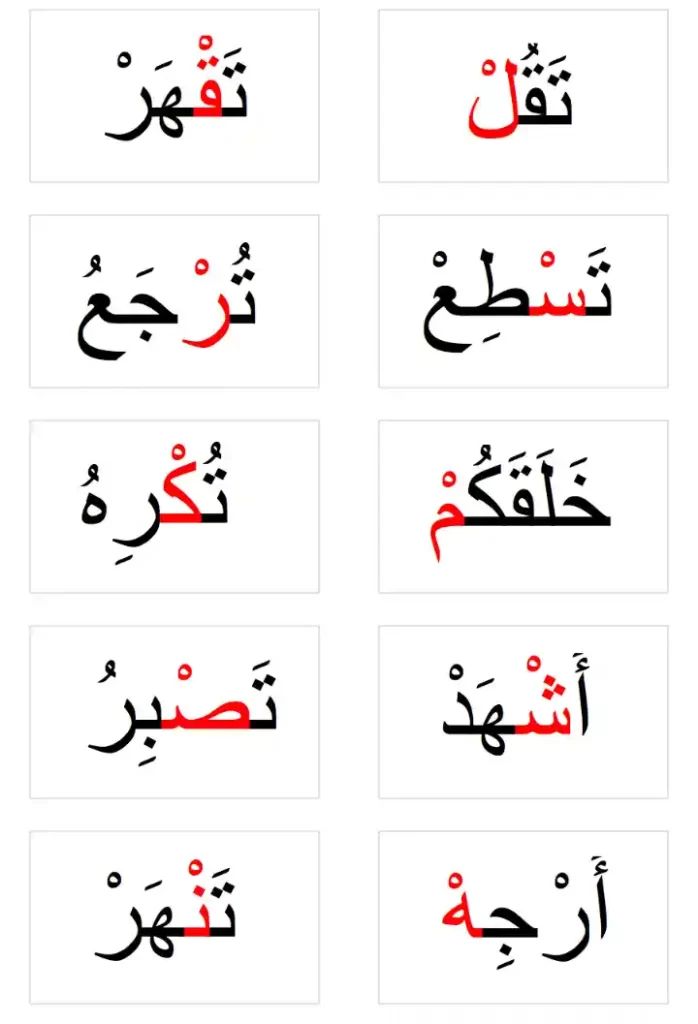
- A sakin letter cannot appear at the start of a word.
- Words always begin with a vowel or a voweled letter.
- Example: Incorrect: ـبَـيـت (starting with Sukoon) → not allowed
- Example: Correct: بَيْت (bayt) → starts with a voweled letter, ends with sukoon
2. Sukoon in the Middle
- Sukun often appears between two vowels to connect consonants smoothly.
- Example: يَكْتُبْ (yaktub) → the “k” and “b” carry sukoon, linking the syllables yak-tub.
3. Sukoon at the End
- Many Arabic words end with a Sukoon to create a clean stop.
- Examples:
- بَيْت (bayt) → ends with “t” sukoon
- قَمَرْ (qamar) → ends with “r” sukoon
- اِسْمْ (ism) → ends with “m” sukoon
This placement shows learners where to stop and how to connect sounds, ensuring correct pronunciation.
Simple Sukoon Arabic words Explained to Practice
Here are some practical examples of sukoon in Arabic words:
| Arabic Word | Sukun Letter | Transliteration | Meaning |
|---|---|---|---|
| بَيْت | تْ | bayt | House |
| يَكْتُبْ | تْ, بْ | yaktub | He writes |
| قَمَرْ | رْ | qamar | Moon |
| اِسْمْ | مْ | ism | Name |
| حَقّْ | قْ | haqq | Truth |
| رَبّْ | بْ | rabb | Lord |
Tips for Beginners:
- Look for the small circle (ـْ) above letters.
- Pause briefly on the sukoon letter, don’t add a vowel.
- Start with short words, then progress to longer words and sentences.
Sukoon vs Harakat in Arabic Explained
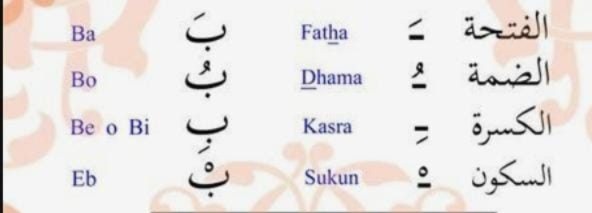
In Arabic, Harakat and Sukoon are two opposite concepts that shape how words are pronounced.
- Harakat (حركات) are short vowel marks that add movement to letters, giving them an “a,” “i,” or “u” sound.
- Sukoon (سُكُون) is a small circle (ـْ) that removes the vowel, creating a still, silent consonant sound and acting as a brief pause between vowels.
Think of it this way:
- Harakat = motion → letters “move” with a vowel.
- Sukoon = stillness → letters “pause” without a vowel.
Mastering both is essential for correct pronunciation, word flow, and Tajweed.
Difference Between Sukoon and Fatha, Damma, Kasra in Arabic Explained
Here’s a side-by-side comparison:
| Symbol | Name | Placement | Sound Example | Function |
|---|---|---|---|---|
| ـَ | Fatha | Above the letter | ba (بَ) | Adds “a” sound (motion) |
| ـِ | Kasra | Below the letter | bi (بِ) | Adds “i” sound (motion) |
| ـُ | Damma | Above the letter | bu (بُ) | Adds “u” sound (motion) |
| ـْ | Sukoon | Above the letter | b (بْ) | No vowel, stops sound (still) |
Key Points:
- Harakat activate the sound, giving letters motion.
- Sukoon pauses the sound, creating a clean consonant stop.
- A Sukoon cannot start a word because it must follow a voweled letter.
Examples:
- بَ (ba) → moving vowel sound
- بْ (b) → still consonant, stops sharply
- يَكْتُبْ (yaktub) → stops on كْ and بْ, linking consonants to preceding vowels
How Sukoon Changes the Flow of Reading in Arabic Explained
Sukoon directly affects how words are read and pronounced:
- Stops vowel continuation
- Without sukoon, learners might add extra vowels:
- Example: كَتَبْ (katabْ) → stop on the last b
- Incorrect: kataba → extra vowel added
- Without sukoon, learners might add extra vowels:
- Connects consonants smoothly
- Helps form proper syllables: ب + يْ = بِي (bay)
- Letters alone cannot form a pronounceable unit without a vowel or sukoon.
- Shapes Tajweed and rhythm in the Quran
- Rules like Ikhfaa, Idgham, Qalqalah depend on Sukoon.
- Correct stops create smooth, melodic recitation.
Tip for Beginners:
- Always check for the small circle (ـْ) above letters.
- Pause briefly on that letter, don’t add a vowel.
- Practice with short words first, then longer ones.
Example Words With Sukoon:
- بَيْت (bayt) → ends with “t” sukoon
- يَكْتُبْ (yaktub) → stops on “k” and “b”
- قَمَرْ (qamar) → ends with “r” sukoon
Sukoon in Quran Reading and Tajweed Basics

Sukoon (سُكُون) is the small circle above a letter that signals stillness—meaning the letter has no vowel sound. In Quranic recitation (Tajweed), mastering Sukoon is essential because it not only teaches learners to stop correctly on consonants but also to connect them with the preceding vowel and follow the natural rhythm of the Quran.
A letter marked with Sukoon is called a sakin letter, and it is always pronounced as a pure consonant, never elongated or doubled. Furthermore, understanding Sukoon lays the foundation for important Tajweed rules like Qalqalah, Idgham, and Ikhfa, ensuring that your recitation remains clear, precise, and melodious.
Sukoon and Noon Saakinah Explained Simply
Noon Sakinah (نْ) and Meem Sakinah (مْ) are special cases of sukoon in the Quran. Depending on the letter that follows, they follow rules like:
- Izhar (Clarity): Pronounce the sound clearly.
- Idgham (Merging): Merge the sound into the next letter.
- Iqlab (Conversion): Convert نْ into مْ when needed.
- Ikhfa (Hiding): Conceal the sound with a light nasalization.
These rules rely entirely on recognizing the sukoon on the Noon or Meem.
Struggling with Tajweed rules like Sukoon, Ikhfa, and Idgham?
Discover how learning Quran online makes everything easier:
👉 Recite Quran in Arabic — 9 Life-Changing Benefits from Home
Common Mistakes Beginners Make With Sukoon

Beginners often struggle with the Sukoon (ـْ), which represents a silent, still consonant. Mispronouncing it can affect clarity, rhythm, and meaning—especially in Quranic recitation.
Here are the most frequent mistakes and tips to fix them.
Adding an Extra Vowel After Sukoon
Mistake: Pronouncing a Sukooned letter with an extra vowel.
- Example: أَبْ (ab) pronounced as “Aba,” “Abi,” or “Abu.”
Correction:
- Stop immediately on the consonant.
- Move to the next letter without adding a vowel.
💡Tip: Use the tapping method—tap once for the vowel, lightly tap for the Sukoon.
Failing to Apply Qalqalah Properly
Mistake: Ignoring the subtle “bounce” on the five Qalqalah letters (ق، ط، ب، ج، د).
- Example: Not bouncing the ‘B’ in أَبْ.
Correction:
- Add a slight vibration on the letter.
- Remember: the echo is subtle, not a full vowel.
Confusing Sukoon with Shaddah
Mistake: Treating Sukoon (ـْ) as a doubling of the letter.
- Sukoon = single silent consonant
- Shaddah = first consonant silent, second voweled
Correction:
- Identify the symbol carefully before pronouncing.
Holding Sukoon for Too Long or Too Short
Mistake:
- Over-holding: Treating Sukoon like a Madd (elongation).
- Ignoring it: Sliding over the letter too quickly.
Correction:
- Use a quick, touch-and-go sound.
- Always connect with the preceding vowel.
Mispronouncing Noon or Meem Sakinah
Mistake: Not applying Ghunnah (nasal sound) when needed.
- Example: Pronouncing نْ or مْ too dry.
Correction:
- Slightly hold the sound in the nose for Noon Sakinah and Meem Sakinah.
Mistakenly Pronouncing Alif as Sukoon
Mistake: Thinking an Alif with a circle or no mark carries a Sukoon.
Correction:
- Hamzat al-Wasl is silent when connected, and should not be pronounced separately.
Easy Practice Examples for Sukoon in Arabic
Learning Sukoon becomes much easier when you practice with real words and short sentences. Repetition and small steps are key to mastering the “still” sound of each consonant.
Simple Words to Practice Sukoon
Start with everyday, easy-to-read words where Sukoon appears. Focus on stopping correctly and connecting with the previous vowel:
- أَبْ (ab) – Stop sharply on ‘b’
- مِنْ (min) – Stop on ‘n’
- قَلْب (qalb) – Stop on ‘l’
- شَمْس (shams) – Stop on ‘m’
- يَكْتُبْ (yaktub) – Stop on ‘k’ and ‘b’
💡Tip: Say each word slowly, then gradually increase speed as you become more confident.
Short Sentences for Daily Reading Practice
Once you feel comfortable with single words, move on to short sentences to train smooth transitions:
- أَبِي يَكْتُبْ – ‘Abi yaktub’ – Focus on the Sukoon in أَبْ and يَكْتُبْ
- الشَّمْسُ تُشْرِقُ – ‘Ash-shamsu tushriqu’ – Notice the Sukoon in شَمْس and تُشْرِقُ
- قَلْبِي يَفْهَمُ – ‘Qalbi yafhamu’ – Practice stopping correctly on قَلْب
💡Tip: Repeat each sentence 3–5 times daily. Listen to a reciter if possible to mimic proper pauses and rhythm.
How to Teach Sukoon to Children and New Learners
Teaching Sukoon can be fun and effective if approached with visuals, sounds, and small steps. The goal is for learners to hear, see, and feel the “stillness” in the letters.
Visual and Phonics-Based Teaching Methods
- Color Coding: Use colors to highlight letters with Sukoon vs letters with vowels.
- Symbols and Stickers: Place a small circle sticker above Sukoon letters to make them stand out.
- Tapping Method: Tap once for the vowel, tap lightly for the Sukoon to practice timing.
- Phonics Games: Have learners “stop” on Sukoon letters while clapping or tapping, turning practice into a game.
Step-by-Step Learning Without Overwhelm
- Start Small: Begin with 1–2 Sukoon letters in simple words.
- Repeat Slowly: Focus on clarity, not speed.
- Connect with Previous Letter: Always emphasize that Sukoon cannot start a word alone.
- Gradually Build: Move from words → short sentences → short Quranic phrases.
- Positive Reinforcement: Celebrate correct stops, even if small, to boost confidence.
Tip: Consistency is more important than quantity. Short, daily practice sessions work better than long, irregular ones.
Final Thought
Mastering Sukoon (سُكُون) is a crucial step in learning Arabic reading and Quranic recitation. Although it may seem small—just a tiny circle above a letter—its impact is huge: it ensures correct pronunciation, maintains a clear rhythm, and preserves the proper meaning in every word.
With consistent practice and careful listening, along with guided instruction, learners can master this essential concept. Whether you are a beginner or teaching children, focusing on Sukoon will lay a strong foundation for fluency and confidence in Arabic.
Learn Arabic Reading the Right Way With Areeb Academy
At Areeb Academy, we make learning Arabic and Quran reading simple, effective, and enjoyable:
- Beginner Arabic and Quran Reading Courses – Start from scratch with structured lessons.
- One-to-One Online Lessons With Expert Teachers – Get personalized guidance from experienced, native Arabic instructors.
- Book a Free Trial – Experience our teaching style risk-free and see the progress yourself.
Take the first step today and start reading Arabic confidently and correctly, with the support of expert teachers and a step-by-step approach that works for everyone.