

Understanding Arabic Tanween Rules for Beginners is essential for anyone starting to learn Arabic. Tanween (تَنْوِين), or nunation, is a small but crucial part of Arabic grammar that marks nouns and adjectives as indefinite. It appears as double vowel signs at the end of words and adds an “-n” sound, like in kitābun (كِتَابٌ – a book).
Following these beginner-friendly Tanween rules helps learners read Arabic correctly, whether in everyday sentences or Quranic recitation, and builds a strong foundation for understanding the language’s structure.
In this article, we will explore what Tanween is, its types, pronunciation, rules for both grammar and Tajweed, common mistakes, and practical tips for beginners and children. By the end, you’ll have a clear understanding of Tanween and be able to practice and apply it confidently in reading and speaking Arabic.
Understanding Arabic Tanween Rules for Beginners
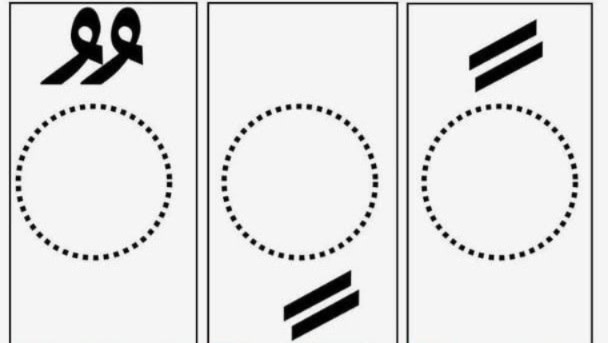
Tanween in Arabic is a grammatical feature that appears as a double vowel sign at the end of certain words, creating a soft “n” sound when pronounced. It is written as two identical short vowels: ً (fathatayn), ٌ (dammatayn), or ٍ (kasratayn). Although this “n” sound is clearly heard, it is not written as a separate letter—only represented by these diacritical marks.
For learners just starting out, understanding Arabic Tanween rules for beginners makes this concept much easier to grasp. Tanween can be seen as a marker that tells us the word is indefinite, meaning it refers to something general rather than specific. For example, the word كِتابٌ (kitābun) means “a book”, while الكِتاب (al-kitāb) means “the book.” This small change plays a big role in how meaning is conveyed in Arabic.
Learning and practicing Arabic Tanween rules for beginners is one of the first essential steps in mastering Arabic reading, grammar, and pronunciation—especially for students studying Quranic recitation and Tajweed.
Meaning of Tanween in Arabic Grammar
In Arabic grammar, Tanween refers to the addition of an extra “noon” sound at the end of a noun or adjective. This sound is not written as the letter ن (noon), but is indicated by doubling the final vowel. That’s why Tanween is often described as “a pronounced noon that is not written.”
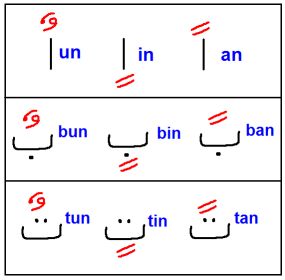
There are three types of Tanween, each corresponding to a short vowel:
- Tanween Fathah (ـً) → sounds like -an
- Tanween Dammah (ـٌ) → sounds like -un
- Tanween Kasrah (ـٍ) → sounds like -in
Each type reflects a grammatical case in Arabic:
- Nominative (subject)
- Accusative (object)
- Genitive (after prepositions or possession)
So the same word can appear with different Tanween depending on its role in the sentence. This is one of the reasons Tanween is so important—it helps learners understand how Arabic sentence structure works.
Benefits of Mastering Arabic Tanween Rules for Beginners
For beginners, Tanween is more than just a pronunciation detail—it is a key that unlocks the logic of Arabic grammar. Understanding Arabic Tanween rules helps beginners:
- Distinguish Between Definite and Indefinite Words: Words with Tanween are indefinite (a book, a boy, a house), while words without it—or with “al-”—are definite (the book, the boy, the house). This distinction is crucial for meaning.
- Improve Reading and Pronunciation: Tanween affects how words sound, especially in formal Arabic and Quranic recitation. Beginners who learn Tanween early develop clearer pronunciation and smoother reading.
- Understand Sentence Structure: Since Tanween reflects grammatical case, it helps students recognize whether a word is a subject, object, or part of a possessive phrase—without needing to guess.
- Support Tajweed Learning: In Quran recitation, Tanween follows specific Tajweed rules that affect how letters merge, stretch, or stop. Beginners who understand Tanween find Tajweed rules much easier to grasp.
In short, learning Tanween early saves beginners from confusion later. It builds a strong foundation for grammar, pronunciation, and Quranic accuracy—all at once.
Ready to Apply What You’ve Learned?
Now that you understand the importance of Tanween in Arabic grammar and Quranic recitation, it’s time to put this knowledge into real practice.
If your goal is to read the Quran correctly, confidently, and with proper Tajweed, don’t miss our complete guide:
👉 Learn to Read Quran Online — Fast, Easy & Rewarding
In this guide, you’ll discover simple methods, step-by-step lessons, and beginner-friendly tips that help you master Quranic reading without feeling overwhelmed.
Types of Tanween in Arabic
In Arabic, Tanween appears in three main forms, each one represented by a doubled short vowel. These types do not only change the pronunciation of a word but also reflect its grammatical role in a sentence. Understanding these three forms is essential for beginners who want to read Arabic accurately and build a strong foundation in grammar.
The three types of Tanween are:
- Tanween Fath (ــًـ) → sounds like -an
- Tanween Damm (ــٌـ) → sounds like -un
- Tanween Kasr (ــٍـ) → sounds like -in
Each type is placed on the last letter of a noun or adjective and indicates that the word is indefinite. Let’s look at each one in detail.
How to Apply Arabic Tanween Fath Rules for Beginners
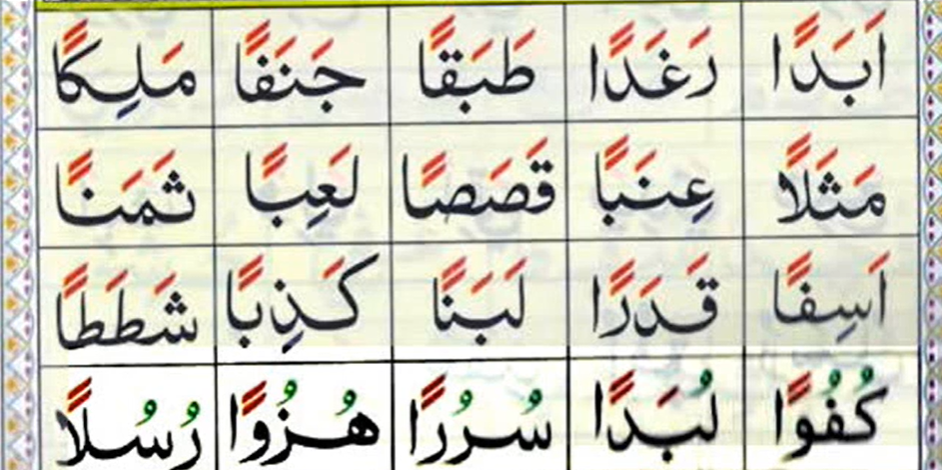
Tanween Fath, also called Fathatayn (فَتْحَتَيْن), is written as two small fatha signs (ــًـ) and is pronounced as “-an.” It usually appears when a noun is in the accusative case, often after a verb.
One special rule about Tanween Fath is that it is usually written with an extra alif (ا) at the end of the word, and the Tanween is placed on the letter before it.
Examples:
- كِتابًا (kitāban) → a book
- قَلَمًا (qalaman) → a pen
- طَالِبًا (ṭāliban) → a student
In a sentence:
اشتريتُ كتابًا جديدًا
Ishtaraytu kitāban jadīdan
“I bought a new book.”
Here, كتابًا has Tanween Fath, showing that the noun is indefinite and functioning as the object of the sentence.
How to Apply Arabic Tanween Damm Rules for Beginners
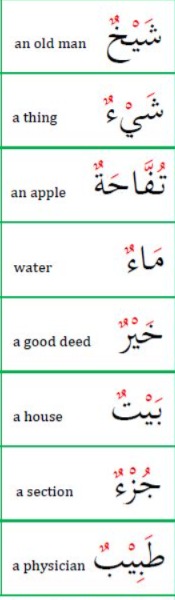
Tanween Damm, also known as Dammatayn (ضَمَّتَيْن), is written as two damma signs (ــٌـ) and is pronounced as “-un.” This type usually appears when the word is in the nominative case, meaning it is often the subject of a sentence.
Unlike Tanween Fath, Tanween Damm does not take an extra alif.
Examples:
- كِتابٌ (kitābun) → a book
- طَالِبٌ (ṭālibun) → a student
- بَيْتٌ (baytun) → a house
In a sentence:
حَضَرَ طَالِبٌ إِلَى المَدْرَسَةِ
Ḥaḍara ṭālibun ilā al-madrasah
“A student came to school.”
Here, طالبٌ takes Tanween Damm because it is the subject of the sentence.
How to Apply Arabic Tanween Kasr Rules for Beginners
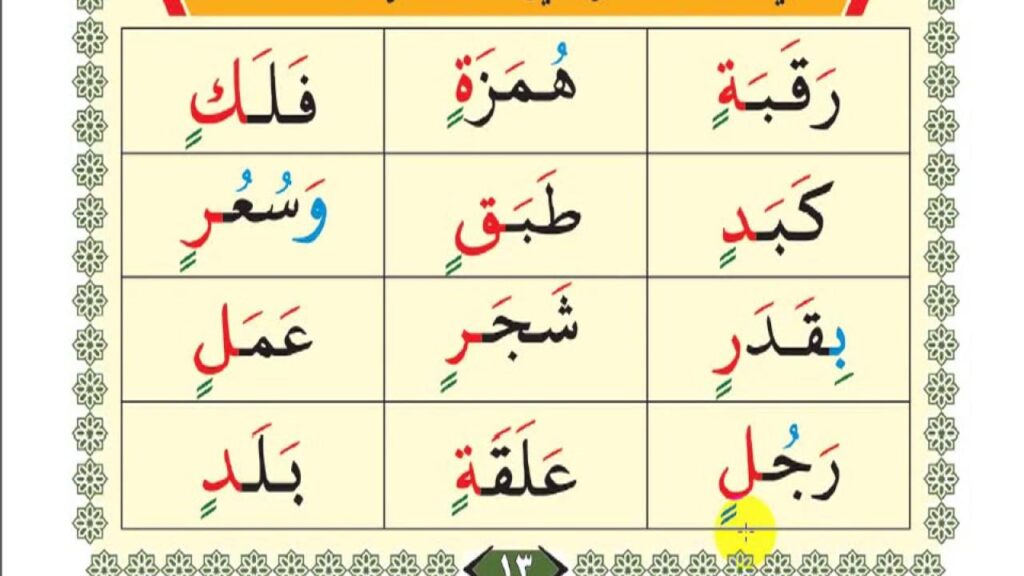
Tanween Kasr, called Kasratayn (كَسْرَتَيْن), is written as two kasra signs (ــٍـ) and is pronounced as “-in.” This form usually appears when the noun is in the genitive case, often after prepositions or in possessive structures.
Examples:
- كِتابٍ (kitābin) → a book
- قَلَمٍ (qalamin) → a pen
- بَيْتٍ (baytin) → a house
In a sentence:
اسْتَعَنْتُ بِكِتَابٍ مُفِيدٍ
Ista‘antu bikitābin mufīdin
“I used a useful book.”
Here, كتابٍ and مفيدٍ both take Tanween Kasr because they follow a preposition and are grammatically linked.
Tips for Practicing Arabic Tanween Pronunciation Rules for Beginners
To pronounce Tanween correctly, you need to add a soft “n” sound to the end of the vowel. Think of it as a gentle nasal ending, similar to the n sound in the word “sun.” This applies to all three types of Tanween:
- Fathatayn (ـً) → sounds like -an
- Kasratayn (ـٍ) → sounds like -in
- Dammatayn (ـٌ) → sounds like -un
So, for example:
- كِتَابًا → kitāban
- كِتَابٍ → kitābin
- كِتَابٌ → kitābun
In Normal Arabic Speech (When Stopping)
When you pause at a word with Tanween, you pronounce the vowel plus a light “n” sound. This is the basic and most common way beginners learn Tanween.
In Quran Recitation (Tajweed Rules)
In Tajweed, Tanween does not always sound the same. The “n” sound may change depending on the next letter:
- Izhar (Clear sound): The n sound is pronounced clearly.
- Ikhfa (Nasal sound / Ghunnah): The n sound becomes hidden and nasal.
- Idgham (Merging): The n sound merges into the next letter.
This means that Tanween interacts with the following word, and its pronunciation adapts accordingly—one of the reasons it is so important in Quranic recitation.
Understanding how Tanween works in Tajweed is a major step toward correct Quran recitation.
Want to learn more about Tajweed rules? Check out our full beginner guide:
👉 Tajweed Quran for Beginners: Rules, Benefits, and How to Start
Listening and Speaking Tips for Beginners
Learning to pronounce Tanween correctly takes practice, especially if Arabic is not your first language. Here are some beginner-friendly tips:

- Listen Before You Speak: Always start by listening to native speakers or qualified Quran teachers. Hearing how Tanween naturally flows at the end of words will train your ear.
- Practice With Isolated Words: Begin with single words before moving to full sentences:
- كِتَابٌ
- قَلَمًا
- بَيْتٍ
- Exaggerate Slightly at First: In the beginning, it helps to slightly emphasize the -n sound. Later, you will naturally soften it.
- Read Out Loud: Reading aloud helps you connect the sound with the written symbol. This builds confidence and fluency.
- Record Yourself: Compare your pronunciation with native audio. This is one of the fastest ways to improve.
Common Pronunciation Errors With Tanween
Many beginners make small mistakes when learning Tanween. Being aware of these errors will help you avoid them early on.
- Dropping the “n” Sound Completely: Some learners pronounce:
- كِتَابٌ as kitābu instead of kitābun
This removes the Tanween effect and changes the grammatical meaning.
- كِتَابٌ as kitābu instead of kitābun
- Overemphasizing the “n”: Tanween should sound light and smooth, not heavy like a full ن letter.
- Mixing Up the Vowels: Learners sometimes confuse:
- -an with -in
- -in with -un
Each one has a distinct sound and grammatical role.
- Ignoring Tajweed Rules: In Quran recitation, Tanween follows special pronunciation rules. Treating it the same way in every situation can lead to mistakes.
- Forgetting It Exists in Speech: Some learners only recognize Tanween in writing but forget to pronounce it while speaking.
Arabic Tanween Rules for Beginners in Grammar

In Arabic grammar, Tanween (تَنْوِين), or nunation, is an “n” sound (like the English ‘n’) added to the end of an indefinite noun or adjective in speech. It is not written with the letter noon (ن), but is represented by doubling the final short vowel. The type of Tanween depends on the grammatical case of the word in a sentence.
The Three Types of Tanween
- Tanween al-Dhamma (ضمّتين)
- Symbol: ـٌ (double damma)
- Pronunciation: -un
- Example: كِتَابٌ (kitāb-un) → “a book”
- Tanween al-Fatha (فتحتين)
- Symbol: ـً (double fatha)
- Pronunciation: -an
- Example: كِتَابًا (kitāb-an) → “a book”
- Tanween al-Kasra (كسرتين)
- Symbol: ـٍ (double kasra)
- Pronunciation: -in
- Example: كِتَابٍ (kitāb-in) → “a book”
Key Rules for Beginners
- Indefiniteness Marker
Tanween shows that a noun or adjective is indefinite (general, not specific), similar to English “a” or “an”.- Example: بَيْتٌ (bayt-un) → “a house” vs. الْبَيْتُ (al-bayt-u) → “the house”
- Exclusively for Nouns and Adjectives
Tanween is only used at the end of nouns and adjectives. It is never applied to verbs or particles (e.g., prepositions). - Cannot Coexist With the Definite Article “Al” (الْـ)
A word cannot have both Tanween and the definite article al-. If al- is added, the Tanween disappears and is replaced by a single vowel.- Example: بَيْتٌ (bayt-un) → “a house”
الْبَيْتُ (al-bayt-u) → “the house”
- Example: بَيْتٌ (bayt-un) → “a house”
- Grammatical Case Indicator
The type of Tanween depends on the word’s function in the sentence:- ـٌ (-un): Nominative case (subject)
- ـً (-an): Accusative case (object)
- ـٍ (-in): Genitive case (after prepositions)
- The “Alif” Rule with Fatha Tanween
When writing Tanween al-Fatha (ـً), an extra alif (ا) is usually added after the last letter:- Example: رَأَيْتُ بِنْتًا (ra’aytu bint-an) → “I saw a girl”
Exceptions:- Words ending with taa marbuta (ة)
- Words ending with hamza (ء) preceded by alif (ا)
- Example: مَاءً (mā’an) → “water”
: مساءً (masa’an) → “night”
- Example: مَاءً (mā’an) → “water”
- Example: رَأَيْتُ بِنْتًا (ra’aytu bint-an) → “I saw a girl”
When Tanween Is Used in Nouns

- At the end of indefinite nouns or adjectives
- Indicates subject, object, or possession based on the grammatical case
- Helps clarify meaning in written and spoken Arabic
Examples:
- بَيْتٌ (baytun) → “a house” (nominative)
- كِتَابًا (kitāban) → “a book” (accusative)
- قَلَمٍ (qalamin) → “a pen” (genitive)
When Tanween Is Not Used

- With definite nouns (with الـ)
- With verbs or prepositions
- In cases where the word already ends with a taa marbuta or a hamza following an alif, for Fatha Tanween
- When the noun is specific or already marked as definite
Examples:
- الْبَيْتُ (al-baytu) → “the house” (no Tanween)
- كِتَابُ القِصَّةِ (kitāb-u al-qissa) → “the book of the story” (no Tanween on the definite word)
Understanding Definiteness in Arabic Tanween Rules for Beginners
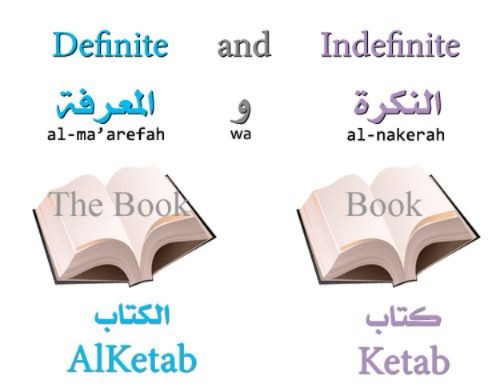
In Arabic, Tanween (تَنْوِين) marks a noun as indefinite—similar to the English “a” or “an”. It appears as double vowel signs at the end of the word, such as -un, -in, -an.
Adding the definite article ال (al-) makes the noun definite (“the”), which requires dropping the Tanween and using a single vowel at the end.
Example:
- كتابٌ (kitābun) → “a book” (indefinite)
- الكتابُ (al-kitābu) → “the book” (definite)
Tanween signals non-specificity, while al- indicates a known, specific item. Proper nouns are an exception: they remain definite even with Tanween.
Indefinite Nouns (النَّكِرَة)
- Definition: Any general or unspecified person, place, or thing
- Marking: Use Tanween (double vowel signs) at the end
- Examples:
- بَيْتٌ (baytun) → “a house” (any house)
- كِتَابٌ (kitābun) → “a book” (any book)
- مَدْرَسَةٌ (madrasatun) → “a school” (any school)
Definite Nouns (المَعْرِفَة)
- Definition: A specific, known person, place, or thing
- Marking: Prefix الـ (al-) + single vowel at the end (no Tanween)
- Examples:
- البَيْتُ (al-baytu) → “the house”
- الكِتَابُ (al-kitābu) → “the book”
- المَدْرَسَةُ (al-madrasatu) → “the school”
Want to pronounce al- (الـ) correctly?
Learn the difference between Sun Letters and Moon Letters in Arabic: Here
The Key Rule
When you add ال (al-) to an indefinite noun to make it definite:
- Remove the Tanween
- Keep only the single final vowel
Example:
- كِتَابٌ (kitābun) → الكتابُ (al-kitābu)
Special Cases in Arabic Tanween Rules for Beginners
- Proper Nouns
Names like محمد (Muhammad) are inherently definite. Even with Tanween (مُحَمَّدٌ), they do not become indefinite like other nouns. - Grammatical Cases
The type of Tanween (fatha, kasra, damma) changes based on the noun’s role (subject, object, etc.), but the principle of indefiniteness always applies.
Tanween vs. Al- in Arabic Grammar for Beginners
- Tanween → Marks a noun as indefinite (a/an)
- Al- (ال) → Marks a noun as definite (the)
- They cannot appear together. Adding al- removes Tanween.
Showing Indefiniteness Using Arabic Tanween Rules for Beginners
- Appears only at the end of nouns and adjectives
- Indicates the noun is general or unspecified
- Signals the noun’s grammatical case (nominative, accusative, genitive) while still keeping it non-specific
Examples:
- قَلَمٌ (qalam-un) → “a pen” (subject)
- قَلَمًا (qalam-an) → “a pen” (object)
- قَلَمٍ (qalam-in) → “a pen” (after a preposition)
Tanween Rules for Reading the Quran
In the Quran, Tanween (double vowel signs) follows four main Tajweed rules based on the next letter:

- Izhar (Clear Pronunciation)
- When: Followed by throat letters (ء, ه, ع, غ, ح, خ)
- How: Pronounce the Tanween ‘n’ clearly, without merging or nasalization
- Example: جَنَّةٍ عَالِيَةٍ (Jannatin ‘Aaliyah)
- Idgham (Merging)
- When: Followed by ي, و, م, ن (Y, W, M, N)
- How: Merge the ‘n’ into the next letter, often with a nasal sound (Ghunnah)
- Example: مِنْ رَبِّهِم (Min Rabbihim)
- Iqlab (Conversion)
- When: Followed by ب (Ba)
- How: Convert the ‘n’ sound into ‘m’, with Ghunnah
- Example: مِن بَعْدِ (Min Ba’di)
- Ikhfa (Concealment / Hiding)
- When: Followed by the remaining 15 letters not in Izhar, Idgham, or Iqlab
- How: Hide or muffled ‘n’ sound with a two-count nasal Ghunnah
- Example: إِنْ كُنْتَ (In Kunta)
Key Rule for Stopping (Waqf)
- When pausing on a word ending with Tanween, the ‘n’ sound disappears
- The final vowel becomes sukun (silent)
- Example: كِتَابًا → kitāb
Tanween and Tajweed Basics for Beginners
- Mastering these rules ensures accurate and beautiful Quranic recitation
- Recommended to learn under qualified teacher guidance
Tanween With Noon Saakinah
- The same Tajweed rules apply for Noon Saakinah (نْ)
- The difference: Tanween is at the end of indefinite nouns/adjectives, while Noon Saakinah appears anywhere within a word
How to Teach Arabic Tanween Rules to Children
Teaching Tanween to children doesn’t have to be complicated or boring. With the right methods, it can become a fun and engaging experience that helps kids remember the rules naturally. Since children learn best through play, visuals, and repetition, Tanween should be introduced in a simple, friendly way that feels like a game—not a grammar lesson.
Fun and Visual Learning Techniques
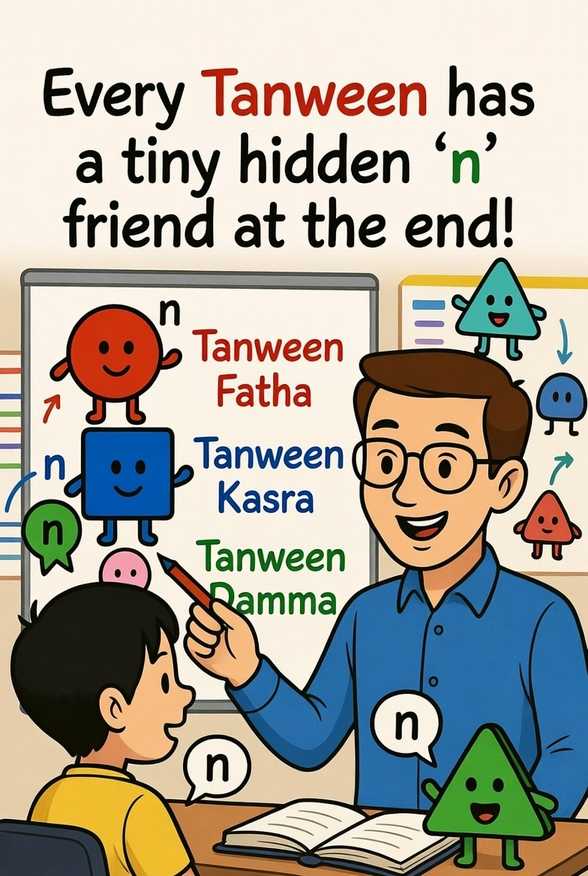
Children respond strongly to colors, characters, and movement. Turning Tanween into something they can see and play with makes a huge difference.
You can start by using color-coded vowels or bright stickers to represent each type of Tanween. For example, make Tanween Fatha red, Kasra blue, and Damma green. This visual distinction helps kids recognize patterns faster.
Another effective technique is introducing cute characters or symbols that represent the hidden “-n” sound. For instance, you can say:
👉 “Every Tanween has a tiny hidden ‘n’ friend at the end!”
This makes the concept less abstract and more relatable.
Songs and rhymes are also powerful tools. Singing simple Tanween songs or repeating short rhythmic phrases helps children memorize the sounds naturally. When learning feels like singing and clapping, it sticks much faster.
Gradual Learning Without Overwhelm

One of the biggest mistakes when teaching children is giving them too much at once. Tanween should be introduced step by step, in small, manageable pieces.
Start with one type of Tanween only, such as -un, and let the child get comfortable with it before moving on. Once they recognize the sound and symbol, you can slowly add the others.
Always begin with familiar words like:
📌 بَيْتٌ (house)
📌 قَلَمٌ (pen)
📌 وَلَدٌ (boy)
After mastering single words, move on to short and simple sentences. This helps children understand how Tanween works in real language, not just in isolation.
Encouraging Speaking and Listening Practice
Listening and speaking are just as important as reading. Encourage kids to say words with Tanween out loud, repeat after you, or listen to short Arabic clips that include Tanween. Hearing the sound repeatedly helps them recognize it naturally in reading later on.
Most importantly, keep the atmosphere relaxed. Praise progress, repeat gently, and avoid pressure. When kids feel safe to make mistakes, they learn faster and with more confidence.
Final Thought
Understanding Tanween is a small but essential step toward mastering Arabic grammar. Once learners grasp how Tanween works with different vowels, grammatical cases, and pronunciation rules, they can read, write, and speak more accurately and confidently.
Whether you’re a beginner or looking to strengthen your Arabic skills, consistent practice with Tanween will improve your fluency and comprehension.
Learn Arabic Grammar Step by Step With Areeb Academy
At Areeb Academy, we offer beginner Arabic courses for kids and adults, along with one-to-one lessons with expert native Arabic teachers. Our flexible schedules make it easy to learn at your own pace.
🌟 Book a free trial class now and start your journey to mastering Arabic grammar, reading, and pronunciation with confidence!
Frequently Asked Questions About Tanween in Arabic
1. What is Tanween in simple words?
Tanween is a double vowel sign added to the end of some Arabic nouns and adjectives. It creates a soft “-n” sound and shows that the word is indefinite, meaning it refers to something general, not specific.
2. Is Tanween the same as a normal short vowel?
No. A short vowel (ـَ / ـِ / ـُ) is a single sound, while Tanween is a double vowel (ً / ٍ / ٌ) that adds an extra “n” sound at the end of the word.
3. Do all Arabic words take Tanween?
No. Tanween is used only with nouns and adjectives. It is not used with verbs, particles, or definite nouns that begin with الـ (al-).
4. Why is Tanween important for Quran recitation?
In Tajweed, Tanween follows special pronunciation rules like Izhar, Idgham, Ikhfa, and Iqlab. These rules affect how the sound flows and blends with the next word, making recitation more accurate and beautiful.
5. When is Tanween not pronounced?
When stopping (waqf) at the end of a word, Tanween is not pronounced as “-n.” Instead, the word ends with a silent sound (sukoon).
Example: كِتابًا → kitāb (when stopping)
6. Is Tanween hard for beginners?
Not at all! When taught step by step, Tanween becomes very easy to understand. With practice, examples, and listening exercises, beginners usually master it quickly.
7. How can children learn Tanween easily?
Children learn Tanween best through songs, games, visuals, repetition, and short daily practice. Making it fun and interactive helps them remember the sounds naturally.