
Learning to read Arabic can seem tricky at first, but understanding Sun and Moon Letters makes it much easier—and even fun! These letters tell us how to pronounce the definite article “al-” (الـ), an important rule in Arabic reading and Quran recitation (Tajweed).
In this guide, you’ll discover:
- What Sun and Moon Letters are and how they affect pronunciation.
- Easy ways to tell them apart with simple examples.
- Fun tips for beginners and kids to make learning interactive.
By the end of this article, you’ll be able to recognize Sun and Moon Letters, pronounce them correctly, and read Arabic words smoothly—step by step!
What Are Sun and Moon Letters in Arabic?
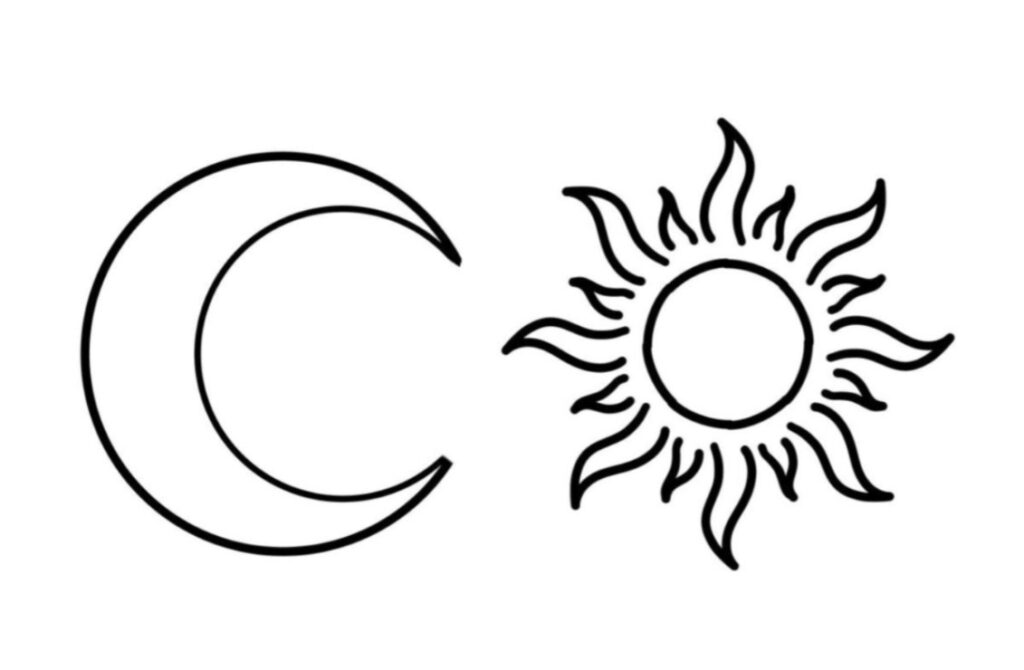
Sun and Moon letters are one of the first pronunciation rules every Arabic learner meets — and don’t worry, they’re much easier than they sound
This rule explains how to pronounce the word “the” in Arabic (ال – al) depending on the letter that comes right after it.
In Arabic, every noun becomes definite by adding ال (al-) to the beginning.
But here’s the interesting part: the letter that comes after “al” decides how we pronounce it.
Simple Definition for Beginners
Simply put:
- Sun letters make the L (ل) in al- disappear in pronunciation, and the next letter sounds stronger and doubled.
- Moon letters keep the L (ل) clear and easy to hear.
So it’s not about spelling — It’s all about how Arabic is spoken.
For example:
- We pronounce الشمس as ash-shams, not al-shams.
- We pronounce القمر as al-qamar, and we hear the L sound clearly.
After you hear it a few times, your ear picks it up very quickly.
Why They Are Called Sun and Moon Letters
The names come from two very familiar Arabic words:
- Sun = الشَّمْس (Ash-Shams)
Here, the ل (Lam) is not pronounced — it blends into the ش sound. - Moon = الْقَمَر (Al-Qamar)
Here, the ل (Lam) is pronounced clearly.
So:
- Sun letters (الحروف الشمسية) → Lam is hidden in pronunciation
- Moon letters (الحروف القمرية) → Lam is clearly pronounced
The rule is literally hidden in the names — a clever and helpful reminder
Where This Rule Comes From
This rule exists to make Arabic smooth and easy to pronounce.
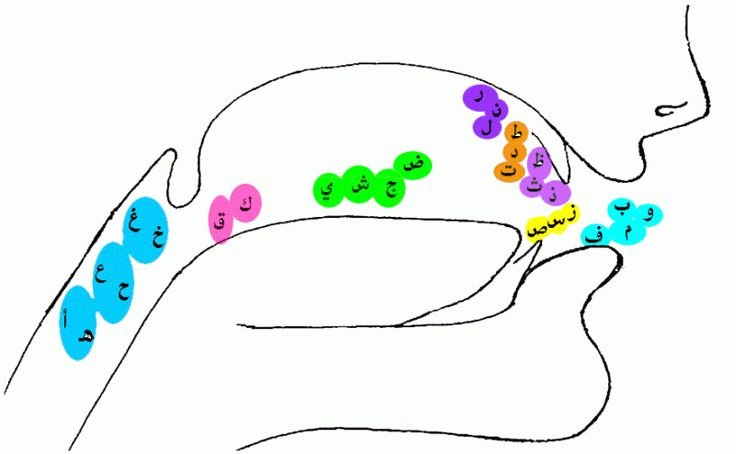
When you say al (ال), your tongue is already close to your teeth. Many sun letters are pronounced in the same area of the mouth, so Arabic naturally merges the sounds together. This merging is called Idgham (إدغام) — and you can learn more about it here.
Moon letters, on the other hand, are pronounced from different parts of the mouth, so there’s no need to merge the sounds — the Lam stays clear.
Arabic is a language meant to be spoken and heard, not just read.
That’s why these pronunciation rules developed — to keep speech light, natural, and flowing.
✨ Good news for beginners:
There are only 14 Sun letters and 14 Moon letters — exactly half and half.
With a little listening and practice, this rule becomes automatic before you even think about it.
Why Sun and Moon Letters Matter

Understanding Sun and Moon letters is not just a grammar detail — it’s a key skill for speaking and reading Arabic naturally. This rule trains your ear, your tongue, and your confidence when reading Arabic words for the first time.
Correct Pronunciation in Arabic
Arabic is a language that depends heavily on clear and accurate pronunciation.
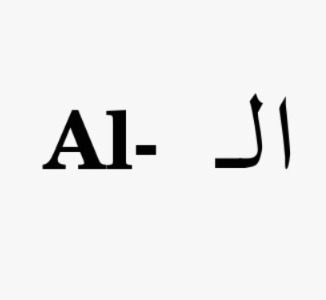
Sun and Moon letters help you know exactly how to say the word “al-” (ال) before any noun.
- With Sun letters, the ل (Lam) blends into the next letter, making the sound smooth and doubled.
- With Moon letters, the ل (Lam) stays clear and easy to hear.
Learning this rule early helps you sound more natural and fluent, even as a beginner. Native speakers rely on this instinctively — and now you can too
Avoiding Common Reading Mistakes
Many beginners make the same mistake:
👉 They pronounce every word with “al” the same way.
For example:
- Saying al-shams instead of ash-shams
- Or dropping the Lam where it should be pronounced
Knowing Sun and Moon letters helps you:
- Read new words with confidence
- Avoid hesitation and overthinking
- Recognize patterns instead of memorizing word by word
Once you understand the rule, your reading becomes faster and smoother.
Importance in Quran and Arabic Reading
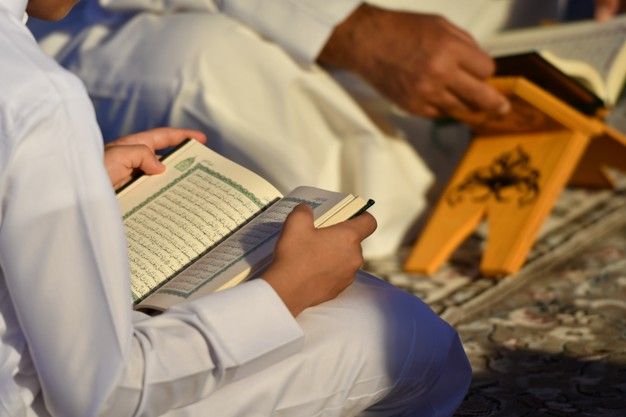
Sun and Moon letters are especially important when reading the Quran.
Correct pronunciation affects:
- Meaning
- Beauty of recitation
- Accuracy in Tajweed
In the Quran, the difference between Sun and Moon letters is often shown clearly using:
- Shaddah ( ّ ) for Sun letters
- Sukoon ( ْ ) for Moon letters
Mastering this rule helps you:
- Read Quran with better flow
- Follow Tajweed rules more easily
- Feel more confident during recitation
Want to Learn More About Arabic Harakat?
Discover tips, examples, and tricks to read the Quran and Arabic correctly and confidently!
➡ Read More About Arabic Harakat
The Moon Letters (Al-Huroof Al-Qamariyyah)
Moon Letters are one of the easiest and most important pronunciation rules in Arabic.
They tell you when to clearly pronounce the “L” sound (ل) in the definite article “al-” (الـ).
Unlike Sun Letters, Moon Letters do NOT hide the Lam — you always hear it clearly when speaking or reading.
Complete List of Moon Letters
There are 14 Moon Letters in Arabic:
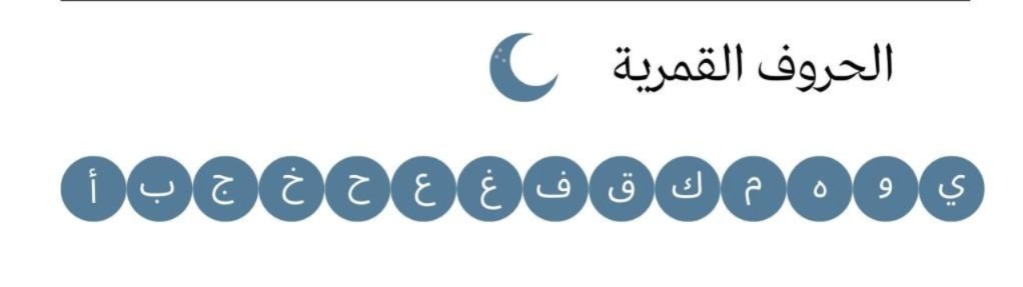
They are often memorized using this famous phrase:
ابغِ حجك وخف عقيمه
Ibgh Hajjk w Khaf ‘Aqimah”
Arabic learners use the phrase “Ibgh Hajjk w Khaf ‘Aqimah” as a mnemonic to remember all the Moon Letters (Huruf Qamariyah). It doesn’t form a meaningful sentence in everyday Arabic—it’s just a learning trick.
How “Al-” Is Pronounced With Moon Letters
When a word starts with a Moon Letter:
- The Lam (ل) in الـ is pronounced clearly
- There is no merging and no doubling of the next letter
- In the Quran, the Lam usually has a sukoon (ْ) on it
So the pronunciation goes smoothly as:
al + letter
Not fast, not hidden — just clear and calm
Clear Examples With Words
Here are some easy examples to help you hear the difference:
- القمر → al-qamar (the moon)
✔ The Lam is clear before ق - الباب → al-bāb (the door)
✔ The Lam is pronounced before ب - الكتاب → al-kitāb (the book)
✔ Smooth and clear pronunciation
👉 Simple rule to remember:
If you hear the Lam — it’s a Moon Letter.🌙
The Sun Letters (Al-Huroof Ash-Shamsiyyah)
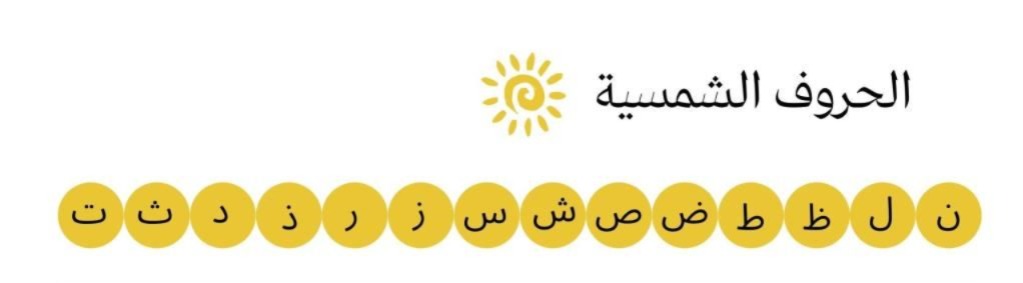
Sun Letters are one of the most important pronunciation rules in Arabic.
They explain why the “L” sound (ل) in the definite article “al-” (ال) sometimes seems to disappear when you speak.
When a word starts with a Sun Letter, we do not pronounce the Lam. Instead, the next letter sounds stronger and doubled — this is what gives Arabic its smooth and natural flow.
How “Al-” Changes With Sun Letters
When ال (al-) comes before a Sun Letter:
- The Lam (ل) becomes silent
- The Sun Letter is doubled in pronunciation
- In the Quran, this doubling is shown with a Shaddah (ّ)
So instead of saying al + letter, Arabic blends the sounds together smoothly.
We call this process assimilation (Idgham), and it makes pronunciation easier and lighter.
Want to Master Idgham and Tajweed Rules?
Check out our detailed guide: “Tajweed Quran for Beginners: Rules, Benefits, and How to Start” and learn how to recite the Quran correctly and beautifully!
➡ Read the Full Guide
Clear Examples With Words
Here are some simple and clear examples:
- الشمس → ash-shams (the sun)
❌ al-shams - الذهب → adh-dhahab (the gold)
- النور → an-nūr (the light)
- الرحمن → ar-Raḥmān (The Most Merciful)
If you hear the next letter strong and doubled, you’re dealing with a Sun Letter ☀️
✨ Quick tip for beginners:
- Lam disappears → Sun Letter
- Lam is clear → Moon Letter
Once your ear gets used to this rule, you’ll use it automatically—especially when you read the Quran or speak Arabic naturally.
How to Tell Sun and Moon Letters Apart

At first, Sun and Moon letters might look confusing, but once you know what to listen for, the rule becomes very easy. Arabic helps you by giving sound clues and visual signs to guide your pronunciation.
Easy Memory Tricks
Here are two simple tricks every beginner can use:
- Think of the examples:
- ash-shams (the sun) → Lam disappears
- al-qamar (the moon) → Lam is clear
- Half and half rule:
There are 28 Arabic letters
→ 14 Sun letters
→ 14 Moon letters - Moon-letter phrase:
Many learners memorize Moon letters using this sentence:
ابغِ حجك وخف عقيمه
If the word starts with one of these letters, the Lam will be pronounced.
Visual and Sound Cues
Arabic gives you hints in both sound and writing:
Sound clues:
- If you hear the “L” sound, it’s a Moon Letter
- If the next letter sounds strong and doubled, it’s a Sun Letter
Visual clues (with harakat):
- Moon Letters: Lam has a sukoon (ْ) → الْقمر
- Sun Letters: Next letter has a shaddah (ّ) → الشَّمس
Your eyes and ears work together here
Practice Tips for Beginners

To master Sun and Moon letters faster:
- Read out loud — Arabic is learned through sound
- Listen to Quran recitation and notice the shaddah and sukoon
- Practice with short words before moving to long sentences
- Repeat after native speakers whenever possible
Start by spotting just one letter at a time. With practice, your brain will recognize the pattern automatically.
✨ Beginner reminder:
If the Lam is clear → Moon Letter 🌙
If the Lam disappears → Sun Letter ☀️
Once this clicks, Arabic pronunciation becomes much smoother and more confident.
Sun and Moon Letters With Examples
Understanding Sun and Moon Letters becomes much easier when you see and hear examples side by side. Here’s how you can practice and recognize them in real words.
Side-by-Side Word Comparisons
| Sun Letters (Huruf Shamsiyyah) | Moon Letters (Huruf Qamariyyah) |
|---|---|
| الشمس (ash-shams) – the sun | القمر (al-qamar) – the moon |
| النور (an-nūr) – the light | الباب (al-bāb) – the door |
| الذهب (adh-dhahab) – the gold | الكتاب (al-kitāb) – the book |
| الرجل (ar-rajul) – the man | البحر (al-baḥr) – the sea |
| الضحى (aḍ-ḍuḥā) – the morning brightness | اليوم (al-yawm) – the day |
Notice how Sun letters double the first sound, while Moon letters keep the Lam clear.
Listening and Reading Practice
- Listen carefully: Focus on whether the Lam (ل) is pronounced or not.
- Repeat aloud: Copy the sound you hear; start slow, then speed up.
- Use short phrases: e.g., ash-shamsu qamarun or al-bābu al-kitāb.
- Check the written diacritics:
- Shaddah (ّ) → Sun Letter, double the consonant
- Sukoon (ْ) → Moon Letter, Lam pronounced
Hearing and repeating these patterns trains your ear naturally for Arabic pronunciation.
Common Everyday Arabic Words
Here’s a small list of words you can practice in daily conversation:
Sun Letters:
- التفاح (at-tuffāḥ) – the apple
- الثعلب (ath-tha‘lab) – the fox
- الدب (ad-dubb) – the bear
- الرجل (ar-rajul) – the man (ممكن نخليها جديدة لو حابة، مثل: الرجل becomes الرئيس – ar-ra’īs – the president)
- الذهب (adh-dhahab) – the gold
Moon Letters:
- القمر (al-qamar) – the moon
- البحر (al-baḥr) – the sea
- المكتبة (al-maktabah) – the library
- الفيل (al-fīl) – the elephant
- اليوم (al-yawm) – the day
- السماء (as-samāʼ) – the sky
- المدرسة (al-madrasah) – the school
Tip: Try mixing them in sentences:
الكتاب على الطاولة → al-kitāb ʿalā aṭ-ṭāwilah
Notice how the Lam behaves differently with Sun and Moon letters.
Sun and Moon Letters in Quran Reading

In Quranic recitation (Tajweed), knowing Sun and Moon Letters is essential. These rules tell you how to pronounce the definite article “al-” (ال), which affects both the beauty of recitation and the meaning of the words.
- Sun Letters (حروف شمسية): Lam (ل) disappears, and the following letter is stressed (doubled).
- Moon Letters (حروف قمرية): Lam (ل) is pronounced clearly.
Why This Rule Is Essential in Tajweed
- Correct pronunciation: Ensures that every word in the Quran is read as intended.
- Smooth flow: Assimilation with Sun Letters (Idghaam Shamsi) creates a natural, melodious rhythm.
- Preservation of meaning: Mispronouncing Sun or Moon letters can slightly alter the meaning, so accuracy matters.
Avoiding Meaning-Changing Errors
- Sun Letter mistake: Saying al-shams instead of ash-shams could sound awkward and affect Tajweed rules.
- Moon Letter mistake: Saying aṣ-ṣaḥrāʼ instead of al-qaṣrāʼ would incorrectly drop the Lam.
- Tip: Always check the first letter after الـ. If it’s one of these Sun Letters: ت, ث, د, ذ, ر, ز, س, ش, ص, ض, ط, ظ, ن, ل, assimilate. Otherwise, pronounce the Lam clearly.
Practical Quran Examples
Here are some easy-to-spot examples from the Quran:
Sun Letters (Idghaam Shamsi):
- الشمس (ash-shams) – The sun
- الرَّحمن (ar-Raḥmān) – The Most Merciful
- النور (an-nūr) – The light
Moon Letters (Ith’har Qamari):
- القمر (al-qamar) – The moon
- الكتاب (al-kitāb) – The book
- البحر (al-baḥr) – The sea
Practice Tip: While reading the Quran, notice the Shaddah (ّ) on Sun letters and Sukoon (ْ) on the Lam for Moon letters. Your ears will quickly learn the difference!
Sun and Moon Letters for Beginners and Kids
Learning Sun and Moon Letters can be fun and easy, even for kids! The key is to hear it, see it, and play with it.
Simple Explanation for Children

- Sun Letters (حروف شمسية):
The “L” in al- disappears and the next letter gets stronger and doubled.- Example: الشمس → ash-shams (the sun)
- Think: “The sun is so bright, it hides the ‘L’!” ☀️
- Moon Letters (حروف قمرية):
The “L” in al- is pronounced clearly.- Example: القمر → al-qamar (the moon)
- Think: “The moon shines gently, so we can hear the ‘L’!” 🌙
Fun Learning Methods
- Use rhymes: Memorize Moon letters with: ابغ حجك وخف عقيمه
- Clap or tap the Sun letters: When the Lam disappears, kids can clap for the doubled sound
- Flashcards: Write words with Sun and Moon letters, and have kids say them aloud
- Storytime: Make a short story using words like ash-shams, al-qamar, an-nūr, and emphasize the difference
Making the Rule Stick
- See it, say it, do it:
- Look at the first letter after الـ
- Say it aloud: is the Lam silent or clear?
- Practice with real words from the Quran or daily life
- Use colors: Highlight Sun letters in yellow, Moon letters in blue — it helps memory!
- Daily mini-practice: Pick 5 words every day and repeat them. Soon, kids automatically know the difference.
✨ Tip for kids: “Sun hides the L, Moon lets the L shine!” 🌞🌙
Final Thoughts on Sun and Moon Letters
Mastering Sun and Moon Letters is one of the first steps to reading Arabic confidently and correctly, especially for Quran recitation and everyday words. When beginners understand when to pronounce or assimilate the Lam in “al-”, they avoid common mistakes and develop smooth, natural pronunciation.
At Areeb Academy, we make learning easy, fun, and effective:
- Quran and Tajweed Basics: Start reading with correct rules from day one.
- Learn With Qualified Native Teachers: Our instructors are fluent in Arabic and experienced in teaching beginners.
- Step-by-Step Guidance: From Sun and Moon Letters to full Arabic and Quran reading, every lesson builds on the previous one.
Whether you’re a child or a beginner, Areeb Academy helps you read Arabic fluently and confidently, making your learning journey enjoyable and rewarding.
🎁 Book your FREE trial class today and start your journey with confidence!
Frequently Asked Questions (FAQs)
1. What are Sun and Moon letters in Arabic?
Sun and Moon letters form two groups of Arabic letters that change how we pronounce the definite article “al-” (ال). With Sun letters, the l sound disappears and the next letter doubles. With Moon letters, we pronounce the l sound clearly.
2. Why are Sun and Moon letters important in Quran reading?
They are essential for correct Tajweed and pronunciation. Reading them properly helps preserve the meaning of words, improves the beauty of recitation, and prevents mistakes.
3. How many Sun and Moon letters are there?
There are 14 Sun letters and 14 Moon letters in the Arabic language.
4. How can I tell if a word starts with a Sun or Moon letter?
Look at the first letter after ال:
- If the l sound disappears and the next letter is doubled → it’s a Sun letter.
- If the l sound is clear → it’s a Moon letter.
5. How are Sun and Moon letters shown in the Quran?
- Sun letters usually have a shaddah ( ّ ) on the next letter.
- Moon letters usually have a sukoon ( ْ ) on the l (ل).
6. Can children learn Sun and Moon letters?
Yes! Children can learn them easily using fun examples, listening practice, and step-by-step lessons.