
Ramadan is the perfect time to strengthen your connection with the Quran, but without a clear plan, even the best intentions can feel overwhelming. A successful Quran reading plan in Ramadan focuses on consistency, quality, and achievable daily goals, rather than trying to finish large portions at once.
Whether you are reading alone, with your family, or learning with a teacher, having a structured approach helps you stay motivated, improve your recitation, and truly benefit spiritually. From short daily sessions after Fajr or before Maghrib to interactive tools and gentle repetition, a well-designed plan ensures that every verse you recite brings you closer to Allah and makes your Ramadan more meaningful.
Why a Quran reading Plan Makes Ramadan feel different

A structured Quran reading plan in Ramadan transforms the month from just fasting into a deeply spiritual and purposeful experience. It creates a daily connection with Allah, bringing calm, focus, and intentionality to each day. Rather than reading sporadically, a plan provides structure, guidance, and motivation to complete the Quran, while also encouraging reflection (Tadabbur) and understanding of the divine message.
Benefits include:
- Deepens Spiritual Connection: Daily Quran reading strengthens faith (Iman) and taqwa, purifying the heart and fostering patience and gratitude.
- Inner Peace and Focus: Following a plan creates a routine that calms the mind, especially when reciting at Fajr, Suhoor, or Iftar times.
- Maximizes Rewards: Consistent engagement in Ramadan taps into multiplied rewards, as the Quran is the central blessing of the month.
- Encourages Reflection: Combining recitation with translation or Tafsir ensures understanding, turning reading into contemplation and personal growth.
Consistency beats intensity in your Ramadan Quran reading plan
In Ramadan, a Quran Reading Plan focuses on regular small steps is far more impactful than occasional long sessions. Even dedicating 10–15 minutes daily ensures continuity and deepens your bond with Allah. A consistent Quran Reading in Ramadan Plan helps you stay on track and makes the month spiritually fulfilling.
Tips for maintaining consistency in your Quran Reading in Ramadan Plan:
- Set a fixed reading schedule: after Fajr, during Iftar prep, or before sleeping.
- Break the Quran into manageable daily portions (e.g., one Juz per day).
- Focus on quality over quantity: understanding and reflecting on verses matters more than finishing quickly.
- Reduce distractions: choose a quiet space, use “Do Not Disturb” mode, or read aloud for better focus.
Pick one focus for your Quran reading in Ramadan plan: fluency, khatmah, or reflection
Having a clear goal helps your Ramadan Quran reading plan succeed. Common goals include:
- Fluency (Tajweed-focused): Improve pronunciation and confidence in recitation.
- Khatmah (Completing the Quran): Aim to finish all 30 Juz over the month.
- Reflection and Understanding: Focus on Tafsir and translation to internalize lessons and apply them in daily life.
You can combine goals—for example, recite for fluency while reflecting on key verses or completing a Juz for khatmah. The key is aligning your plan with your spiritual priorities and time availability.
Choose your target: 3 realistic Ramadan Quran Reading goals Plan
Setting realistic and actionable Quran reading plan for Ramadan 2026 helps create a sustainable connection with the Quran, balancing consistency, understanding, and spiritual growth. Here are three practical approaches to consider:
Complete 1 khatmah (1 juz per day)

- Goal: Finish the entire Quran by the end of Ramadan.
- Approach: Read one Juz (≈20 pages) daily at a consistent time—after Fajr, before Iftar, or during Suhoor prep.
- Tips for success:
- Use a Quran tracking app or join an online group Khatmah for motivation.
- Break the Juz into smaller portions if needed to avoid burnout.
- Reflect on a few verses each day to combine quantity with understanding.
As you reach the final days of Ramadan and complete your khatmah, pause and take in the beauty of the moment. Completing the Quran is not just an achievement—it is a deeply spiritual milestone.
Many scholars mention that duas made after completing the Quran are among the most likely to be answered. This is a precious opportunity to turn to Allah with gratitude, hope, and sincere supplication.
To prepare your heart for this moment, you may find it meaningful to read:
Dua for Completing the Quran – When Duas Are Answered, and reflect on the words you make after finishing Allah’s Book.
Half khatmah plan – 15 juz of Quran for busy Ramadan reading schedules
- Goal: Finish half of the Quran during Ramadan, suitable for people with limited time.
- Approach: Read 10–15 pages daily or focus on completing one surah at a time.
- Tips for success:
- Build a daily routine: allocate Quran reading after each obligatory prayer.
- Adjust the schedule as needed—if a session is missed, make up later the same day.
- Use short audio or video Tafseer sessions (5–10 minutes) to deepen understanding without taking too much time.
Strengthen Quran reading skills with a Tajweed-focused Ramadan plan

- Goal: Focus on fluency, Tajweed, and deeper comprehension rather than completion.
- Approach:
- Select a few familiar surahs or sections to recite slowly and correctly.
- Use Noor Al-Bayan or Tajweed resources to practice pronunciation and rules.
- Dedicate 15–20 minutes daily for this focused practice.
- Tips for success:
- Pair recitation with Tafseer or translation to internalize the meaning.
- Record your recitation to track progress and identify areas for improvement.
- Engage in memorisation of short, key surahs to reinforce both fluency and understanding.
The 30-day Quran Reading in Ramadan plan (simple daily schedule)
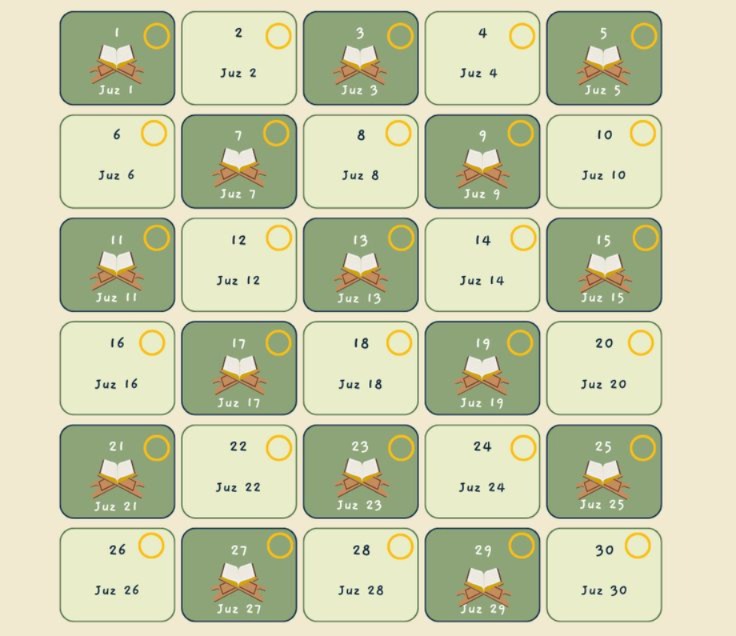
A 30-day Quran reading plan helps you complete the Quran in Ramadan while balancing consistency, understanding, and Tajweed. The key is dividing the recitation into manageable daily sessions that fit your schedule.
1) Plan A: 1 juz per day (split into 4–5 sessions)
- Goal: Complete the Quran in 30 days.
- Daily Breakdown (20 pages/Juz):
- Before/After Fajr: 4 pages
- Before/After Dhuhr: 4 pages
- Before/After Asr: 4 pages
- Before/After Maghrib: 4 pages
- Before/After Isha/Taraweeh: 4 pages
- Tips:
- If you miss a session, catch up by reading 8 pages at the next prayer time.
- Read translation or Tafseer alongside for better reflection.
- Beginners can start with 3–4 sessions per day and gradually increase to 5.
2) Plan B: 2 pages after each salah (steady and easy)
- Goal: Maintain consistency without feeling overwhelmed.
- Daily Breakdown:
- Recite 2 pages after each of the 5 daily prayers (≈10 pages/day).
- This approach is perfect for busy schedules or beginners.
- Tips:
- Use this as a steady daily habit, ensuring small progress every day.
- Add a 10–15 minute evening review to revise what you read.
- Focus on proper Tajweed in each short session rather than rushing through.
3) Plan C: 20 minutes daily + weekend boost
- Goal: Build a sustainable routine while improving fluency and understanding.
- Weekday Schedule:
- Dedicate 20 minutes per day to focused recitation, either before Fajr or after Isha.
- Recite 1–2 pages slowly with Tajweed, understanding meanings.
- Weekend Boost:
- Use weekends to recite extra Juz or study Tafseer of the week’s sections.
- Optional: complete 3–4 pages in one sitting to compensate for weekdays.
- Tips:
- Pair recitation with listening to a slow, clear audio reciter.
- Take brief notes on verses that resonate with your life for deeper reflection.
- Evaluate weekly progress to stay on track for completing the Quran.
Extra Tips for All Plans
- Consistency over intensity: Even 10 minutes daily is better than long, inconsistent sessions.
- Tajweed focus: Allocate a few minutes per session to correct pronunciation.
- Understand the meaning: Read translation or Tafseer for at least 1–2 verses daily.
- Use reminders: Apps, prayer times, or sticky notes can help maintain your schedule.
- Spiritual mindset: Make Du’a before reciting to strengthen your heart and focus.
Best times for your Quran reading in Ramadan plan (so you don’t miss a day)
To maintain daily consistency and complete the Quran during Ramadan, it’s essential to choose the most effective reading times. Dividing 1 Juz (≈20 pages) daily into manageable sessions ensures steady progress even for busy schedules.
Start Your Quran Reading Plan After Fajr in Ramadan (quiet mind, best focus)

- Why: The mind is fresh, distractions are minimal, and spiritual energy is high.
- How:
- Read 4 pages after Fajr (or split: 2 pages before and 2 pages after).
- Optional: pray 2 rakahs of Tahajjud before starting recitation.
- Tips:
- Keep your Quran and prayer mat ready for a smooth start.
- Pair with a short du’a asking Allah for understanding and barakah in your day.
The Online Quran Recitation Course – Learn, Recite & Perfect from Home blog post is ideal for learners who want to improve pronunciation, apply tajweed rules properly, and build confidence while reading—especially during Ramadan.
Before Iftar (high barakah, short sessions)
- Why: The last moments of fasting are highly blessed, and supplications are accepted.
- How:
- Read 2–4 pages before breaking your fast.
- Make du’a for forgiveness, acceptance of fasting, and daily needs.
- Tips:
- Even a brief recitation counts; focus on quality over quantity.
- Use this time for reflection on the verses read.
«ثَلَاثَةٌ لَا تُرَدُّ دَعْوَتُهُمْ: الصَّائِمُ حِينَ يُفْطِرُ وَالْإِمَامُ الْعَادِلُ وَدَعْوَةُ الْمَظْلُومِ»
“There are three whose supplication is not rejected: one who has just ended a fast, a just imam, and one who has been wronged
📚 Mishkat al-Masabih 2249
After Taraweeh (review + memorization)
- Why: After prayer, the heart is calmer and more receptive.
- How:
- Use 10–15 minutes to review that day’s recitation.
- Memorize short surahs or key verses.
- Tips:
- Pair recitation with Tafseer for deeper understanding.
- Track progress with a bookmark or Quran app.
For moms and students: micro-sessions that still count
- Why: Busy routines may prevent long reading sessions.
- How:
- Break the Juz into 2–5 small slots of 2–5 pages throughout the day.
- Examples: while waiting for Suhur, during short study breaks, or before bedtime.
- Tips:
- Prioritize consistency over length.
- Keep devices away to avoid distractions.
- Even 5–10 focused minutes per session accumulate to meaningful progress.
How to stay consistent with your Quran Reading Plan when you fall behind in Ramadan
Falling behind in Ramadan is common, but the month is designed for resilience, not perfection. The key is to shift from guilt to consistent, intentional action. Even small deeds done consistently are beloved to Allah, and the last 10 days hold immense potential to make up for lost time.
The “no shame” catch-up method (make it up in chunks)
- Mindset Shift:
- Focus on now, not past days. Start with 1 page a day if needed.
- Stop comparing yourself to others; your Ramadan is personal.
- Repent for missed efforts (Istighfar) and start fresh immediately.
If falling behind was due to distraction or lost focus, Istighfar is the most powerful reset. Ramadan is a month of mercy, not guilt, and Allah loves when His servant turns back to Him—no matter how late it feels.
You can read more about the impact of daily Istighfar and how it softens the heart here:
Astaghfirullah: Unlock Its Power & Make Istighfar a Daily Habit
- Practical Steps:
- Break missed Quran sessions into small, manageable chunks.
- Bundle worship: Listen to Quran or lectures while cooking, commuting, or cleaning.
- Use pocket time—short gaps during the day—for dhikr or a few verses.
Use a weekly reset day (days 7, 14, 21, 28)

- Why: Provides structured opportunities to reassess and readjust goals.
- How:
- Check which goals you’ve met and which need adjusting.
- Re-prioritize: focus on essentials—five daily prayers, fasting, and dhikr.
- Review the week’s Quran recitation, tafseer, or memorization.
- Tip: Use Sundays (or another consistent day) for reflection and gentle catch-up without pressure.
Don’t double your target—adjust your plan instead
- Avoid Burnout: Trying to cram missed days can lead to exhaustion or losing focus.
- Strategy:
- Reduce daily targets slightly and extend sessions over multiple days.
- Quality > Quantity: focus on khushu’ (concentration) rather than rushing.
- Use the last 10 nights wisely—intensify worship without overloading yourself.
- Physical & Energy Tips:
- Eat light, nutritious meals at suhoor and iftar.
- Hydrate steadily between iftar and suhoor.
- Take 10–20 minute power naps to stay energized for taraweeh.
Plan to make your Quran Reading better during Ramadan (without overwhelm)

Improving your Quran recitation doesn’t need to be stressful. Focus on small, consistent efforts, slow reading (tartil), and creating a calm environment.
5-minute tajweed warm-up before reading
- Practice problem letters (like ج، ح، خ) for 5 minutes before each session.
- Run through vowel sounds: fathah, kasrah, dammah, sukoon. Example: قَ قِ قُ أَقْ
- Helps prime your tongue and mind for accurate recitation.
Common pronunciation fixes that level you up fast
- Focus on one to three letters or sounds that challenge you.
- Slow down your recitation to 7–10 seconds per line initially.
- Repeat words or phrases in a looping technique: first word → second word → connect → add third word gradually.
Record and compare (simple self-check technique)
- Record 1–2 ayat or a short surah on your phone.
- Play it back and identify mistakes or unclear pronunciations.
- Repeat until you notice improvement.
Reading Quran with meaning: a mini reflection plan alongside recitation in Ramadan

Reciting the Quran is more than finishing pages—it’s about connecting with the meaning.
One ayah to live by each day
- Pick one verse from your daily reading.
- Reflect on how it applies to your life.
- Write a short note or reminder for the day.
A beginner-friendly tafsir routine (10 minutes max)
- Spend 5–10 minutes reading the tafsir or translation.
- Focus on understanding one surah or key ayat.
- Helps strengthen connection beyond just pronunciation.
Dua list inspired by what you read
- Note duas mentioned in your daily Juz or ones inspired by its meaning.
- Make a small dua routine before or after each prayer.
- Example: ask Allah for guidance, patience, and ease in fasting or recitation.
💡 Pro tips to avoid overwhelm:
- Break a Juz into 4–5 small sessions (after each Salah).
- Prioritize quality (tartil, correct Tajweed) over speed or number of pages.
- Listen to Qaris for rhythm, and use recordings to track progress.
- Focus on one or two improvements per month instead of perfection.
Quran reading in Ramadan plan for kids and families

A successful family Quran plan focuses on consistency, engagement, and gentle learning, not on volume. Even 5–15 minutes a day can create lasting habits.
Family Quran circle (10–15 minutes)
- Choose a fixed time each day: after Fajr, before Maghrib, or at bedtime.
- Everyone participates, even if differently: adults read aloud, children listen, repeat, or press play on audio tools.
- Keep the tone calm, positive, and pressure-free.
Sticker chart + gentle rewards (no pressure)
- Track children’s engagement with a visual chart.
- Reward effort, not just accuracy, to foster love for the Quran.
- Even listening quietly or coloring during recitation counts as participation.
Short surahs + repetition plan for memorization
- For young children: memorize 1–3 new short surahs per week.
- Repeat daily to build confidence and fluency.
- Older children/adults can use a structured PDF to revise short surahs and Salah recitations.
Additional Tips for Families

- Model behavior: Parents reading aloud inspires children.
- Use age-appropriate goals: Focus on small, achievable milestones.
- Storytelling: Read Quran stories about Prophets to teach character lessons.
- Flexible approach: Adjust timing and session length as energy levels shift.
- Celebrate effort: Praise participation, not just correct recitation.
💡 Remember:
Ramadan is about building love and familiarity with the Quran, not enforcing perfection. Short, consistent sessions with a calm environment create memories that last long after the month ends.
Common mistakes that ruin the Quran Reading plan in Ramadan (and quick fixes)
Even with the best intentions, Ramadan plans can fail if we fall into common traps. Awareness and small corrections can protect both spiritual and physical benefits.
- Starting too intense on day 1:
✅Quick Fix: Start with manageable goals—10–15 minutes of Quran, 1–2 extra prayers, or gradual increase in worship. Consistency beats intensity. - Reading only when you “feel like it”:
❌Mistake: Waiting for motivation before engaging with worship.
✅Quick Fix: Schedule Quran reading, prayers, or dhikr at specific times daily (after Fajr, before Maghrib, or before bed). Habit over mood ensures progress. - Ignoring sleep and hydration:
❌Mistake: Sleeping all day, skipping Suhoor, or drinking too little water. Leads to fatigue, low focus, and missed worship.
✅Quick Fix:- Sleep: Maintain a regular schedule; short naps can refresh you.
- Suhoor: Eat close to Fajr for lasting energy.
- Hydration: Drink water steadily between Iftar and Suhoor; avoid excessive caffeine.
- Overeating & high-sugar meals
❌Mistake: Breaking fast with large, heavy meals causes lethargy and distracts from worship.
✅Quick Fix: Break fast with dates and water, pray Maghrib, then eat a balanced meal slowly (protein, complex carbs, vegetables). - Neglecting worship for worldly distractions
❌Mistake: Spending too much time shopping, socializing, or watching TV instead of focusing on prayer, Quran, and dhikr.
✅Quick Fix: Plan your day with specific ibadah windows and limit distractions to after Isha or short breaks. - Fasting but not giving up evil:
❌Mistake: Avoiding food but continuing lying, backbiting, smoking, or other sinful actions.
✅Quick Fix: Ramadan is about spiritual discipline. Pair fasting with conscious self-control and good character.
The ultimate fix is planning and moderation. Small, consistent acts of worship, proper sleep, hydration, and mindful eating preserve both your body and your connection to Allah this Ramadan.
Final Thought

Ramadan is a precious opportunity to connect deeply with the Quran, strengthen your faith, and build lasting habits of worship. It’s not about rushing through pages or aiming for perfection—it’s about consistency, intention, and quality in every small effort.
Whether you’re reading alone, with your family, or under the guidance of a teacher, what matters most is showing up every day, learning gradually, and seeking Allah’s reward in every recitation. Remember, even small, focused efforts accumulate into meaningful progress, and every sincere attempt is accepted and multiplied by Allah.
By planning wisely, avoiding common mistakes, and prioritizing both spiritual and physical well-being, you can make this Ramadan a month of true growth, reflection, and connection to the Quran.
If you want to strengthen your Ramadan routine even more, read our complete guide:
Ramadan 2026 and Fasting Basics: 10 Fasting Tips & Key Dates
— a practical resource to help you fast correctly, avoid common mistakes, and prepare spiritually and physically for the month.
Start your Ramadan plan with a teacher (faster progress, fewer mistakes)
Taking the right steps from the beginning can make all the difference this Ramadan. At Areeb Academy, we provide:
- Experienced Quran teachers who guide you through reading and recitation with proper Tajweed.
- Flexible scheduling to fit around your daily routine—morning, evening, or anytime that works for you.
- Structured Ramadan program designed to help you complete Quran recitation with quality throughout the month.
- Personalized attention to correct mistakes early, so you make faster progress without feeling overwhelmed.
Plus, you can book a free trial to experience our teaching style and see how easily you can improve your Quran recitation. Start your journey today and make this Ramadan truly rewarding!
Frequently Asked Questions (FAQs)
1. What is the best Quran reading plan for Ramadan beginners?
The best Quran reading plan for beginners in Ramadan is one that focuses on consistency, not volume. Start with 2–5 pages daily, ideally after Fajr or before Maghrib, and gradually increase. Pair recitation with basic Tajweed practice and short reflections to build confidence and a strong daily habit.
2. Is it better to finish the Quran or focus on Tajweed during Ramadan?
Both are rewarding, and the choice depends on your goal and time. Completing a khatmah brings great reward, while focusing on Tajweed improves accuracy and long-term fluency. Many people combine both by reading daily while slowing down to correct pronunciation and understand key verses.
3. What if I fall behind in my Quran reading plan during Ramadan?
Falling behind is common and not a failure. Ramadan is about returning, not perfection. Start again immediately, even with one page a day, and break missed readings into small chunks. Consistency matters more than catching up all at once.
4. When is the best time to read Quran in Ramadan?
The most effective times include after Fajr, before Iftar, and after Taraweeh. These periods offer focus, barakah, and fewer distractions. Busy readers can divide their daily portion into short sessions after each prayer.
5. Can I improve my Quran reading in Ramadan without a teacher?
Yes, self-study can help, especially with audio reciters and apps. However, learning with a qualified teacher allows you to correct mistakes early, apply Tajweed properly, and progress faster. Even short guided sessions during Ramadan can make a noticeable difference.