

Understanding Arabic Pronouns is one of the most important steps toward truly connecting with the meanings of the Quran and the Arabic language as a whole. These small words—like “he,” “you,” “we,” and “they”—carry deep significance, shaping who is speaking, who is being addressed, and how actions and emotions unfold in each verse.
In Arabic, pronouns change based on gender, number, and person, and they often appear either as independent words or attached to other words. This rich system may seem complex at first, but once you understand it, everything starts to make sense. Instead of guessing meanings, you begin to see the structure of the language clearly.
In this guide, we will break down Arabic pronouns in a simple, step-by-step way, using clear explanations, examples, and Quran-based contexts—so you can read with confidence, understand deeply, and feel closer to the message behind every word.
What Are Arabic Pronouns?
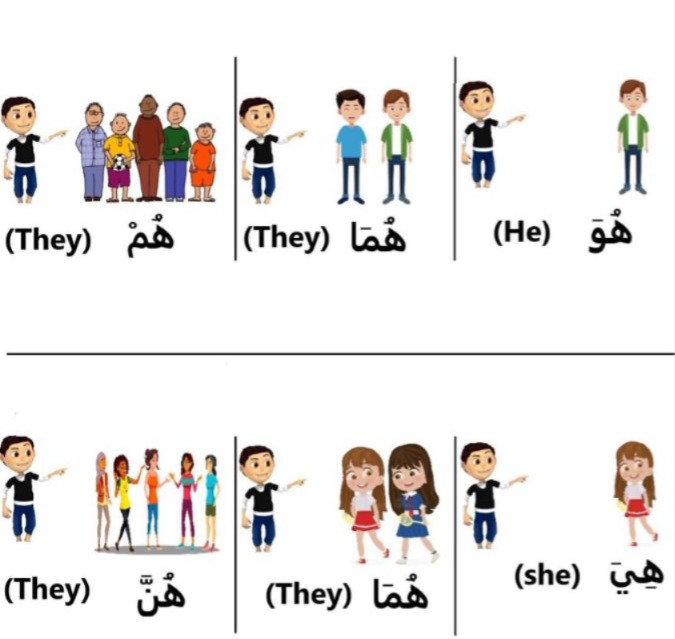
Arabic pronouns are words that replace nouns to avoid repetition and make sentences clearer and smoother. In Arabic, pronouns are called الضمائر (al-ḍamāʾir), and they play a central role in everyday communication—whether spoken or written.
Unlike English, Arabic pronouns change based on gender, number, and person. As a result, they are more precise, but at the same time, they can feel more complex for beginners. For example, they can appear as independent words (like أنا – I) or as suffixes attached to nouns, verbs, and prepositions (like ـهُ – his).
In simple terms, Arabic pronouns help us talk about people and things more naturally, without repeating their names again and again. Because of this, mastering pronouns is one of the first and most important steps in understanding Arabic grammar.
Simple Definition for Beginners
Arabic pronouns are small words that stand in place of names. In other words, they help us avoid repeating the same noun again and again.
For example, instead of saying:
Ahmed is my friend. Ahmed is kind.
You can simply say:
Ahmed is my friend. He is kind.
Similarly, in Arabic:
أحمد صديقي. هو طيب.
As you can see, pronouns make sentences:
✔ Shorter
✔ Clearer
✔ More natural
Most importantly, they tell us who we are talking about without repeating the noun, which makes speech and writing smoother and easier to follow.
Why Arabic Pronouns Are Important
Arabic pronouns are not just grammar rules—in fact, they are essential for real communication.

For instance, they help you:
• Speak naturally without repeating names
• Understand who is doing the action
• Show ownership (my, your, his, her…)
• Ask clear questions
• Build longer and more meaningful sentences
Moreover, because Arabic is a highly structured language, using the wrong pronoun can completely change the meaning of a sentence. Therefore, mastering pronouns early makes learning Arabic much easier later on.
Once you understand pronouns, you’ll also find it easier to learn:
✔ Verb conjugation
✔ Sentence structure
✔ Conversation patterns
In short, pronouns are small words with a big impact—they form the foundation for speaking, reading, and writing Arabic confidently.
If you want to start using Arabic naturally in real conversations, greetings are the perfect place to begin.
👉 Read our full guide on Arabic Greetings and learn how to say hello, goodbye, and more like a native.
How Arabic Pronouns Differ From English
Arabic pronouns work very differently from English pronouns in several important ways:
1. Gender Matters

In English, we say: You are smart.
In Arabic, “you” changes based on gender:
• أنتَ ذكيّ (to a male) (anta zaki)
• أنتِ ذكية (to a female) (anti zakiyya)
Arabic always shows whether you’re talking to a man or a woman.
2. Arabic Has Dual Pronouns
English only has singular and plural. However, Arabic goes a step further.
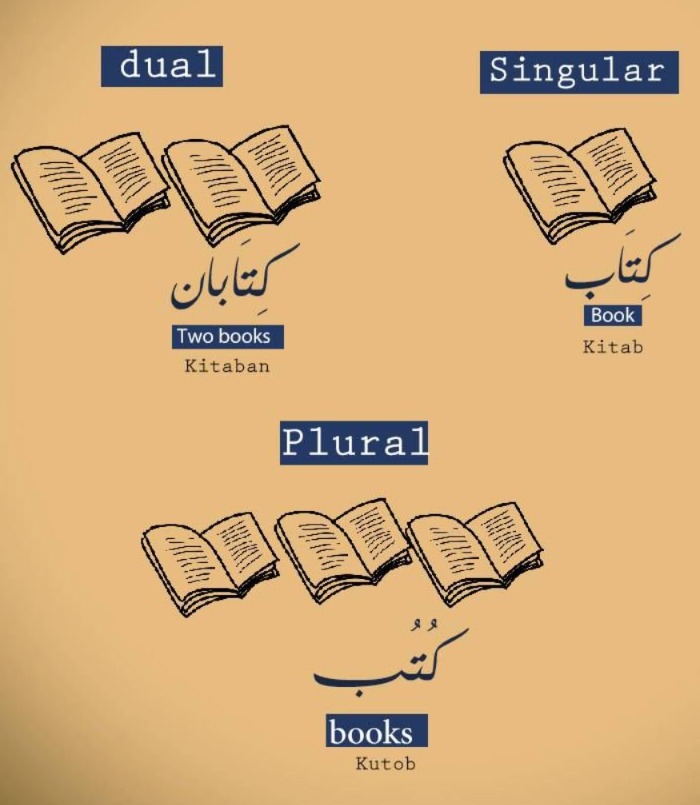
Arabic has:
• Singular (one)
• Dual (two)
• Plural (more than two)
For example:
• They (two males) → هما (huma)
• They (many males) → هم (hum)
As a result, Arabic is more specific and detailed, allowing speakers to indicate exactly how many people or things they are talking about.
In addition, this distinction affects verbs, adjectives, and pronouns, making sentence structure precise and clear.
3. Pronouns Can Attach to Words
In English, pronouns are usually separate words:
My book
His house
In Arabic, pronouns often attach directly to the word:
• كتابي = my book (kitabi)
• بيته = his house (baytuhu)
So one word can contain both the noun and the pronoun.
4. Arabic Often Drops the Verb “To Be”
In English: I am a student.
In Arabic:
أنا طالب (ana taleb)
Literally: I student
The pronoun already implies “am / is / are.”
Types of Arabic Pronouns
Arabic pronouns are divided into several main types, each serving a different function in a sentence. What makes Arabic pronouns unique, moreover, is that they adapt to gender (masculine/feminine), number (singular, dual, plural), and person (first, second, third). Consequently, this system allows Arabic to be extremely precise in meaning.
The main types of Arabic pronouns include:
• Detached Pronouns (الضمائر المنفصلة) – stand alone as independent words.
• Attached Pronouns (الضمائر المتصلة) – attach to nouns, verbs, and particles.
• Demonstrative Pronouns (أسماء الإشارة) – point to specific people or things.
• Relative Pronouns (الأسماء الموصولة) – link sentences and add extra information.
• Interrogative Pronouns (أسماء الاستفهام) – used for asking questions.
In addition, each type plays a vital role in building correct and natural Arabic sentences. Therefore, understanding them makes reading, writing, and speaking much easier.
Subject Pronouns in Arabic
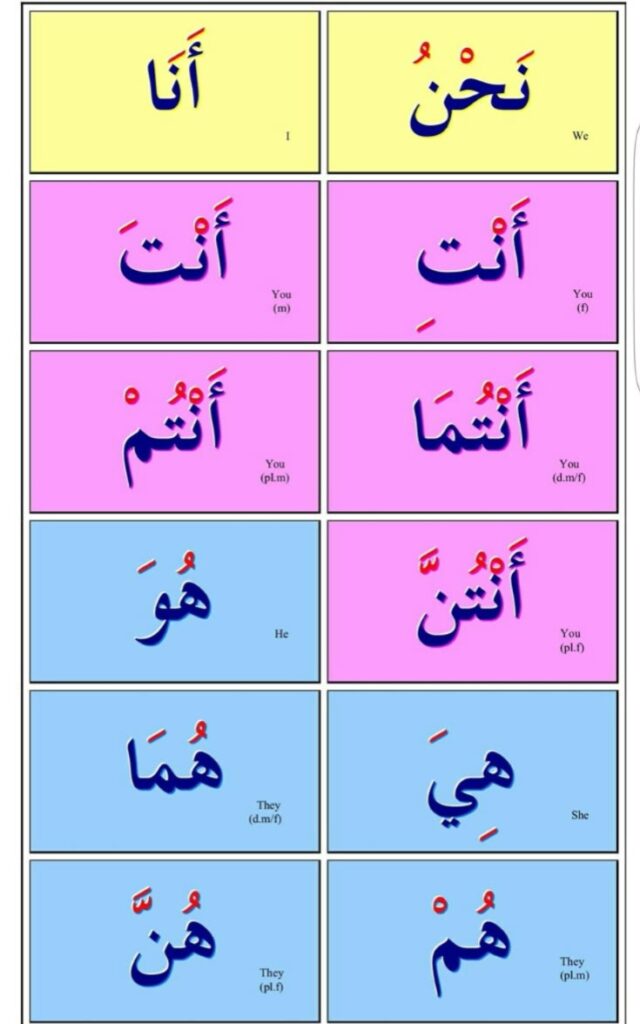
Subject pronouns in Arabic are used to show who is doing the action in a sentence. Specifically, they usually appear as detached pronouns, meaning they stand alone and are not attached to any word.
For example:
- أنا أدرس. (Ana adrusu) – I study.
- هو يعمل هنا. (Huwa ya‘mal huna) – He works here.
Furthermore, Arabic subject pronouns change based on:
✔ Gender
✔ Number
✔ Person
Unlike English, Arabic has separate forms for:
- You (male vs. female)
- They (two vs. many)
In addition, Arabic often drops the subject pronoun because the verb itself already shows who is doing the action. This is called the hidden or implicit pronoun (الضمير المستتر), and as a result, it is very common in Arabic.
Object Pronouns in Arabic
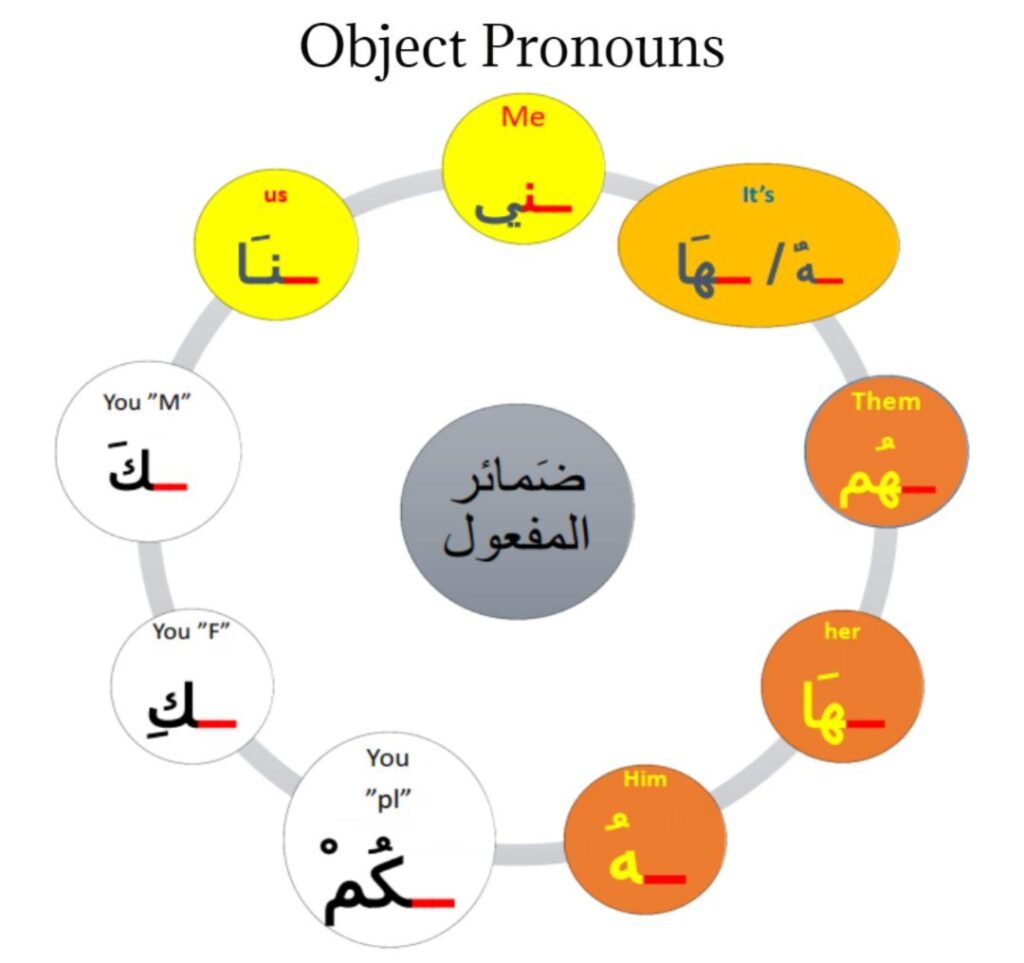
Object pronouns show who receives the action of the verb. In Arabic, these usually appear as attached pronouns, meaning they connect directly to the verb.
For example:
- رأيتُهُ (Ra’aytuhu) – I saw him.
- ساعدتُها (Sa‘adtuhā) – I helped her.
- أحبك (Uḥibbuka) – I love you (male).
Instead of using a separate word like in English, Arabic often attaches the object pronoun to the verb itself. This makes sentences shorter and more fluid.
Arabic also has detached object pronouns, which are used mainly for emphasis, such as:
إيّاكَ نعبد
You alone we worship.
Possessive Pronouns in Arabic
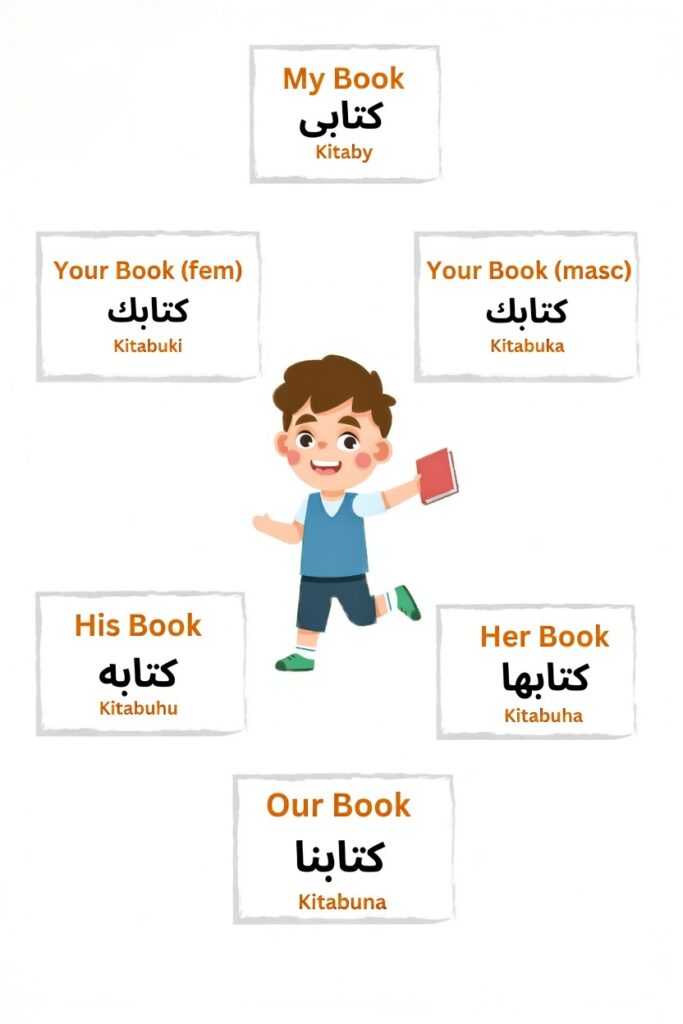
Possessive pronouns in Arabic are used to indicate ownership or belonging, and importantly, they always appear as attached suffixes. Specifically, they attach directly to nouns, prepositions, and sometimes even verbs.
For example:
- كتابي (kitābī) – my book
- بيتك (baytuka) – your house (male)
- مدرستهم (madrasatuhum) – their school
Unlike English, Arabic does not use separate words like my, his, or their. Instead, it adds a suffix directly to the noun itself.
As a result, this system makes Arabic more compact; however, it also requires learners to memorize the correct endings for each pronoun.
Detached (Independent) Arabic Pronouns
Detached Arabic pronouns (الضمائر المنفصلة) are independent words that stand alone in a sentence, just like “I,” “you,” “he,” “she,” and “they” in English. Unlike attached pronouns, which connect to nouns or verbs, detached pronouns appear separately and are used mainly to identify who is being talked about.
Specifically, these pronouns are categorized based on:
- Person: first (speaker), second (listener), third (absent)
- Number: singular, dual, plural
- Gender: masculine and feminine
Moreover, one important feature of detached pronouns is that they are always definite (معرفة) and always in the nominative case (مرفوعة). Therefore, they are especially useful as subjects of sentences, helping to make meaning clear and precise.
List of Detached Pronouns
Here is a complete list of the most common detached Arabic pronouns:
First Person (المتكلم – The Speaker)
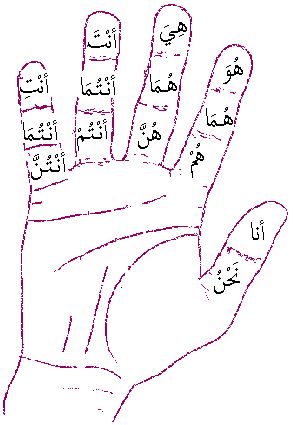
Used when talking about yourself.
- أنا (Ana) – I
- نحن (Nahnu) – We
Second Person (المخاطب – The Addressee)
Used when speaking directly to someone.
- أنتَ (Anta) – You (male, singular)
- أنتِ (Anti) – You (female, singular)
- أنتما (Antuma) – You (dual, male/female)
- أنتم (Antum) – You (male plural)
- أنتنَّ (Antunna) – You (female plural)
Third Person (الغائب – The Absent One)
Used when talking about someone who is not present.
- هو (Huwa) – He / It (masculine)
- هي (Hiya) – She / It (feminine)
- هما (Huma) – They (dual)
- هم (Hum) – They (male plural)
- هنَّ (Hunna) – They (female plural)
When to Use Independent Pronouns
Detached pronouns are mainly used in the following situations:
1. As the Subject of a Sentence
They often appear at the beginning of nominal sentences (sentences without a verb “to be”).
Examples:
- أنا طالب. (Ana ṭālib.) – I am a student.
- هو مهندس. (Huwa muhandis.) – He is an engineer.
- هم مهندسون. (Hum muhandisūn.) – They are engineers.
2. For Emphasis
Sometimes, the verb already shows who is doing the action, but the detached pronoun is added for emphasis or clarity.
Example:
- أنا أحب العربية. – I love Arabic. (Emphasizing “I”) = أحب العربية without ana
3. When the Subject Is Not Clear from the Verb
In some cases, the verb alone is not enough to show gender or number clearly, so the detached pronoun is used.
Common Beginner Mistakes
Here are some mistakes learners often make with detached pronouns:
1. Mixing Gender Forms
Many beginners use one form of “you” for everyone. In Arabic, gender matters:
❌ أنتَ جميلة = anta gamila
✔ أنتِ جميلة = anti gamila
2. Ignoring Dual Pronouns
Arabic has special pronouns for exactly two people. Many learners skip them and use plural instead.
❌ أنتم طالبان
✔ أنتما طالبان
3. Overusing Pronouns
In Arabic, the verb often already contains the subject. Using the detached pronoun every time can sound unnatural.
Too much:
أنا أدرس، أنا أذهب، أنا أكتب…
Better:
أدرس، أذهب، أكتب…
4. Confusing Detached and Attached Pronouns
Learners sometimes mix them up:
❌ أنا كتاب
✔ كتابي (My book)
Attached Arabic Pronouns
Attached pronouns in Arabic (الضمائر المتصلة) are suffixes that connect directly to verbs, nouns, or prepositions. They show possession or indicate the object of an action. Unlike detached pronouns, they are not separate words—they are attached to the end of another word.
Attached pronouns are very common in Arabic and are divided into three main groups based on what they attach to:
- Attached Pronouns with Verbs
- Attached Pronouns with Nouns
- Attached Pronouns with Prepositions
Attached Pronouns With Verbs
When attached to verbs, these pronouns indicate the object of the action (who the action is done to).
| Person | Pronoun | Example (Verb) | Translation |
|---|---|---|---|
| 1st Singular | ـي (-ī) | شاهدني (shāhidnī) | Saw me |
| 2nd Singular (M) | ـكَ (-ka) | رأيتكَ (ra’aytuka) | I saw you (m.) |
| 2nd Singular (F) | ـكِ (-ki) | أعطيتكِ (a‘ṭaytuki) | I gave you (f.) |
| 3rd Singular (M) | ـهُ (-hu) | قرأتُهُ (qara’tuhu) | I read it / him |
| 3rd Singular (F) | ـها (-hā) | ساعدتها (sa‘adtuhā) | I helped her |
| 1st Plural | ـنا (-nā) | أحبّنا (uḥibbnā) | We love (it / them) |
| 2nd Plural (M/F) | ـكم / ـكنّ (-kum / -kunna) | رأيتكم (ra’aytkum) | I saw you all |
| 3rd Plural (M/F) | ـهم / ـهنّ (-hum / -hunna) | ساعدتهم (sa‘adtuhum) | I helped them |
Example sentences:
- أحبكِ → I love you (to a female)
- قرأتُهُ → I read it / him
- ساعدتهم → I helped them
Attached Pronouns With Nouns
Attached pronouns can indicate possession, turning a noun into my, your, his, her, our, or their.
| Person | Pronoun | Example (Noun) | Translation |
|---|---|---|---|
| 1st Singular | ـي (-ī) | كتابي (kitābī) | My book |
| 2nd Singular (M) | ـكَ (-ka) | بيتكَ (baytuka) | Your house (m.) |
| 2nd Singular (F) | ـكِ (-ki) | كتابكِ (kitābuki) | Your book (f.) |
| 3rd Singular (M) | ـهُ (-hu) | قلمه (qalamuhu) | His pen |
| 3rd Singular (F) | ـها (-hā) | غرفتها (ghurfatuhā) | Her room |
| 1st Plural | ـنا (-nā) | ديننا (dīnunā) | Our religion |
| 2nd Plural (M/F) | ـكم / ـكنّ (-kum / -kunna) | صديقكم (ṣadīqukum) | Your friend (all) |
| 3rd Plural (M/F) | ـهم / ـهنّ (-hum / -hunna) | مدرستهم (madrasatuhum) | Their school |
Example sentences:
- كتابي جديد → My book is new
- غرفتها واسعة → Her room is spacious
- صديقكم رائع → Your friend is amazing
Attached Pronouns With Prepositions
Some prepositions in Arabic require the object to be a pronoun suffix, which is attached directly to the preposition.
| Preposition Example | Pronoun Suffix | Example Sentence | Translation |
| إلى (to) | ـي (-ī) | إليّ → to me | أعطاه إليّ → He gave it to me |
| مع (with) | ـهُ (-hu) | معه → with him | ذهبت معه → I went with him |
| عن (about) | ـها (-hā) | عنها → about her | سألته عنها → He asked about her |
| على (on) | ـهم (-hum) | عليهم → on them | الكتاب عليهم → The book is on them |
Example sentences:
- ذهبت معه → I went with him
- سألته عنها → He asked about her
- أعطاه إليّ → He gave it to me
Attached pronouns make Arabic compact, precise, and flexible, allowing one word to express both the noun/verb and the pronoun at the same time.
Singular, Dual, and Plural Pronouns
Arabic pronouns are uniquely sensitive to number, distinguishing between singular (one), dual (two), and plural (three or more). This makes Arabic grammar more precise than English, which only has singular and plural pronouns.
Singular Pronouns Explained
Singular pronouns refer to one person or thing. In Arabic, they also differentiate gender (masculine/feminine) for second and third persons.
| Person | Masculine | Feminine | English |
| 1st | أنا (Anā) | أنا (Anā) | I |
| 2nd | أنتَ (Anta) | أنتِ (Anti) | You |
| 3rd | هو (Huwa) | هي (Hiya) | He / She |
Dual Pronouns in Arabic
Dual pronouns are used exclusively for two people or things. English does not have dedicated dual pronouns; we usually say “the two of them” or “both.”
| Person | Arabic | English |
|---|---|---|
| 2nd | أنتما (Antumā) | You two |
| 3rd | هما (Humā) | They two (m./f.) |
Examples:
- أنتما طالبان → You two are students
- هما مهندسان → They (two males) are engineers
- هما معلمتان → They (two females) are teachers
Plural Pronouns for Masculine and Feminine
Plural pronouns refer to three or more people or things. Arabic distinguishes masculine and feminine forms for second and third persons, unlike English where “they” is neutral.
| Person | Masculine | Feminine | English |
|---|---|---|---|
| 1st | نحن (Naḥnu) | نحن (Naḥnu) | We |
| 2nd | أنتم (Antum) | أنتنَّ (Antunna) | You all |
| 3rd | هم (Hum) | هنَّ (Hunna) | They |
Examples:
- نحن طلاب → We are students
- أنتم مهندسون → You all (male/mixed) are engineers
- أنتنَّ معلمات → You all (female) are teachers
- هم مسلمون → They (male/mixed) are Muslims
- هنَّ مسلمات → They (female) are Muslims
Key Takeaways
- Number matters in Arabic: singular, dual, and plural forms exist for pronouns, nouns, and verbs.
- Gender distinction: Dual and plural forms often have separate masculine and feminine versions.
- English limitations: English uses singular/plural only, expressing dual meaning indirectly with words like “both” or “the two of them.”
- Precision: Using dual and gendered plural forms allows Arabic speakers to be very precise about who or what they are referring to.
Masculine and Feminine Pronouns in Arabic
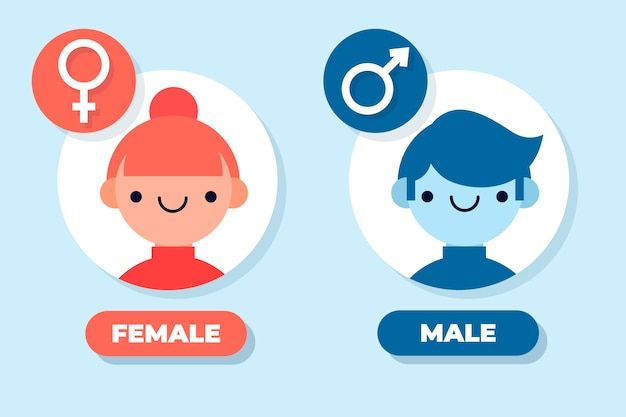
Arabic pronouns often change form depending on gender.
Singular:
- Masculine: هو (Huwa – he), أنتَ (Anta – you m.)
- Feminine: هي (Hiya – she), أنتِ (Anti – you f.)
Plural:
- Masculine: هم (Hum – they m.), أنتم (Antum – you all m.)
- Feminine: هنَّ (Hunna – they f.), أنتنَّ (Antunna – you all f.)
Neutral (gender does not change): أنا (Ana – I), نحن (Nahnu – we)
Gender Rules in Arabic Pronouns
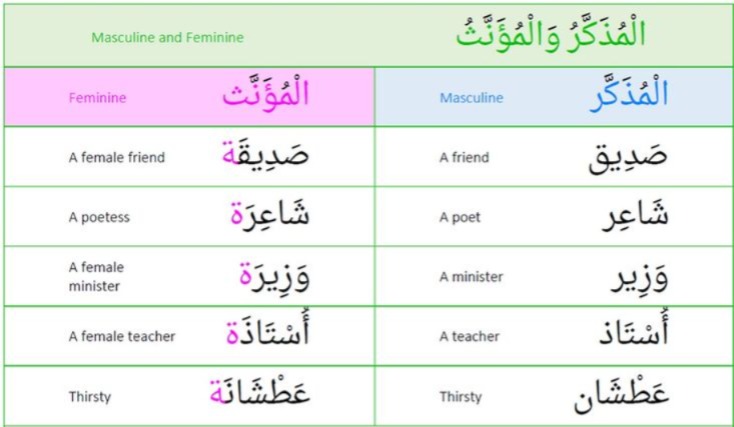
- Singular “you” uses ـَ (fatha) for masculine and ـِ (kasra) for feminine: أنتَ / أنتِ
- Plural pronouns use specific endings to indicate gender: -هم (m.) vs -هنَّ (f.), -تم (m.) vs -تنَّ (f.)
- Pronouns must agree in gender with verbs and adjectives:
- هو طويل → He is tall (masc.)
- هي طويلة → She is tall (fem.)
If these details confuse you, don’t worry — We break them down step by step in my latest blog post on Arabic vowels.
👉 Read the full guide and finally understand Arabic harakat the right way!
How Gender Affects Sentence Meaning
- Using the wrong gender can change the meaning or make the sentence incorrect:
- هو طالبة ❌ (wrong) → هي طالبة ✅ (correct)
- Adjectives and verbs change endings based on gender:
- Masculine singular: مهندس → He is an engineer
- Feminine singular: مهندسة → She is an engineer
- Gender also affects plural forms and dual forms in nouns and pronouns.
Common Errors Beginners Make
- Mixing masculine and feminine pronouns or adjectives: هو طالبة ❌
- Forgetting gender distinctions in plural: هم معلمات ❌ → هنَّ معلمات ✅
- Using singular instead of dual for two people: طالبان → هم طالبان ❌ (should match context)
- Ignoring verb-adjective agreement with gender.
Arabic Pronouns With Examples
Simple Sentences Using Pronouns
- أنا أحب التفاح → I love apples
- هو يلعب في الحديقة → He plays in the garden
- هي تكتب واجبها → She does her homework
- نحن نذهب إلى المدرسة → We go to school
- أنتم تشاهدون التلفاز → You all watch TV
- هنّ يدرسن العربية → They (f.) study Arabic
Side-by-Side English and Arabic Examples
| Arabic | English |
|---|---|
| أنا أكتب رسالة | I am writing a letter |
| هو يقرأ كتابًا | He is reading a book |
| هي تطبخ الطعام | She cooks the food |
| نحن نشرب الشاي | We drink tea |
| أنتم تتعلمون العربية | You all are learning Arabic |
| كتابي على الطاولة | My book is on the table |
| قلمكَ جديد | Your pen (m.) is new |
| غرفتها نظيفة | Her room is clean |
Practice Reading and Speaking
Practice: Change the Pronoun
Fill in the blanks with the correct verb form:
احب التفاح …..
تحب التفاح …..
نحب التفاح …..
يحبون التفاح …..
Answers
أنا أحب التفاح
هي تحب التفاح
نحن نحب التفاح
هم يحبون التفاح
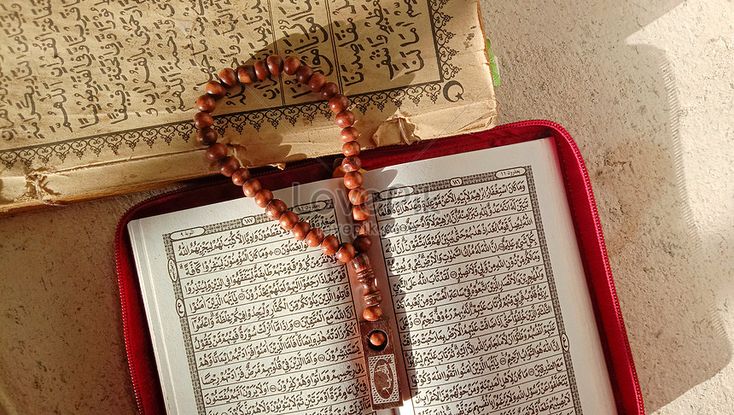
Arabic Pronouns in Quran Reading
Why Pronouns Matter in Understanding Meaning
Arabic pronouns in Quran reading are essential for comprehension. They help identify who is speaking (Allah, prophets, humans) and who is being addressed, which clarifies relationships, actions, and divine commands. For example:
- أنا (Ana) – “I”
Example: إبليس قال: قَالَ أَنَا خَيْرٌ مِّنْهُ، خَلَقْتَنِي مِن نَّارٍ وَخَلَقْتَهُ مِن طِينٍ
(“I am better than him: You created me from fire and You created him from clay.” — Surah Al-A’raf 7:12) - هو (Huwa) – “He” (used for Allah)
Example: ذَٰلِكَ بِأَنَّ اللَّهَ هُوَ الْحَقُّ وَأَنَّ مَا يَدْعُونَ مِن دُونِهِ ۥ هُوَ الْبَاطِلُ ۚ وَأَنَّ اللَّهَ هُوَ الْعَلِيُّ الْكَبِيرُ
(“That is because Allah ˹alone˺ is the Truth and what they invoke besides Him is falsehood, and Allah ˹alone˺ is truly the Most High, All-Great.” — Surah Al-Hajj 22:62) - نحن (Nahnu) – “We”
Example: إِنَّا نَحْنُ نُحْىِ ٱلْمَوْتَىٰ وَنَكْتُبُ مَا قَدَّمُوا۟ وَءَاثَـٰرَهُمْ ۚ وَكُلَّ شَىْءٍ أَحْصَيْنَـٰهُ فِىٓ إِمَامٍۢ مُّبِينٍۢ ١٢
(“It is certainly We Who resurrect the dead, and write what they send forth and what they leave behind. Everything is listed by Us in a perfect Record.1 ” — Surah Ya‑Sin 36:12) - أنت (Anta / Anti) – “You” (addressing someone)
Example: وَيَقُولُ ٱلَّذِينَ كَفَرُوا۟ لَوْلَآ أُنزِلَ عَلَيْهِ ءَايَةٌۭ مِّن رَّبِّهِۦٓ ۗ إِنَّمَآ أَنتَ مُنذِرٌۭ ۖ وَلِكُلِّ قَوْمٍ هَادٍ ٧)
(“The disbelievers say, “If only a sign could be sent down to him from his Lord.” You ˹O Prophet˺ are only a warner. And every people had a guide.” — Surah Ar-Ra’d 13:7)
Pronouns and Context in the Quran
Pronouns appear in detached (subject) forms or attached (possessive/object) forms, and understanding them reveals meaning:
- Detached Subject Pronouns (Rafa’ Detached Pronouns) – stand alone like English subjects:
- هم (Hum) – “They” (masculine plural, e.g., disbelievers) أَلَآ إِنَّهُمْ هُمُ ٱلْمُفْسِدُونَ وَلَـٰكِن لَّا يَشْعُرُونَ ١٢
(“Indeed, it is they who are the corruptors, but they fail to perceive it.” — Surah Al-Baqarah 2:12)
- هم (Hum) – “They” (masculine plural, e.g., disbelievers) أَلَآ إِنَّهُمْ هُمُ ٱلْمُفْسِدُونَ وَلَـٰكِن لَّا يَشْعُرُونَ ١٢
- Attached Pronouns (Suffixes) – indicate possession or object:
- ـي (-i) – “my” رَبِّ ٱجْعَلْنِى مُقِيمَ ٱلصَّلَوٰةِ وَمِن ذُرِّيَّتِى ۚ رَبَّنَا وَتَقَبَّلْ دُعَآءِ
(“My Lord! Make me and those ˹believers˺ of my descendants keep up prayer. Our Lord! Accept my prayers.” — Surah Ibrahim 14:40)
- ـي (-i) – “my” رَبِّ ٱجْعَلْنِى مُقِيمَ ٱلصَّلَوٰةِ وَمِن ذُرِّيَّتِى ۚ رَبَّنَا وَتَقَبَّلْ دُعَآءِ
- Dual Pronouns – for exactly two people, e.g., addressing Musa and Harun.
- Relative Pronouns (Al-ism al-mawṣūl) – link clauses: alladhi (who/which, masculine), allati (who/which, feminine).
Avoiding Misinterpretation
Correctly identifying pronouns prevents misunderstanding who is speaking or being addressed. Recognizing Allah’s use of “I,” “We,” and “He” clarifies divine communication and narrative tone. Mastering pronouns is foundational for Quranic grammar, making translation and comprehension more precise.
Final Thoughts on Arabic Pronouns
Arabic pronouns may look small, but they carry huge meaning—especially in Quran reading and daily communication. Understanding how pronouns work helps you follow who is speaking, who is being addressed, and what exactly is happening in a sentence. Once you master them, Arabic starts to feel clearer, lighter, and far more logical.
Learning Arabic isn’t about memorizing random rules—it’s about building understanding step by step. And when grammar is explained the right way, it becomes something you enjoy, not something you fear.
Learn Arabic Grammar Step by Step at Areeb Academy
At Areeb Academy, Arabic grammar is taught in a simple, structured, and practical way. Lessons focus on real understanding, not just memorization. You learn how Arabic actually works—through clear explanations, Quran-based examples, and daily-use sentences that make the language come alive.
What makes Areeb Academy truly special is its step-by-step approach: every concept builds naturally on the one before it, so you never feel lost or overwhelmed. Whether you’re learning for Quran comprehension, conversation, or academic purposes, the goal is always the same—confidence, clarity, and real progress.
Moreover, our teachers are excellent native Arabic speakers, and they are fluent in English, which makes your learning smooth, easy to understand, and engaging. You’ll get all the guidance you need, with explanations in the language you’re comfortable with.
If you’ve ever felt that Arabic grammar is confusing, Areeb Academy will show you that it doesn’t have to be.
FAQs
1. What are Arabic pronouns?
Arabic pronouns are words that replace nouns to avoid repetition. For example, instead of saying “Ahmed is kind. Ahmed is smart,” you can say “Ahmed is kind. He is smart.” Moreover, pronouns make sentences shorter, clearer, and more natural.
2. Why does Arabic have singular, dual, and plural pronouns?
Unlike English, Arabic distinguishes between one, two, or more than two people, which allows for more precise communication. For instance, “هم” refers to many males, while “هما” refers specifically to two people.
3. How do gender differences affect pronouns in Arabic?
Arabic pronouns change depending on whether the person is masculine or feminine. Consequently, you use “أنتَ” for singular male and “أنتِ” for singular female. In addition, verbs and adjectives must agree with the pronoun’s gender.
4. When should I use attached vs. detached pronouns?
Detached pronouns stand alone and usually indicate the subject, whereas attached pronouns connect to nouns or verbs to show possession or the object. Therefore, understanding both types is essential for reading, writing, and speaking correctly.
5. How can Areeb Academy help me master Arabic pronouns?
At Areeb Academy, native Arabic teachers explain pronouns step-by-step and in fluent English. Furthermore, the interactive lessons and practice exercises make it easier to understand and remember pronouns in daily speech and Quran reading.