
AssalamuAlaikum! Have you ever heard this greeting and weren’t sure how to respond? Or maybe you want to avoid the common mistakes people make when saying it? This article is for you. Here, we’ll explore how to say Assalamu Alaikum correctly, the most common errors, and how to respond appropriately in different situations, whether you’re speaking with a Muslim or someone of another faith. Not only will this guide help you avoid mistakes, but it will also explain the deep meaning behind this greeting and its role in spreading peace and respect.
What Does Assalamualaikum Mean?

Assalamualaikum is more than just a greeting—it is a powerful wish for peace and well-being. Literally, it means “Peace be upon you”, but its meaning goes far deeper. Every time a Muslim says Assalamualaikum, they are invoking protection, blessings, and divine peace from Allah (Al-Salam) upon the person they greet.
The greeting has been used since the time of Prophet Muhammad ﷺ, who taught that spreading Salaam is a way to strengthen love, trust, and unity among people. It is not limited to Arabic-speaking communities; Muslims around the world—from Indonesia to Nigeria, Turkey to Bangladesh—use it to connect hearts, foster harmony, and remind each other of the spiritual value of peace.
Even in everyday interactions, whether meeting a friend, entering a home, or saying goodbye, Assalamualaikum serves as a simple yet profound way to show care and respect. Its spiritual essence is a reminder that peace is not just a word, but a way of life, bridging communities and spreading blessings everywhere it is spoken.
Literal Translation of Assalamualaikum
The phrase “Assalamualaikum” literally means “Peace be upon you.” It’s derived from the Arabic word Salam, which signifies peace, safety, and protection from harm. When you greet someone with these words, you’re not just saying hello—you’re wishing them a deep sense of wellbeing and divine tranquility. This greeting is universal among Muslims, transcending cultures, languages, and continents. From Indonesia to Morocco, from Pakistan to Senegal, saying Assalamualaikum is a beautiful way to express care and goodwill to anyone you meet.
Spiritual Meaning Behind the Greeting

Beyond its literal translation, Assalamualaikum carries profound spiritual significance. It reminds us that true peace comes from Allah—Al-Salam, one of His 99 beautiful names. The greeting connects hearts, fosters trust, and encourages harmony among people. The Prophet Muhammad ﷺ emphasized spreading peace among one another, saying,
(لاَ تَدْخُلُوا الْجَنَّةَ حَتَّى تُؤْمِنُوا، وَلاَ تُؤْمِنُوا حَتَّى تَحَابُّوا، أَوَلاَ أَدُلُّكُم عَلَى شَيْءٍ إِذَا فَعَلْتُمُوهُ تَحَابَبْتُم، أَفْشُوا السَّلاَمَ بَيْنَكُمْ)
“You shall not enter Paradise until you believe, and you have not believed until you love one another. Shall I tell you of something you can do to make you love one another? Spread the greetings of Salam (peace) amongst yourselves (i.e. between each other). – Hisn al-Muslim 224
This shows that a simple greeting is not just social etiquette, but an act of worship that reflects purity of heart, strengthens community, and invites divine mercy into our lives.
Why Muslims Use This Phrase Worldwide
Muslims around the world use Assalamualaikum daily, whether meeting someone new, entering a home, or even saying goodbye. It’s more than a greeting—it’s a way to cultivate safety, love, and respect. From casual interactions in Egypt, Turkey, or Bangladesh, to formal occasions in Iran or Nigeria, this phrase bridges differences and fosters connection. Even non-Arabic speakers have embraced it, keeping the meaning intact: a wish for peace. Using Assalamualaikum reminds us that every interaction is an opportunity to spread goodwill and divine blessings, creating a world where peace is the first message we share.
How to Pronounce Assalamualaikum Correctly
Pronouncing Assalamualaikum correctly is important because it reflects both respect and understanding of the greeting’s meaning. The phrase is pronounced as:
“As-sa-la-mu a-lay-kum“
Each part carries weight: As-Salam (peace) + Alaikum (upon you). When said clearly, it conveys sincerity, care, and the spiritual message of peace to the listener.
Common Pronunciation Mistakes
Many learners make small mistakes when saying Assalamualaikum:
- Dropping the ‘u’ in As-salamu, making it sound like As-salam.
- Mispronouncing the ‘lay’ in alaykum, which should sound like “a-lay-kum” and not “a-lik-um.”
- Rushing the words together, which can make it hard for others to understand.
Correct pronunciation ensures that the greeting carries its full meaning and impact.
Audio-like Breakdown for Beginners
To make it easier, break it into four parts like this:
- As → short, soft “as”
- Sa-laa → stretch the “laa” slightly
- Mu → quick, soft “mu”
- ‘A-lay-kum → “a” like apple, “lay” like play, “kum” soft at the end
Say it slowly at first:
As – sa-laa – mu – a-lay-kum
Then practice speeding it up until it flows naturally. With a little repetition, you’ll master the greeting like a native speaker!
The Sunnah of Saying Assalamualaikum

Saying Assalamualaikum is more than just a greeting—it is a Sunnah of the Prophet ﷺ that carries immense spiritual and social benefits. Initiating Salaam reflects the teachings of Islam on spreading peace, love, and harmony among people. It is a simple yet powerful way to follow the Prophet’s example in daily life and cultivate goodwill in the community.
Hadiths Encouraging Muslims to Spread Salam
The Prophet Muhammad ﷺ emphasized the importance of greeting others with peace:
- Abu Huraira reported: The Messenger of Allah ﷺ said,
قال رسولُ الله ﷺ: “إذا انتهى أحدُكم إلى المجلسِ فليسلّمْ، فإذا أراد أن يقومَ فليسلّمْ، فليستِ الأولى بأحقَّ من الآخرةِ.”
“When one of you comes to a gathering, let him greet (the people) with Salaam; and when he wants to leave, let him greet with Salaam. The first is not more deserving than the last.” (Sunan Abi Dawood, Hadith 520)) - The Prophet ﷺ said, “Allah says: Spread peace among your followers, for it increases love among them.”
(Jami’ at-Tirmidhi, Hadith 2518)
These hadiths highlight that initiating Salaam is not only an act of good manners but also a means of strengthening faith and community bonds.
The Rewards of Greeting Others
Exchanging Salaam carries spiritual rewards:
- Initiating Salaam: Simply saying “As-salamu ‘alaykum” earns you a reward.
- Adding Mercy: Saying “As-salamu ‘alaykum wa rahmatullahi” earns more rewards.
- Full Greeting: Saying “As-salamu ‘alaykum wa rahmatullahi wa barakatuh” brings even greater blessings.
Responding to the greeting is obligatory (fard) and can be done individually or as a group.
The act of exchanging Salaam spreads peace, love, and mercy, and is considered superior to casual greetings like “hi” or “hello,” creating bonds that are both spiritually and socially rewarding.
Different Forms of Salam in Islam
Assalamualaikum (Peace Be Upon You)
This is the most common form of Islamic greeting. It means “Peace be upon you” and is appropriate when greeting one person, multiple people, or even in groups. It is Sunnah to say it clearly, not mumbled, and it should be audible to the person being greeted.
Assalamualaikum Wa Rahmatullah (Peace and Allah’s Mercy Be Upon You)
This version adds the mercy of Allah to the greeting. Saying wa rahmatullah increases the reward for the greeting, following the Prophet ﷺ’s guidance. It can be used for one person or more, and it emphasizes not just peace but also divine mercy.
Assalamualaikum Wa Rahmatullahi Wa Barakatuh (Peace, Mercy, and Blessings of Allah Be Upon You)
This is the fullest form of the greeting and is highly rewarding. The Prophet ﷺ mentioned that adding mercy and blessings brings more rewards than the basic greeting. It is suitable for formal occasions, gatherings, or when wishing extra blessings to someone.
When to Use Each Form
- Assalamualaikum: Everyday greeting, casual and formal situations.
- Assalamualaikum Wa Rahmatullah: When you want to give extra blessing, more respectful or special occasions.
- Assalamualaikum Wa Rahmatullahi Wa Barakatuh: Formal, religious, or highly respectful contexts, such as addressing elders, teachers, or during Islamic gatherings.
| Form | Meaning | Reward | Use Case |
| Assalamualaikum | Peace be upon you | Basic reward | Everyday greeting, casual or formal |
| Assalamualaikum Wa Rahmatullah | Peace and Allah’s mercy be upon you | More reward than basic | Respectful greeting, special occasions |
| Assalamualaikum Wa Rahmatullahi Wa Barakatuh | Peace, mercy, and blessings of Allah be upon you | Greatest reward | Formal gatherings, addressing elders or teachers |
How to Reply to Assalamualaikum
Correct Response According to Sunnah
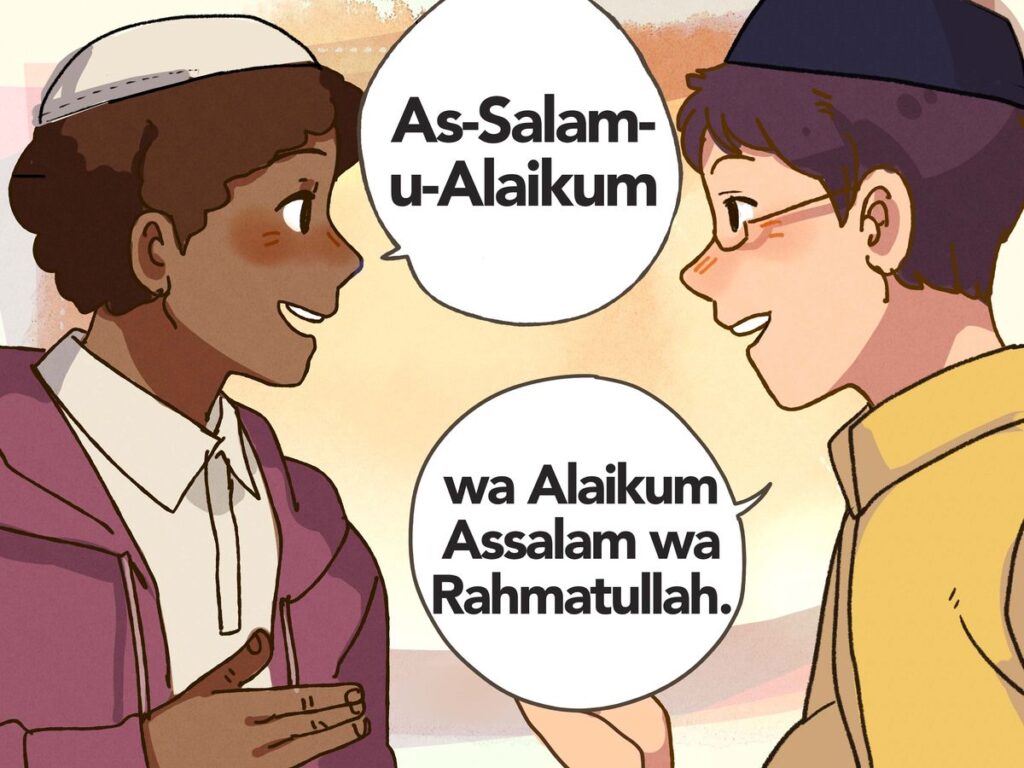
When someone greets you with “Assalamu Alaikum” (“Peace be upon you”), the proper Sunnah response is:
- Short Reply:
“Wa Alaikum Salam” (وَعَلَيْكُمُ السَّلَامُ) — meaning “And peace be upon you.” This is the basic and most common reply. It expresses goodwill, peace, and respect toward the person greeting you. - Longer Reply:
“Wa Alaikum Salam Warahmatullahi Wabarakatuh” (وَعَلَيْكُمُ السَّلَامُ وَرَحْمَةُ اللهِ وَبَرَكَاتُهُ) — meaning “And upon you be peace, the mercy of Allah, and His blessings.” This version is used to return a longer or more formal greeting, especially when someone says “Assalamu Alaikum Warahmatullahi Wabarakatuh”. It adds extra blessings and adheres more fully to Islamic etiquette.
The Prophet ﷺ emphasized that one should return the greeting with equal or better words:
وَإِذَا حُيِّيتُم بِتَحِيَّةٍۢ فَحَيُّوا۟ بِأَحْسَنَ مِنْهَآ أَوْ رُدُّوهَآ ۗ إِنَّ ٱللَّهَ كَانَ عَلَىٰ كُلِّ شَىْءٍ حَسِيبًا ٨٦
“And when you are greeted, respond with a better greeting or at least similarly. Surely Allah is a vigilant Reckoner of all things.” — Surah An-Nisa 4:86
The Difference Between “Wa Alaikum Assalam” and Longer Replies
| Reply | Meaning | When to Use |
| Wa Alaikum Salam | “And peace be upon you” | Everyday casual greetings, quick exchanges |
| Wa Alaikum Salam Warahmatullahi Wabarakatuh | “And peace, mercy, and blessings of Allah be upon you” | Formal occasions, when replying to the longer greeting, or to give extra blessings |
- Short Reply: Suitable for most daily encounters. Simple, polite, and Sunnah-approved.
- Long Reply: More virtuous, recommended when the original greeting includes mercy and blessings or when you want to show extra respect.
Etiquette for Muslims and Non-Muslims
- Muslim-to-Muslim: Always reply to a greeting, even if the other person forgets or delays. If greeting two people, you can use the dual form (Assalamu Alaikumuma). If greeting a group, use the plural (Assalamu Alaikum).
- Muslim response to a non-Muslim: It is acceptable to reply with the short form “Wa Alaikum Salam”. Some scholars advise using only “Salam” or a simple acknowledgment of peace if the non-Muslim does not understand the full greeting.
- Non-Muslim response: A non-Muslim may respond with “Wa Alaikum Salam”, “Wa Alaikum”, or even just “Salam”. The intention is to acknowledge the greeting with peace and goodwill.
When Should You Say Assalamualaikum?
Greeting Family and Friends

Assalamualaikum is the standard greeting among Muslims, whether meeting family, friends, or acquaintances. It’s more than just saying “hi”—it’s a prayer for peace, well-being, and protection. Even after brief separations, companions of the Prophet ﷺ would greet each other with Salaam alaikum, showing that every encounter is an opportunity to spread peace.
For example, imagine two friends who normally see each other every week. One of them has just returned from a trip, and today is the first time they meet after traveling. Even though they are close friends, the returning friend greets the other with “Assalamualaikum”. This greeting isn’t just polite—it’s a sincere prayer for peace, protection, and blessings, celebrating the reunion and the joy of seeing each other safely.
It reminds us that Salaam is more than words; it’s a way to express care, reconnect hearts, and bring blessings into everyday encounters.
Entering and Leaving the Home

It is recommended to say Assalamualaikum when entering any home, even if no one is present. This blessing extends to the house, its inhabitants, and even the angels who reside there. Starting your visit with this greeting fills the space with goodwill and peace, creating a spiritually positive environment from the moment you step inside.
For example, imagine a guest arriving at a friend’s house. Even if the house seems empty at first, they say “Assalamualaikum” as they step in. This simple act not only brings peace to the home but also invokes blessings for everyone living there, and it sets a warm, respectful tone for the visit.
Starting Messages, Emails, and Meetings

The greeting Assalamualaikum can also be used in written and digital communication. Beginning messages, emails, or online meetings with this phrase sets a tone of respect, friendliness, and sincerity. For example, sending an email to a colleague or starting a virtual class with “Assalamualaikum” immediately creates a positive and welcoming atmosphere. It signals that the interaction is rooted in goodwill and reflects proper Islamic etiquette, even in professional or formal settings, making every communication an opportunity to spread peace and blessings.
Salam for Non-Muslims—What Scholars Say
Many scholars encourage using Salam or Assalamu Alaikum as a universal gesture of peace toward people of other faiths. It’s a simple yet meaningful way to convey respect and goodwill, with evidence from the Quran and Hadith supporting the practice. Even if the other person doesn’t fully understand the words, the intention behind them communicates harmony and kindness.
Key Takeaways
- Assalamualaikum is a prayerful greeting, not just a casual “hi.”
- Use it when meeting others, entering homes, starting conversations, or sending messages.
- It spreads peace, strengthens bonds, and reflects Islamic etiquette.
- The standard response is Wa-Alaikum-Salaam, completing the exchange of goodwill.
Common Mistakes People Make With Assalamualaikum
Misspelling the Greeting in English
Even though Assalamu Alaikum is widely recognized, small errors can happen when typing it online or in messages. Here are some tips to avoid mistakes:
- Avoid unnecessary abbreviations like As’kum or A.S. — they make the greeting unclear.
- Keep spacing correct: Assalamu Alaikum (two words) is standard.
- Capitalization: It’s fine to write Assalamu Alaikum or salaam alaikum, just stay consistent.
- Double-check before sending in formal messages to maintain respect and preserve the blessing of the greeting.
✅ Using the correct form online ensures your message carries the full meaning and shows respect.
Shortening It Incorrectly Online
Many people try to shorten the greeting in chats or social media, which can make it unclear or lose its blessing.
Incorrect Short Forms:
- As’kum ❌
- A.S. ❌
- AsA ❌
Correct Use Online:
- Assalamu Alaikum ✅
- Salaam ✅ (if informal and clear to the recipient)
Extra Tip: Even online, using the full greeting shows respect and keeps the prayerful meaning intact.
Mixing Cultural Variations
The pronunciation and style of Assalamu Alaikum can vary across regions, but mixing them incorrectly may change the meaning or sound awkward.
Examples:
- Using a soft “s” like “Asa” instead of a clear “s” → ❌
- Mixing Egyptian pronunciation with Gulf style in the same sentence → ❌
Correct Practice:
- Stick to a clear pronunciation: Assalamu Alaikum ✅
- Respect regional variations but avoid combining them incorrectly.
Extra Note: Learning the proper Arabic pronunciation helps preserve the intended meaning and respect of the greeting.
🕌 Want to learn Arabic and read the Quran and Islamic words confidently? Check out our latest blog post: “Learn Arabic and Quran with Confidence”. Discover tips, guidance, and expert advice to start your learning journey today!
Misunderstanding the Response Etiquette
Some people either don’t respond correctly or respond too briefly.
Incorrect:
- Saying only Alaikum ❌
- Ignoring the greeting ❌
Correct:
- Wa Alaikum Salam ✅
- Wa Alaikum Salam wa Rahmatullahi wa Barakatuhu ✅ (more complete and blessed)
Forgetting to Use It in Proper Situations
Assalamu Alaikum should be used not only when meeting someone but also when entering/leaving a home or gathering.
Common Mistakes:
- Entering a house silently ❌
- Leaving without saying the greeting ❌
Correct Use:
- Always greet when arriving and leaving gatherings ✅
- It’s a prayer for peace, protection, and goodwill ✅
Conclusion
In conclusion, Assalamu Alaikum is far more than a simple greeting—it is a heartfelt prayer, a spiritual act, and a way to spread peace, mercy, and blessings in every interaction. By learning how to pronounce it correctly and respond with the appropriate Sunnah phrases, you not only honor Islamic etiquette but also nurture goodwill, strengthen bonds, and create an atmosphere of harmony around you.
Every time you say Assalamu Alaikum, you are invoking divine peace upon others, reflecting sincerity, respect, and care. Whether greeting family, friends, colleagues, or even strangers, this beautiful phrase serves as a bridge between hearts, reminding us of the importance of love, unity, and community in Islam.
Mastering this greeting also empowers you to confidently share a piece of your faith with others, fostering understanding and connection across cultures. It’s a simple act that carries profound meaning—turning everyday encounters into opportunities for blessing, compassion, and spiritual growth.
Embrace the Sunnah, spread peace wherever you go, and let Assalamu Alaikum be your daily prayer for others’ well-being.
Want to learn more about Islam and read the Quran fluently? Join Areeb Academy! We offer flexible schedules, expert teachers, and affordable lessons—all with a strong focus on Quranic mastery.
📚 BOOK A FREE TRIAL CLASS NOW and start your journey to learning Islam and Quran confidently!